Design · 4 min read
Aluminum Pool Fence Design and Safety in the Lowcountry
Published 11 September 2026
Learn how to balance safety codes, property layout, and aesthetic choices when planning an aluminum pool fence in coastal South Carolina.
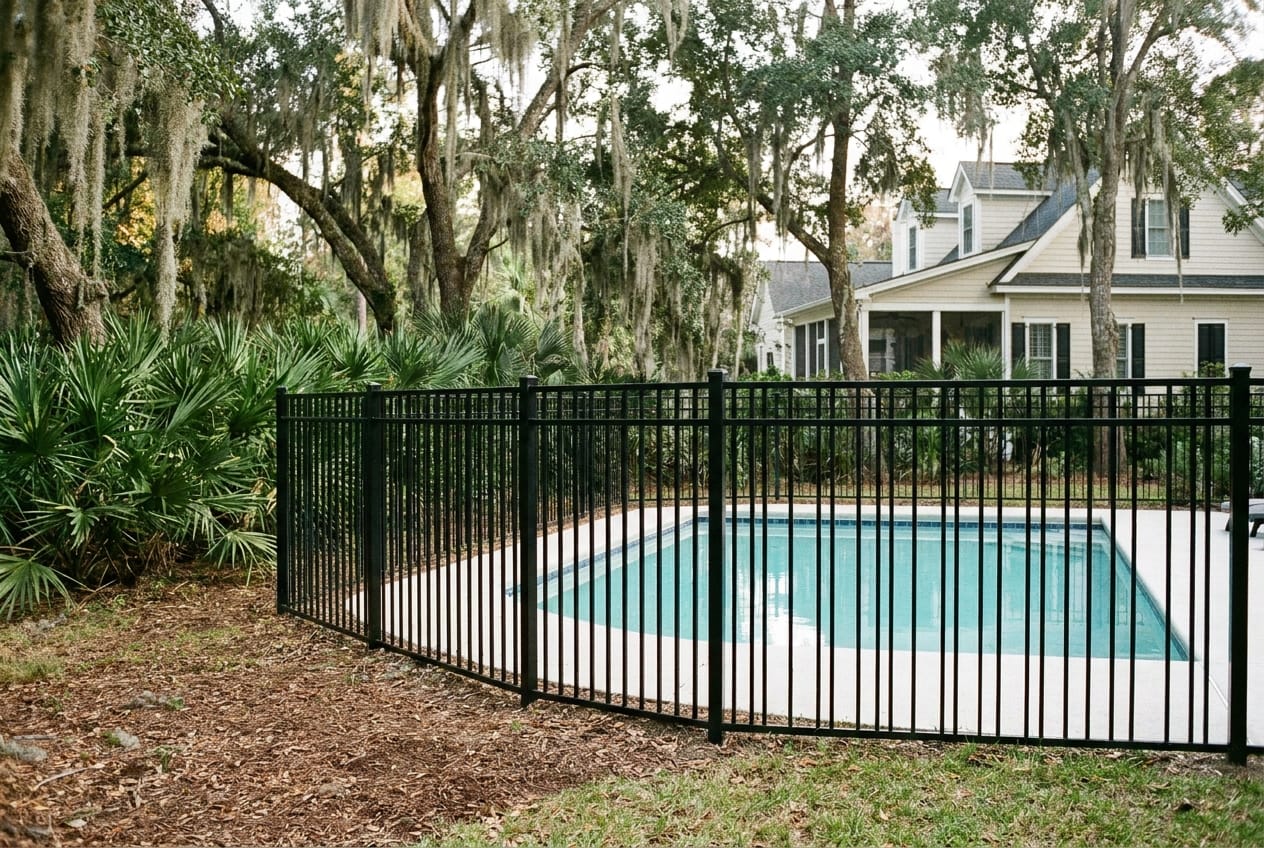
Installing a pool is a significant investment for any homeowner in the Charleston region. Alongside the excavation and water features, the surrounding barrier is a critical component that requires careful planning. Aluminum is a common choice for pool fencing in coastal South Carolina due to its resistance to rust and its clean, modern appearance. However, designing a system that meets both safety standards and aesthetic goals involves several specific decisions.
Local Safety and Building Codes
Before selecting a fence style, you must understand the safety regulations governing pool barriers. These rules are designed to prevent accidental drowning, but they are not uniform across the Lowcountry. What is required in Mount Pleasant or the City of Charleston may differ from rules in Summerville, Moncks Corner, or unincorporated Berkeley County.
Municipalities and counties generally mandate specific heights, picket spacing, and gate operations for pool enclosures. For example, many jurisdictions require a minimum height of 48 inches, though some local codes or specific homeowners associations (HOAs) may demand 60 inches or taller. Picket spacing must be tight enough to prevent a small child or pet from squeezing through. Because code enforcement officers check these dimensions closely during final inspections, you should always verify the exact requirements with your local building department and HOA before purchasing materials.
Choosing a Style and Profile
Aluminum fencing comes in several distinct profiles, each offering a different balance of security, privacy, and visibility.
- Flat-Top Fences: This design features a smooth top rail enclosing the pickets. It is a popular modern look that works well in contemporary backyards and is generally considered safe for families, as there are no exposed points.
- Spear-Top Fences: These have pickets that extend past the top rail, ending in decorative points or finials. While traditional, some homeowners prefer to avoid exposed points around active pool areas.
- Flush-Bottom vs. Standard Bottom: A flush-bottom rail hides the picket ends at the ground level, which can prevent lawn equipment from damaging individual pickets.
If you have a scenic view of a marsh, tidal creek, or golf course, picket spacing is a key design choice. Standard spacing is typically around 3 and 13/16 inches, but wider "view" spacing or narrower "puppy picket" options are available depending on your specific needs.
Gate Design and Hardware
The gate is the most important part of any pool fence because it is the primary point of entry and the most common point of failure. Safety codes almost universally require pool gates to be self-closing and self-latching.
When designing your layout, consider the flow of traffic from the house to the pool, and from the yard to any outdoor showers or storage sheds. You will need to select hinges that use internal springs or magnetic mechanisms to pull the gate shut automatically from any open position. The latch must be positioned at a height that prevents young children from reaching it, often on the inside of the gate. Depending on your location, your local inspector may require the gate to swing outward, away from the pool area, so that a child pushing on a partially latched gate cannot accidentally open it.
Adapting to Lowcountry Terrain
Our local geography presents unique challenges for fence installation. Lowcountry properties often deal with soft, sandy soils, high water tables, and mature live oak root systems.
If your property has a slope or transitions down toward a dock or marsh line, the fence must be designed to follow the grade. Aluminum panels can be "racked" to follow smooth slopes, keeping the gap at the bottom consistent without leaving large openings that violate safety codes. For steeper transitions, step-down panels may be required.
Wind loads are another factor to consider near the coast. While aluminum picket fences allow wind to pass through easily—unlike solid privacy fences—they must still be anchored securely. Setting posts in deep concrete footings is standard practice, but high water tables in areas like Daniel Island or James Island may require specialized digging and pouring techniques to ensure the posts do not shift over time.
Selecting Colors and Finishes
Coastal air carries high moisture and salt content, which can accelerate the corrosion of many metals. Aluminum does not rust like iron, but it can still oxidize if not properly treated.
Most quality aluminum fences feature a powder-coated finish. This electrostatically applied powder is baked onto the metal, creating a durable bond that resists scratching, fading, and salt spray.
- Black: The most common choice because it tends to recede into the landscape, making the fence less noticeable when looking out at a yard or marsh view.
- Bronze: A softer alternative to black that pairs well with natural wood decks, brick patios, and earth-toned homes.
- White: Offers a classic, clean look but requires more frequent washing to remove dirt, pollen, and algae.
Budget and Site Conditions
An aluminum pool fence installation typically ranges from $35 to $60 per linear foot, with gates, specialty hardware, and complex site preparation adding to the total. The final cost of your project will depend heavily on your specific site conditions, including the presence of tree roots, underground utility lines, old concrete patios that must be cored, and the slope of your yard. Consulting with a local professional who understands Lowcountry soil and local permitting is the best way to ensure your design is both safe and durable.