Materials · 5 min read
Wood, vinyl, aluminium or chain link: what lasts on the coast
Published 5 September 2026
Salt air, humidity and ground that stays wet do different things to different fences. What each of the four materials we build in is actually good at, and what the coast does to it.
Every fence material works somewhere. The question is what it does after ten years of salt air, eight months a year of humidity, and ground that does not drain the way it does inland.
Wood
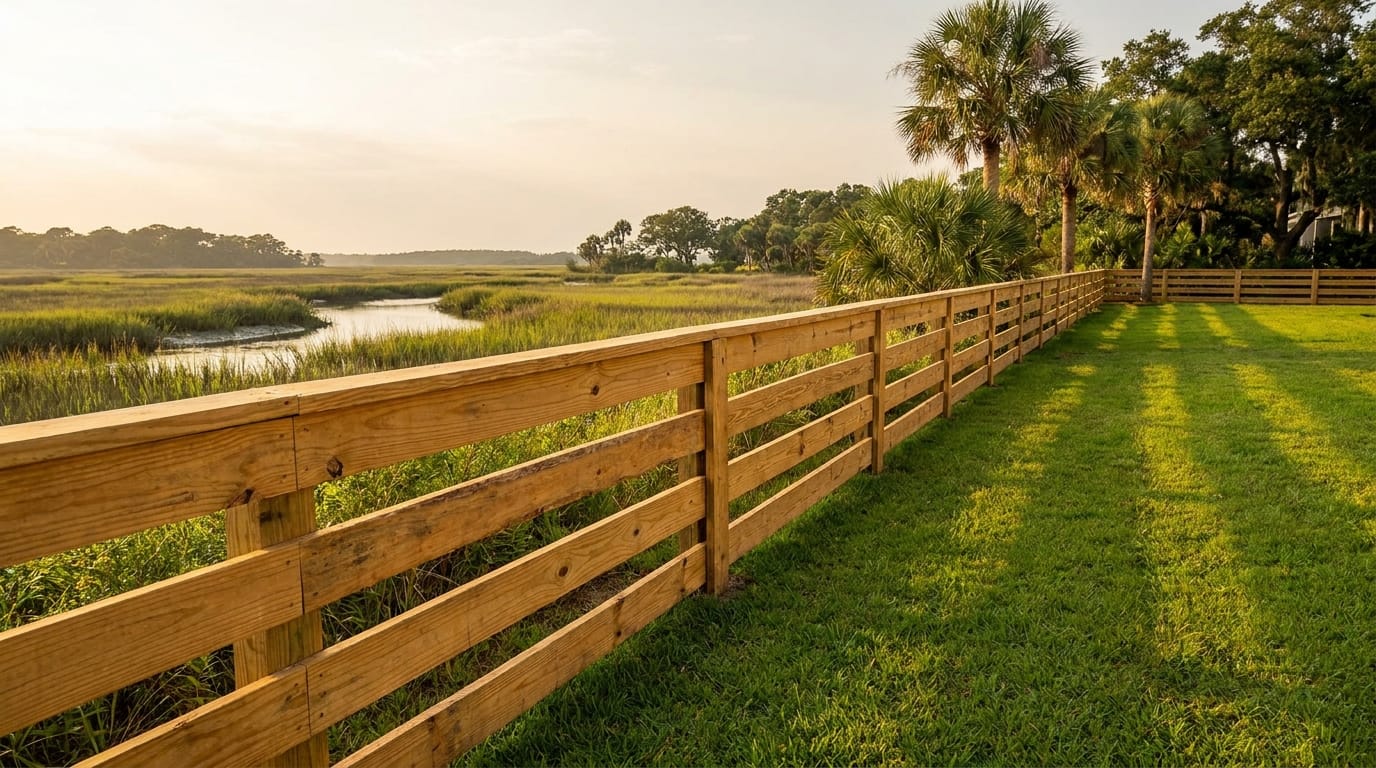
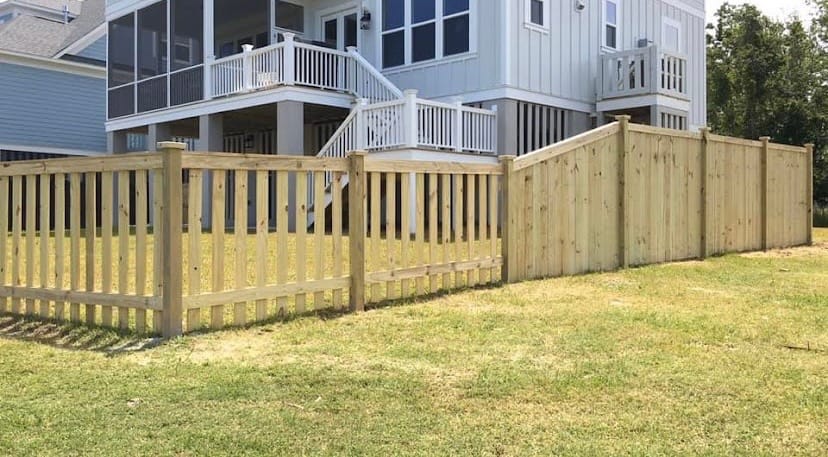
Pressure-treated pine is what most of the lowcountry is fenced in, and for good reason: it is the cheapest way to get a solid six-foot privacy fence, and it can be repaired one board at a time.
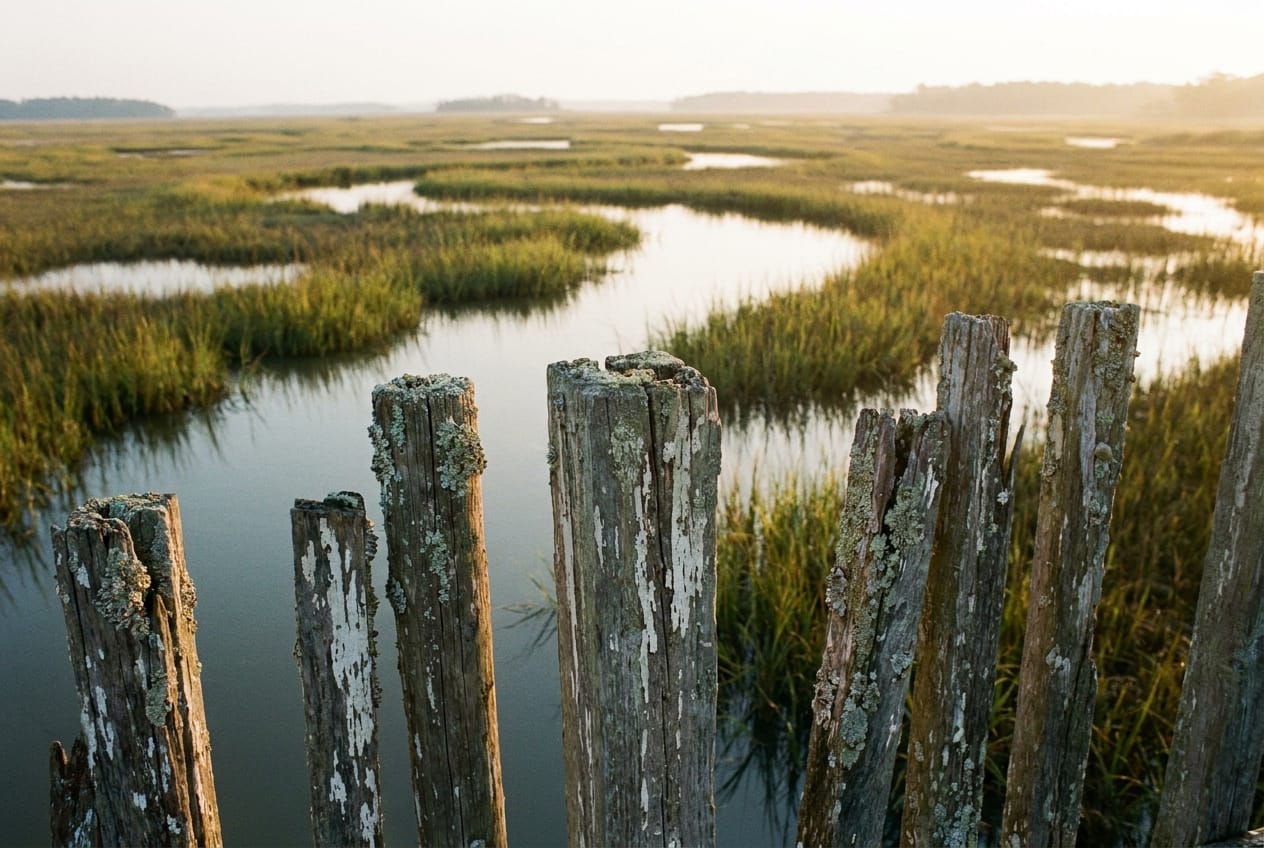
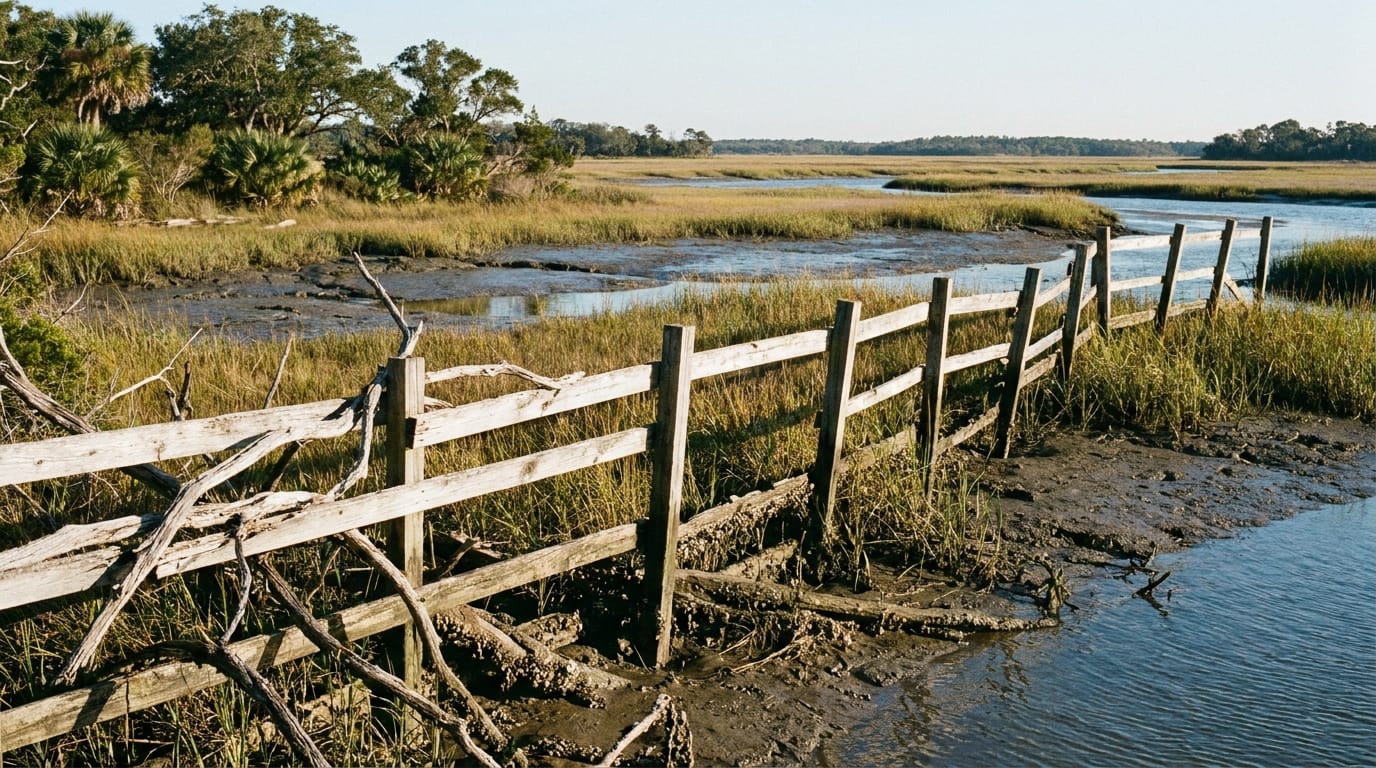
What the coast does to it is rot from the ground up and warp from the sun down. The posts fail first, almost always, and almost always at the soil line where the wood is alternately wet and dry. That is a detail of installation rather than of the material — how deep the post goes, what it is set in, and whether water can sit against it.
Cedar costs more and resists rot better than pine. It is worth asking about if you want a wood fence you will not be thinking about for a while.
Vinyl
Vinyl does not rot, does not need staining, and does not care about humidity. On a coastal lot that is a genuine argument.
Two things to know. It is not repairable the way wood is — a cracked panel is a replaced panel, not a replaced board. And it is a solid surface, which means wind pushes on all of it; on an exposed lot the posts and footings matter more than the panels do.
Aluminium
Aluminium ornamental is the most expensive of the four per foot and the least trouble afterwards. It does not rust — it oxidises, and then stops. Salt air is close to a non-issue.
It is a see-through fence, so it is a poor choice if you want privacy and a good one if you want to enclose a pool or a front garden without walling it off. Wind goes through it, which on an exposed lot is worth something.
Chain link
Galvanised chain link is the cheapest per foot, goes up quickly, and is the right answer far more often than its reputation suggests — for a back boundary, a dog run, or anywhere the job is containment rather than appearance. Privacy slats change how it looks considerably.
The thing to watch on the coast is the coating. Galvanising is what stands between the steel and the salt, and once it is scratched through, corrosion starts there.
The part that is not the material
Whatever the fence is made of, the hardware is steel, and steel near salt water corrodes. Hinges, latches, screws and brackets are where a fence usually starts to look tired first. Stainless or hot-dip galvanised fixings cost a little more and are worth it within sight of the water.
Post depth and what the post is set in matter more than any of the above. A vinyl fence on shallow posts will fail before a wood fence on deep ones.
Asking us
We build in all four, and which one we would suggest depends on the lot rather than on a preference. Tell us what the fence is for — privacy, a dog, a pool, a boundary — and what the ground is like, and we will tell you what we would put there.