Materials · 4 min read
Coastal Fence Materials After Five Years of Salt Air Exposure
Published 15 October 2026
Salt air, coastal humidity, and wind alter fence materials quickly within a mile of Lowcountry waters over five years.
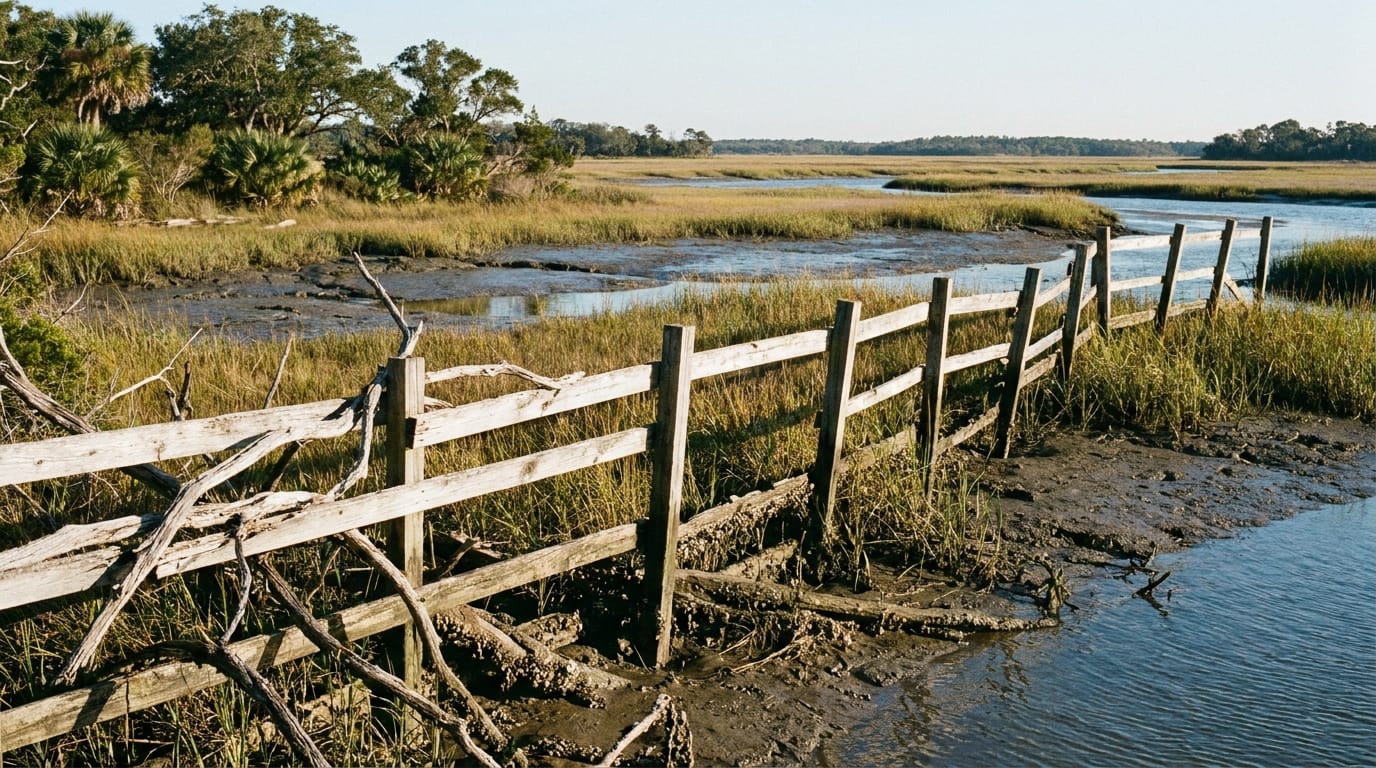
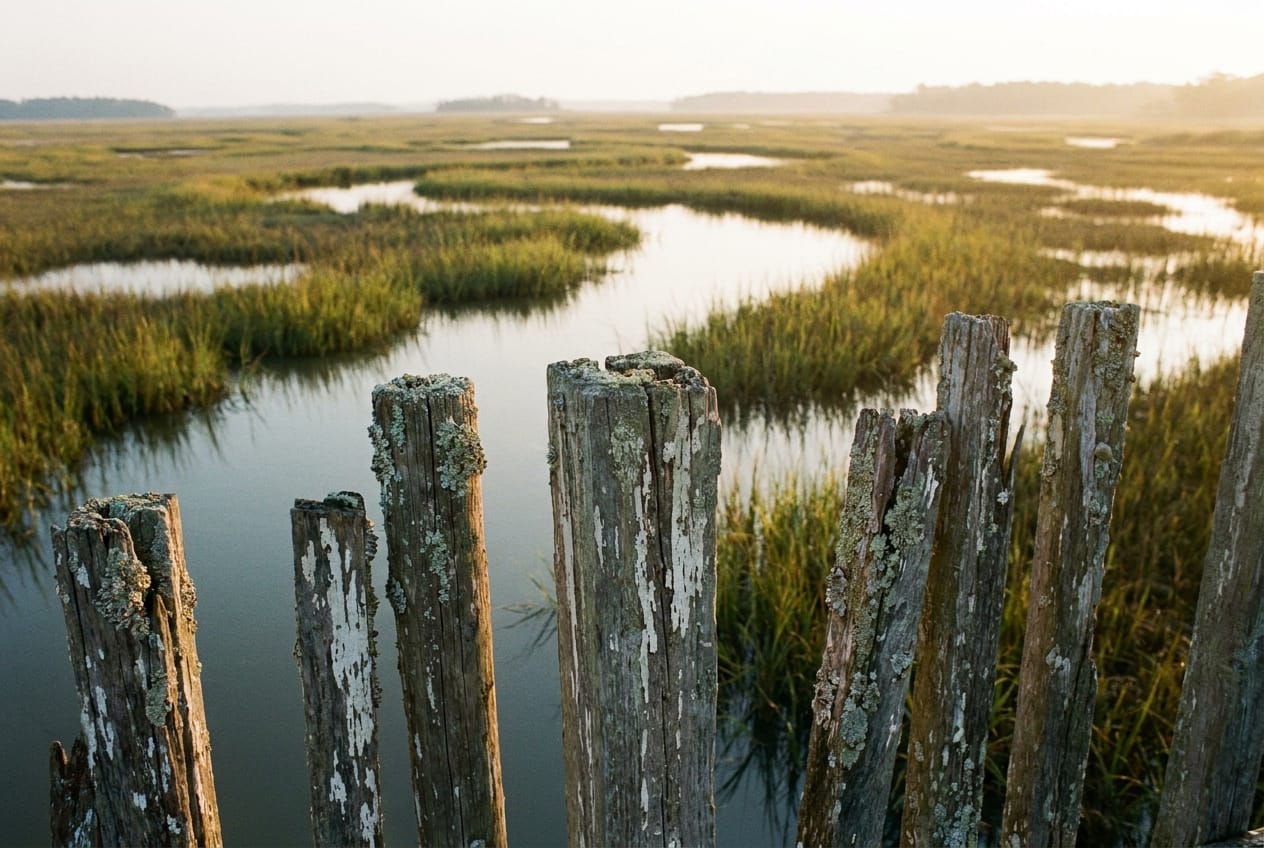
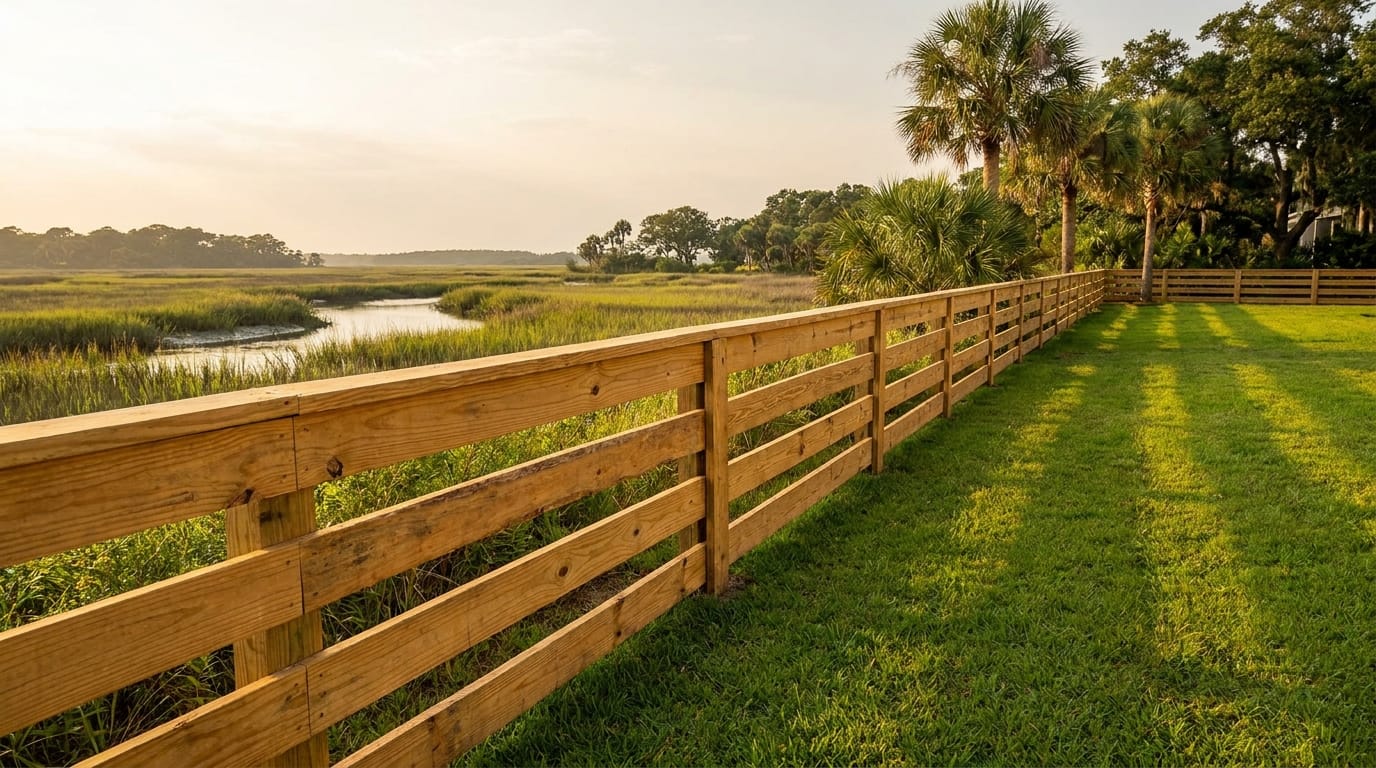
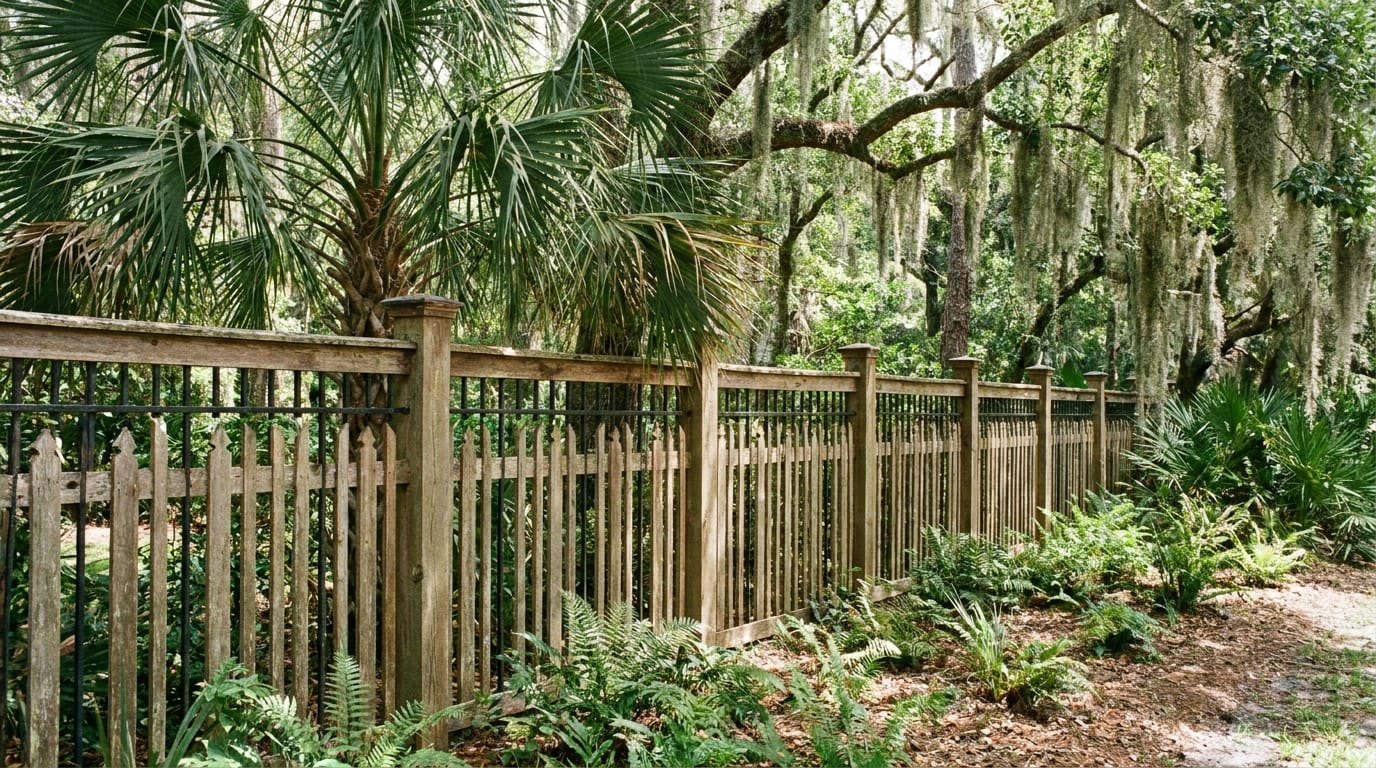
Salt air and persistent humidity within a mile of coastal waters create a harsh environment for outdoor structures. In coastal regions, salt fog and ocean breezes carry sodium chloride onto every exposed surface. Over five years, this coastal atmosphere tests the durability of every standard fencing material in distinct ways.
Understanding how these materials age helps homeowners make realistic decisions about long-term maintenance, appearance, and replacement timelines.
Pressure-Treated Pine
Pressure-treated pine remains a common choice due to lower upfront material costs. However, five years near salt water reveal significant physical changes.
The chemical treatments in pine protect against wood rot and fungal decay, but they do not stop moisture absorption. Daily cycles of high coastal humidity followed by direct sun cause the wood to expand and contract rapidly. Within five years, pine fences near salt water typically show:
- Moderate to severe warping, cupping, and twisting along individual pickets.
- Splitting around nail and screw points due to tension from wet-dry cycles.
- Surface graying and dark mildew growth driven by trapped coastal moisture.
Fasteners are the primary point of failure. Standard galvanized nails react with both the salt air and the copper chemicals in the wood, corroding rapidly. By year five, unsealed pine fences often require board replacements and structural tightening.
Western Red Cedar
Cedar contains natural oils that resist insects and decay better than untreated woods. In a coastal setting, cedar handles salt air better than pine regarding warping, but it still undergoes noticeable weathering.
After five years within a mile of salt water, cedar fences generally display:
- A uniform silvery-gray patina caused by salt spray and ultraviolet light exposure.
- Less twisting and warping than pine, owing to cedar's straight grain structure.
- Dark streaks around fasteners if non-stainless steel hardware was used.
While cedar holds its shape reasonably well, salt residue can draw moisture into the wood surface if left unwashed. Without periodic rinsing with fresh water and an application of clear sealant every few years, cedar pickets can dry out, split, or develop soft spots near ground contact.
Vinyl (PVC)
Vinyl fencing is impervious to salt water corrosion and rot, making it a popular low-maintenance option for coastal yards. Salt fog will not break down the polyvinyl chloride material.
At the five-year mark, a quality vinyl fence in a coastal zone will show:
- No rust, rotting, or structural degradation from salt exposure.
- A light layer of salt film, grime, and green algae growth, particularly on shaded sides.
- Minor chalking or slight dulling of the surface finish caused by intense sun.
Maintenance at year five is mostly cosmetic. A pressure wash or soft scrub with mild soap usually restores the original finish. However, lower-grade vinyl can become brittle from UV exposure over five years, making it more vulnerable to damage from flying debris during wind events.
Powder-Coated Aluminum
Aluminum does not rust like iron or steel, making it well-suited for salt spray environments. However, the powder coating that protects and colors the aluminum faces continuous stress near the coast.
After five years within a mile of salt water, aluminum fencing typically exhibits:
- Good overall structural integrity with zero red rust on the rails or pickets.
- Chalking or a dull powdery residue on dark powder coatings due to salt and sun exposure.
- Blistering or flaking paint around cut edges, welds, or deep scratches where salt air creeps underneath the coating.
Screws and latches are weak spots. If stainless steel hardware was not installed during construction, gate hinges and assembly screws will show rust stains and may freeze up after five years of salt fog exposure.
Galvanized Chain Link
Standard residential chain link uses a zinc coating over steel. In inland areas, this coating lasts decades. Within a mile of salt water, the timeline shortens significantly.
By year five, galvanized chain link fences usually display:
- White rust, which is zinc oxidation, covering large sections of the wire mesh.
- Red rust forming at wire intersections, bottom tension wires, and post bases.
- Stiff gate hinges and latch mechanisms caused by corrosion.
Vinyl-coated chain link performs much better over five years, provided the protective vinyl skin is not torn or punctured. Once salt water penetrates a tear, the underlying steel rusts rapidly from the inside out.
Fastener Selection and Local Requirements
Regardless of the primary material chosen, hardware dictates whether a fence survives five years near the coast. Stainless steel fasteners, specifically 304 or 316 grade, resist coastal corrosion, whereas standard galvanized hardware often fails within three to five years.
Site conditions, soil drainage, and direct wind exposure cause actual performance to vary from property to property. Total costs for coastal fencing projects depend heavily on material selection, property topography, and post depth requirements. Before installing any fence, always verify local guidelines. Building codes, setback rules, permit fees, and HOA requirements vary significantly across different counties, cities, and subdivisions.