Materials · 4 min read
Coastal Air Effects on Fence Fasteners and Hardware
Published 25 October 2026
Salt air accelerates metal corrosion on fence and deck hardware, often causing screws and brackets to fail long before the wood.
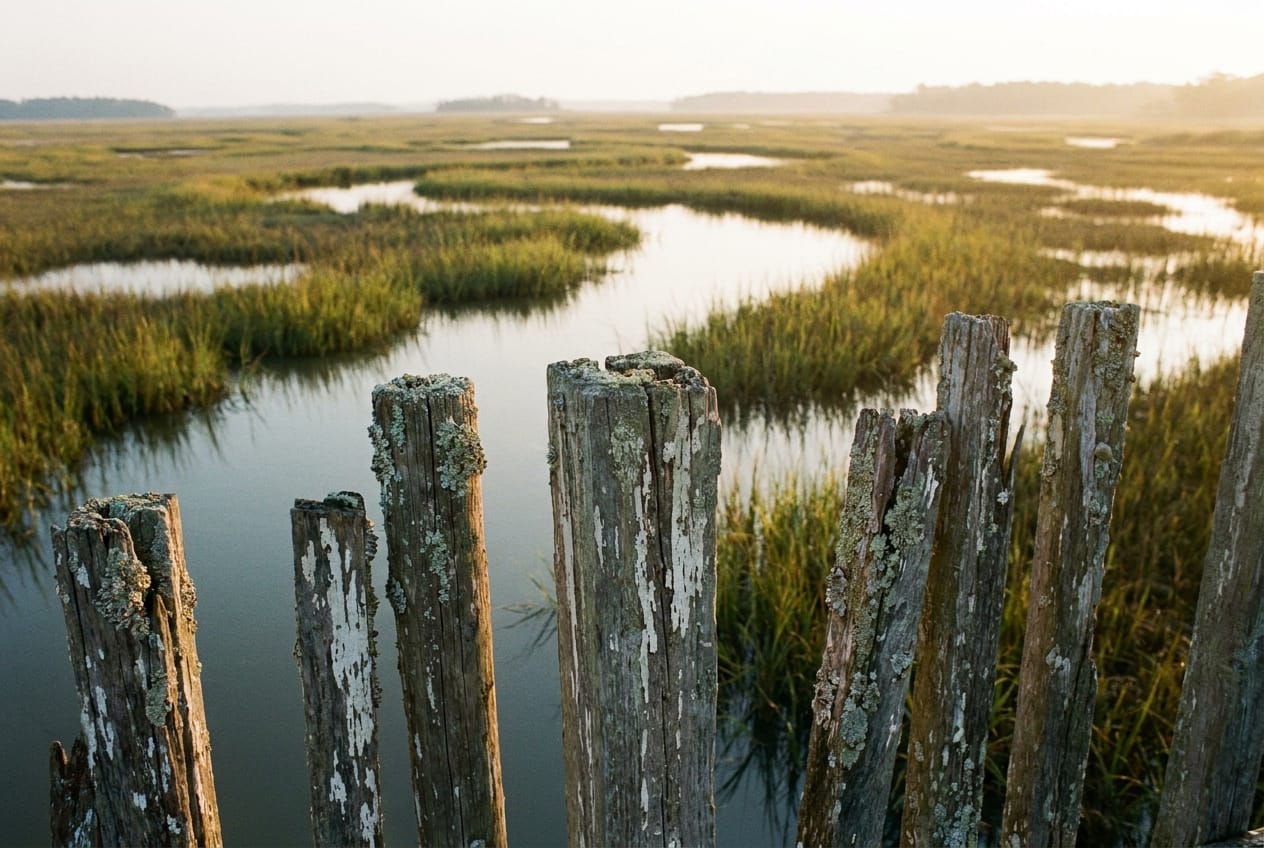
In coastal South Carolina, outdoor wood structures face environmental conditions that differ significantly from inland regions. While homeowners often focus on selecting durable lumber or composite boards for fences, decks, and pergolas, the hardware holding those boards together is frequently the first component to fail. Screws, nails, brackets, and gate hinges are exposed to a combination of high humidity, airborne sea salt, and reactive wood preservatives that accelerate metal breakdown.
Understanding how coastal air interacts with different metals helps explain why a fence post or deck board may remain structurally sound while the fasteners holding it degrade, stain the wood, or snap entirely.
Salt and Moisture in Lowcountry Air
Salt air extends well past the immediate beachfront. Wind carries microscopic salt particles miles inland across Mount Pleasant, Charleston, Awendaw, and surrounding Lowcountry areas. Salt deposited on outdoor metal hardware attracts and holds ambient moisture, creating a persistent liquid film on the surface of screws and brackets even on sunny days.
This moisture layer acts as an electrolyte, setting up ideal conditions for oxidation. Plain steel or thin-plated metal reacts quickly with oxygen and salt water, forming iron oxide, commonly known as rust. As rust forms, the metal expands, cracks away, and loses its structural mass. Over time, a screw shank that began at a specific gauge thins down until it can no longer withstand the tension and shear forces exerted by heavy wood or wind loads.
Pressure-Treated Wood and Metal Reactivity
The lumber used in coastal fences and decks adds another layer of chemical exposure. Pressure-treated pine is injected with chemical preservatives, such as Alkaline Copper Quaternary (ACQ) or Micronized Copper Azole (MCA), to prevent fungal decay and insect damage. These preservatives contain high concentrations of copper.
When copper in treated wood comes into contact with wet steel or zinc, a chemical reaction known as galvanic corrosion occurs. Copper is a noble metal compared to steel and zinc. In the presence of moisture, the less noble metal corrodes at an accelerated rate to protect the copper. If standard fasteners are driven into modern pressure-treated lumber, the combination of wood chemicals and salt air can eat through the metal within a few seasons.
Fastener Coatings and Metal Grades
Choosing the right hardware requires matching the metal composition to the environment. Fasteners come in several distinct grades, each offering different levels of protection against salt air and wood preservatives:
- Electro-galvanized steel has an extremely thin layer of zinc applied through electricity. This coating is designed primarily for interior framing or temporary dry outdoor use. Exposure to Lowcountry humidity quickly strips the zinc, leaving bare steel vulnerable to rapid rusting.
- Hot-dip galvanized steel is dipped in molten zinc, creating a thicker protective barrier. Hot-dip galvanized nails and structural connectors perform adequately in many inland outdoor applications, but salt air can eventually break down the zinc layer, leading to rust streaks and structural weakening over time.
- 304-grade stainless steel contains chromium and nickel, forming an invisible chromium oxide film that stops rust. It performs well in most suburban outdoor settings but can suffer from surface staining or pitting in direct coastal environments.
- 316-grade stainless steel includes molybdenum, an element that specifically resists chloride corrosion caused by sea salt. For properties near tidal creeks, salt marshes, or the ocean, 316 stainless steel provides the highest resistance to corrosion and prevents chemical breakdown inside treated lumber.
Signs of Fastener Breakdown
Fastener failure is not always immediately obvious because much of the damage occurs inside the wood where the screw or nail sits. However, several visible indicators point to compromised hardware:
- Dark black or reddish-brown streaks bleeding downward from screw heads or nail holes across fence pickets.
- Loose pickets or railing balusters where screw heads have snapped off under natural wood expansion and contraction.
- Gate sagging caused by bent, corroded, or pulling hinges that can no longer support the weight of the frame.
- Rust flakes accumulating on metal post caps, joist hangers, or structural brackets.
When fasteners fail, boards begin to warp, twist, and pull away from support posts. Replacing broken hardware after the wood has split or displaced often requires drilling new holes or replacing full sections of lumber.
Hardware Selection and Local Guidelines
Building codes, coastal setback rules, and HOA guidelines vary across Charleston County, Berkeley County, and individual municipalities. Specific structural fastener specifications, post bracket ratings, or aesthetic finish choices may be mandated depending on your location and wind load requirements. Always consult local building officials and your HOA covenants before starting an outdoor installation to confirm hardware requirements for your specific property. Selecting hardware rated for high corrosion environments protects the investment made in posts and boards, keeping the structure sound for its intended lifespan.