Design · 4 min read
Choosing Between Horizontal and Vertical Fence Boards
Published 24 September 2026
Deciding between horizontal and vertical fence boards involves comparing material costs, installation complexity, and modern versus traditional styles.
Choosing the direction of your fence boards is one of the most significant design decisions you will make for your property. While vertical wood fences have been the standard in the Charleston area for decades, horizontal fences have grown in popularity. The choice affects not only the look of your yard but also the total cost, the installation process, and how the structure handles local weather conditions.
Understanding the differences in construction, budget, and long-term performance will help you decide which style fits your property and your budget.
Visual Impact and Yard Design
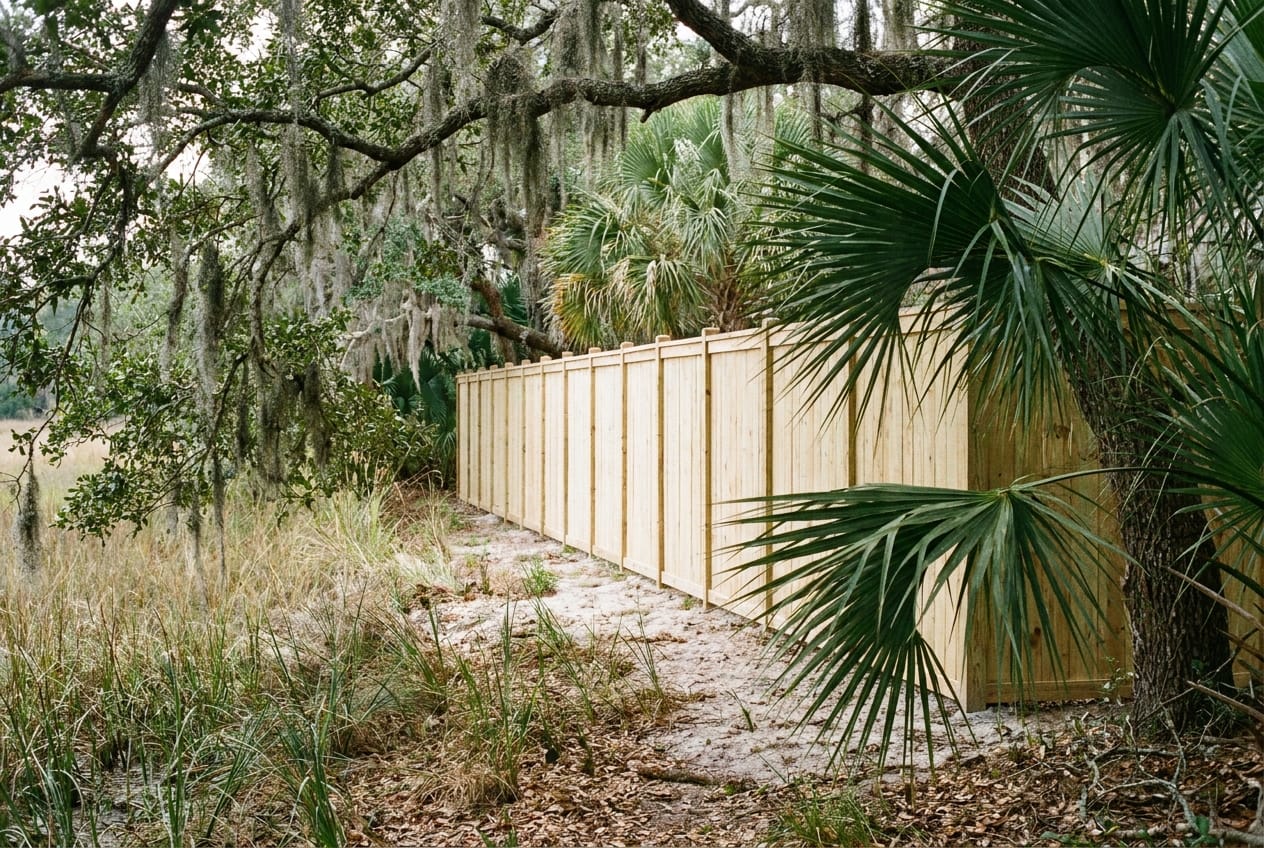
Vertical fence boards draw the eye upward, making the fence line feel taller and more traditional. This style coordinates well with the historic and cottage-style architecture common throughout Mount Pleasant and Summerville. It is a familiar, classic look that blends easily into the background of a landscaped yard.
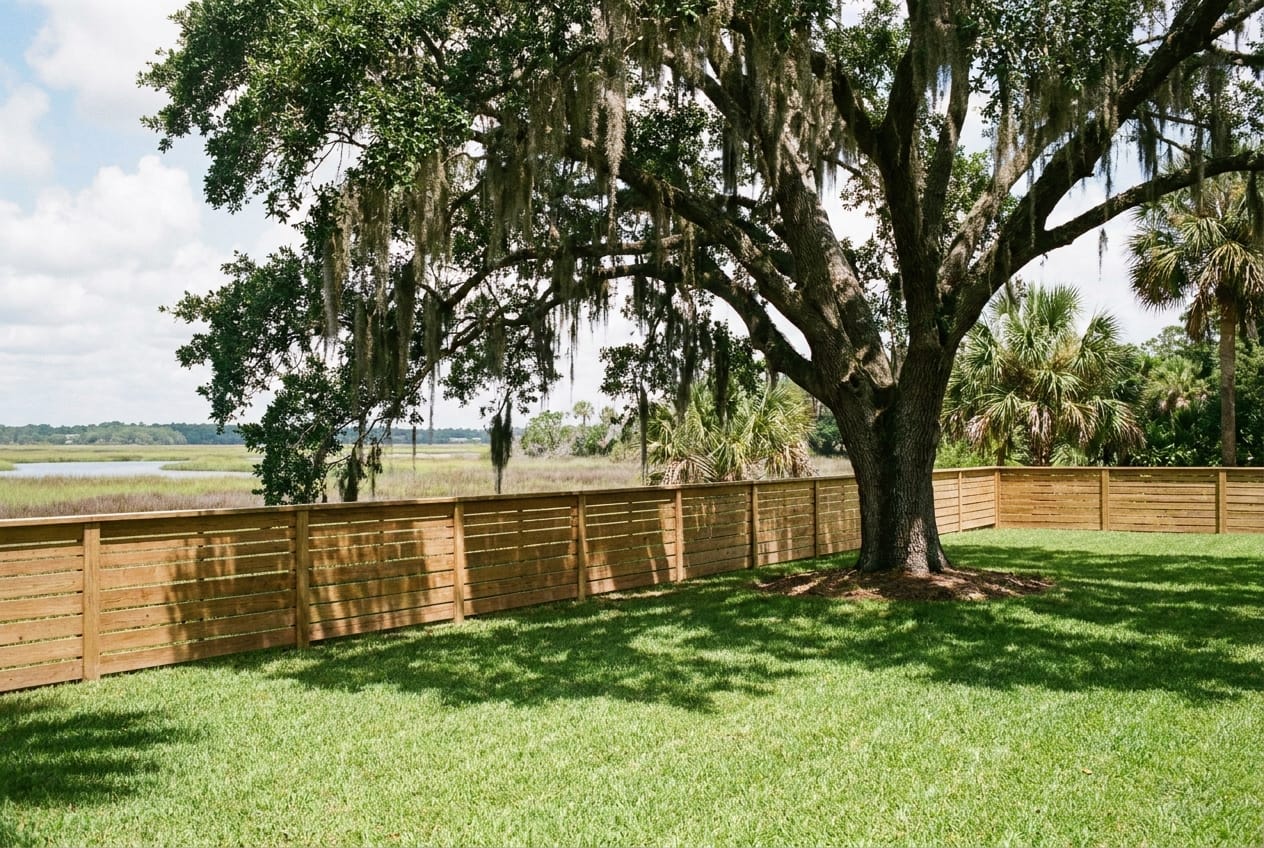
Horizontal fence boards draw the eye sideways, which can make a small yard feel wider and more spacious. This style offers a clean, contemporary aesthetic that complements modern custom homes or transitional designs. Because the lines run parallel to the ground, any slight deviation in level is highly visible. Horizontal fences work best when you want the fence itself to be a distinct design feature rather than a neutral backdrop.
Structural Differences and Warping Risks
The way wood behaves over time differs significantly depending on whether it is installed vertically or horizontally.
Vertical boards are nailed to horizontal rails that run between posts. Because gravity pulls down along the length of the vertical board, there is minimal risk of the boards sagging. If a vertical board warps slightly, it is rarely noticeable from a distance.
Horizontal boards are fastened directly to the vertical posts. Because the boards span horizontally, gravity pulls down on the middle of the board. Over time, horizontal boards are much more prone to sagging and cupping if they are not supported correctly. To prevent this, horizontal fences require:
- Closer post spacing, typically four to six feet apart, compared to the standard eight feet for vertical fences.
- Mid-span vertical supports or stiffeners on the back side of the fence panels.
- Higher-grade lumber, such as select-grade cedar or premium pressure-treated pine, which is less likely to twist over time.
Working with Sloped Yards
Very few yards in the lowcountry are perfectly flat. How your yard slopes will dictate how each fence style must be installed.
Vertical fences are highly adaptable to uneven ground. They can be racked, meaning the fence follows the natural contour of the slope while the boards remain perfectly vertical. This keeps the bottom of the fence close to the ground, preventing gaps that pets or pests could slip through.
Horizontal fences cannot be easily sloped. Instead, they must be stepped. The panels remain perfectly level, and the fence steps down in sections like stairs. This creates triangular gaps under the fence on sloping ground, which may require additional landscaping, dirt work, or gravel boards to fill.
Cost Comparison and Budgeting
Because horizontal fences require more precise labor and more structural support, they generally cost more than traditional vertical designs.
- Vertical Wood Fences: A standard vertical privacy fence typically costs between $25 and $45 per linear foot.
- Horizontal Wood Fences: A horizontal privacy fence typically costs between $35 and $65 or more per linear foot.
These ranges are estimates for standard residential projects. Actual pricing varies significantly based on site conditions, including soil quality, such as sandy soil in coastal areas versus heavy clay in parts of Moncks Corner, tree roots, the slope of the land, and clearing needs. The choice of wood species, such as pressure-treated pine versus western red cedar, will also heavily influence the final price.
Local Rules and HOA Considerations
Before committing to a fence design, it is essential to check your local guidelines. Many homeowners associations in the Charleston metro area have strict rules regarding fence heights, materials, and board orientation. Some neighborhoods specifically require vertical gothic-top or dog-ear pickets and do not permit horizontal configurations.
Permitting requirements and setback rules also vary by municipality, whether you live in Charleston County, Berkeley County, or within specific city limits. Always verify your local zoning laws and HOA bylaws before purchasing materials.