Materials · 4 min read
Long-Term Maintenance Costs for Wood, Vinyl, and Composite
Published 10 October 2026
Standard comparisons focus on up-front fence prices, but ongoing care and lowcountry weather reshape the true cost over ten to twenty years.
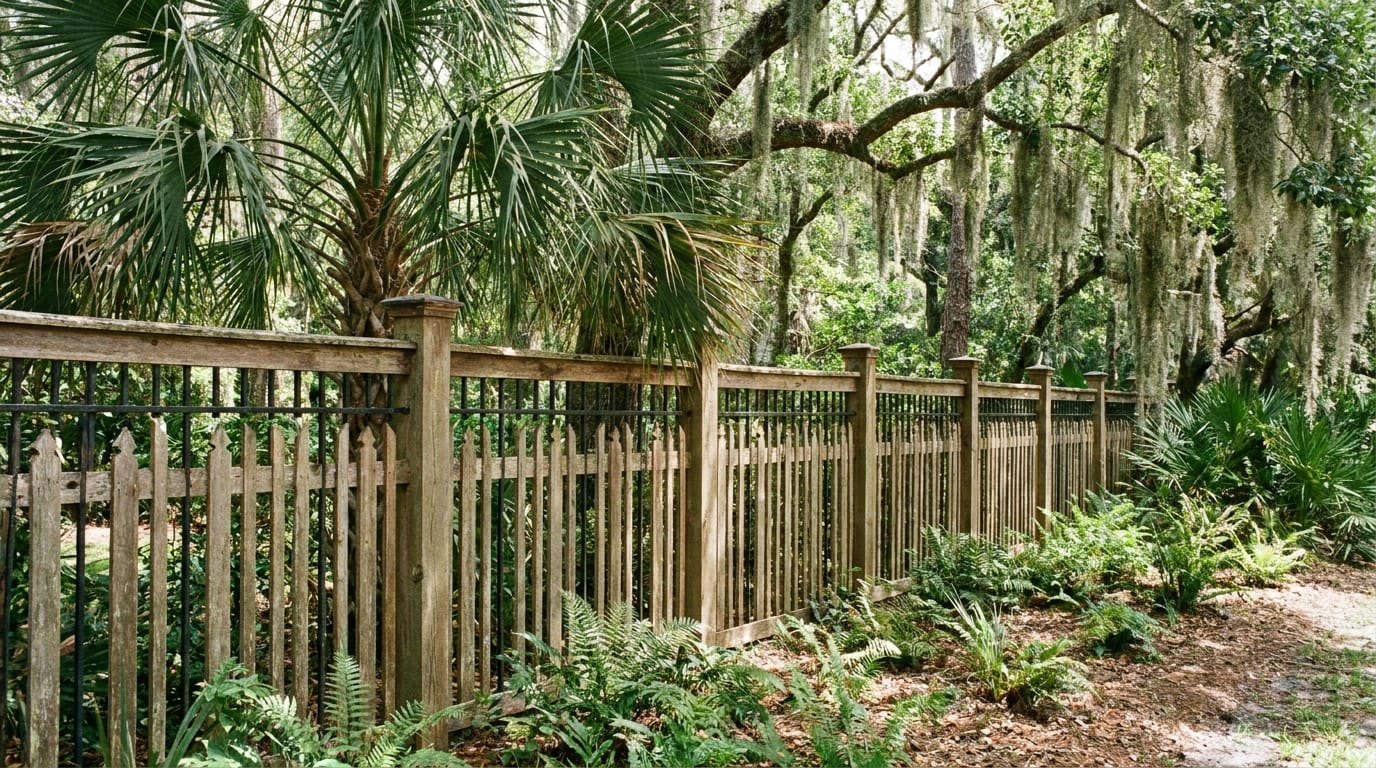
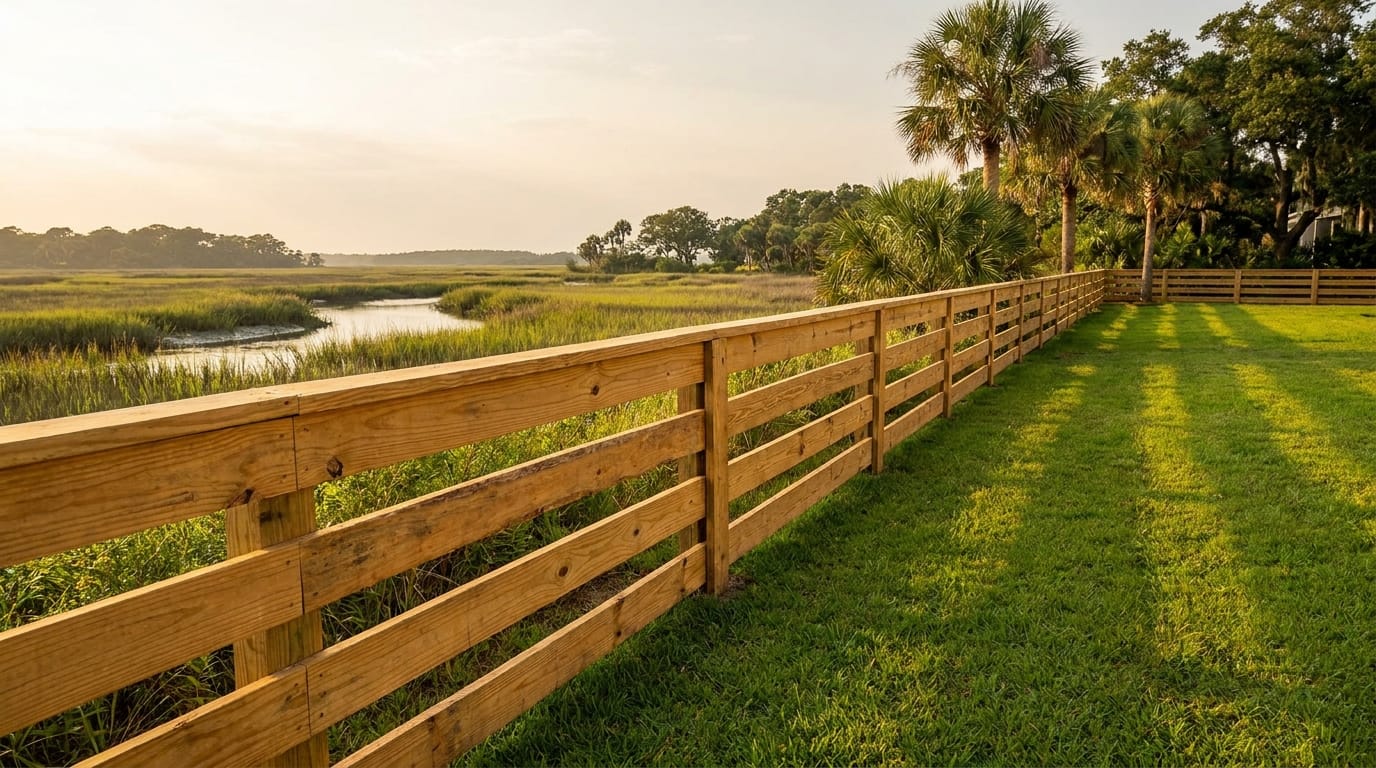
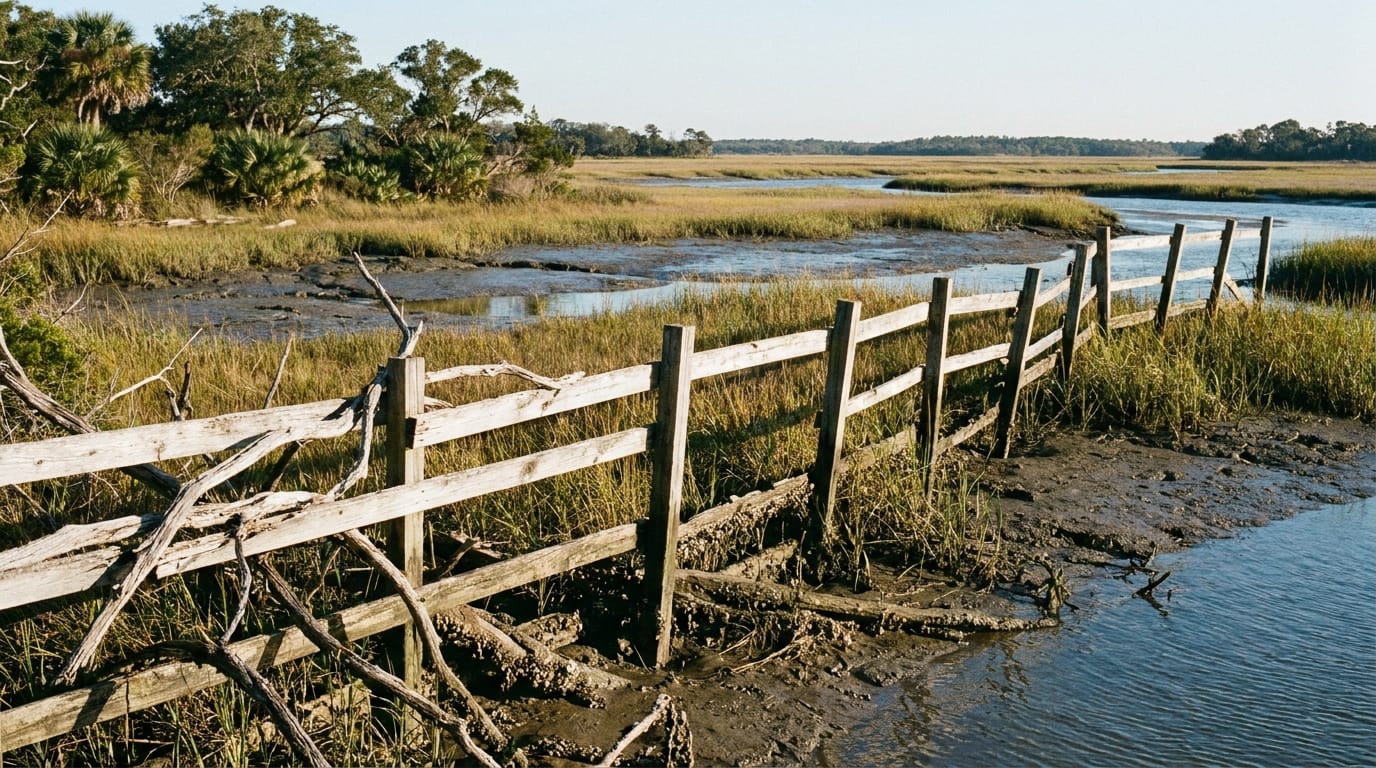
Initial upfront costs usually dominate the conversation when choosing materials for a fence or outdoor structure. However, the initial installation price only tells part of the story. In coastal South Carolina, extreme summer heat, high humidity, frequent rain, salt-laden air, and intense ultraviolet radiation create a challenging environment for exterior building products.
Choosing between pressure-treated wood, vinyl, and composite involves understanding the long-term work and expense required to keep each material clean, structurally sound, and visually appealing over a ten to twenty-year span.
Pressure-Treated Wood and Cedar Maintenance
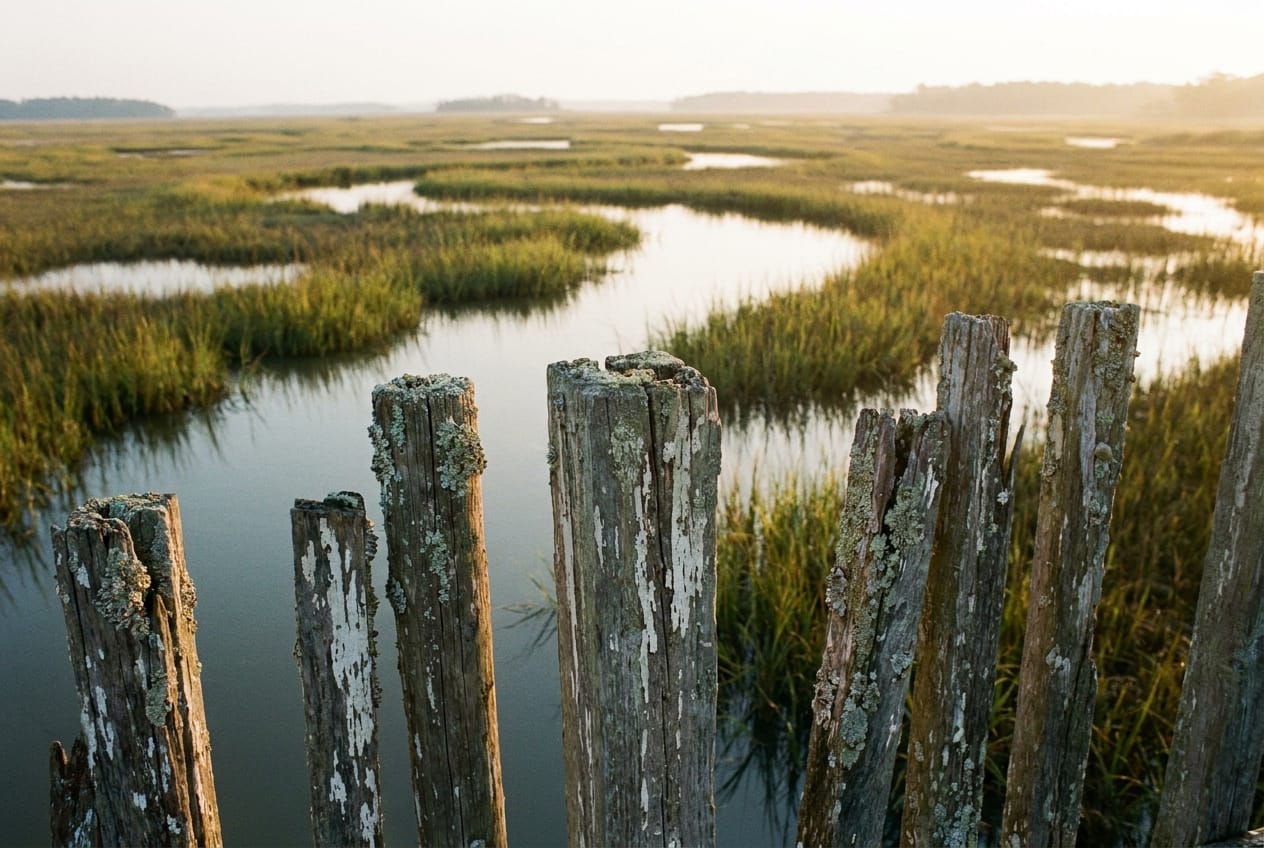
Wood remains a traditional choice, but it requires regular hands-on maintenance to resist the elements. In our regional climate, unprotected wood absorbs moisture quickly during humid summers and afternoon downpours, expanding and contracting constantly.
To prevent severe warping, twisting, splitting, and ground rot, wood structures require a protective finish. This typically involves:
- Cleaning the surface with a wood brightener or light power wash every one to two years to remove mildew and dirt.
- Applying a quality oil-based or acrylic stain and sealer every two to four years.
- Replacing individual boards or rails that buckle, split, or rot over time.
- Inspecting and tightening fasteners, as expanding wood can loosen screws and nails.
Over a fifteen-year period, the cost of stains, sealers, pressure washing equipment, and replacement boards can equal or exceed the initial price of the raw materials. Additionally, homeowners must account for the personal labor hours spent scrubbing, sanding, and staining, or the cost of hiring a contractor to perform these services periodically. In heavily shaded yards with high moisture retention, green algae and mold accumulate quickly, accelerating wood breakdown if left untreated.
Vinyl Fencing Maintenance
Vinyl (PVC) offers a non-porous surface that does not absorb water, making it immune to rot, insect damage, and wood-boring pests. It never requires painting, staining, or liquid sealers.
The ongoing maintenance for vinyl consists primarily of surface cleaning:
- Rinsing the fence with a garden hose or light pressure washer once or twice a year to remove dust, pollen, and salt residue.
- Spot cleaning green algae or dark mildew stains using a mixture of mild dish soap, water, and a soft brush, or a diluted bleach solution.
- Checking gate hinges and latches annually to ensure proper alignment as the ground settles.
While vinyl requires very little labor, it is not completely maintenance-free. High humidity can cause surface algae growth, particularly on North-facing sections or under dense tree canopies. However, this growth rests strictly on the surface and washes away without damaging the underlying material. A key consideration for vinyl is impact damage. Lawn mowers, flying storm debris, or heavy falling branches can crack a vinyl panel. Replacing a single vinyl component often requires disassembling an entire section, whereas wood boards can be swapped individually.
Composite Material Maintenance
Composite materials blend recycled wood fibers with plastic polymers. Modern capped composites feature an outer plastic shell that seals the interior wood flour against moisture, preventing the rot and warping common in traditional timber.
Maintenance expectations for composite materials include:
- Washing the surface once or twice annually with warm soap and water to clear accumulated dirt, tree sap, and pollen.
- Sweeping away leaf litter and organic debris promptly to prevent dark tannic acid stains from sitting on the surface.
- Avoiding harsh chemical strippers or abrasive scrubbing tools that could scratch or dull the protective outer cap layer.
Capped composite materials maintain their color stability well under harsh ultraviolet exposure, though dark shades absorb noticeable heat in direct summer sunlight. Like vinyl, composite does not require painting, sealing, or sanding. The solid profile of composite boards gives them higher impact resistance than hollow vinyl, reducing the likelihood of accidental storm or yard equipment damage.
Evaluating Long-Term Trade-offs
When deciding between wood, vinyl, and composite, evaluate how much time or money you want to commit to ongoing property care. Wood carries a lower entry cost but requires steady financial and physical upkeep throughout its life. Vinyl and composite demand significantly higher material investments upfront but reduce long-term maintenance to simple periodic washing.
Property conditions also influence performance. Direct sun, heavy tree shade, proximity to saltwater, and soil drainage play major roles in how quickly algae grows or how rapidly materials weather.
Permit requirements, property line setbacks, height limitations, and material approvals vary depending on your specific city, county, or homeowners association. Always check local guidelines and HOA rules before selecting materials or beginning construction.