Materials · 3 min read
Comparing Wood and Vinyl Fences for Lowcountry Homes
Published 8 September 2026
Evaluate the costs, maintenance, and durability of wood versus vinyl fencing under the intense humidity and heat of coastal South Carolina.
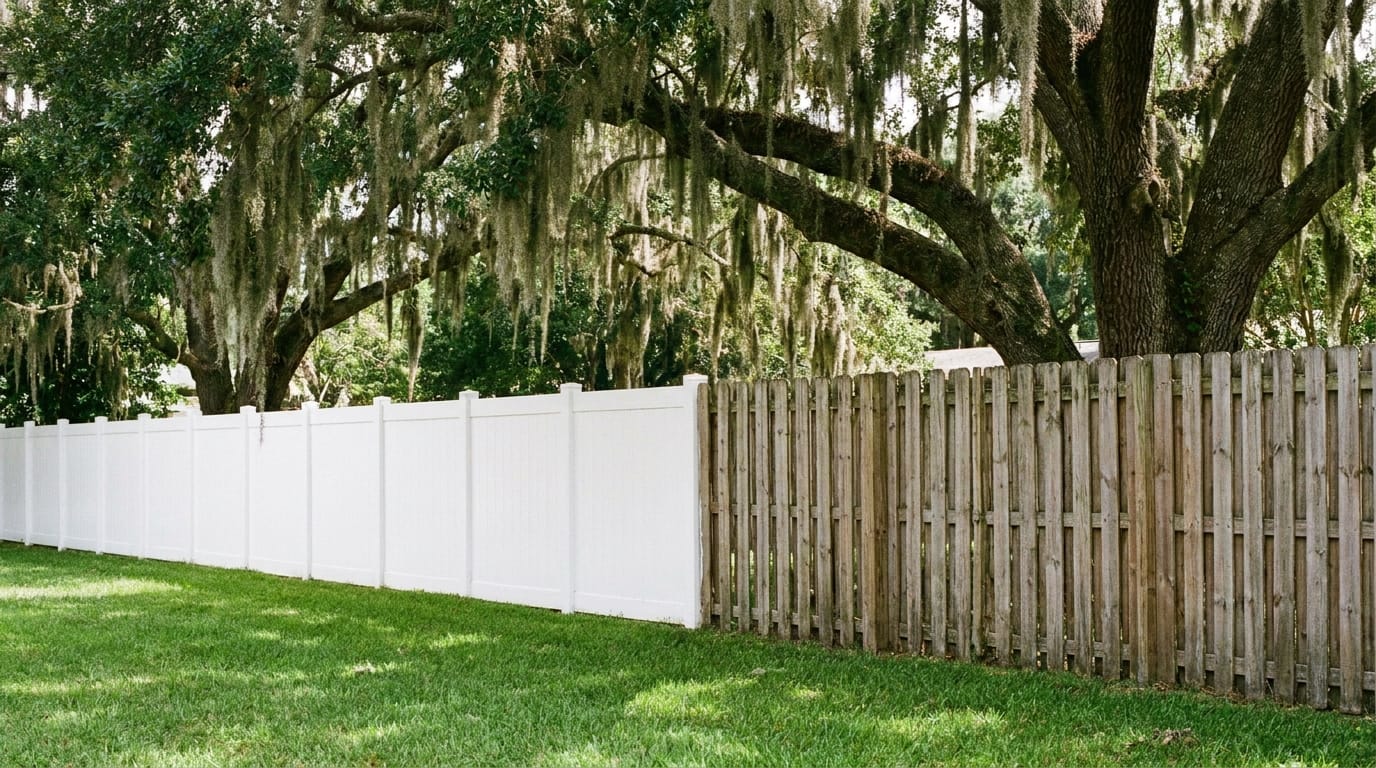
Choosing a new fence for your property in the Charleston area is a significant financial decision. The coastal South Carolina climate—characterized by intense summer heat, high humidity, salt air, and heavy seasonal rains—exerts constant stress on outdoor building materials. For most homeowners in Mount Pleasant, Summerville, and Moncks Corner, the choice comes down to pressure-treated wood or vinyl. Both materials have distinct functional and financial profiles.
Wood Fencing in the Lowcountry
Pressure-treated pine is the most common wood fencing material used in local neighborhoods. It offers a traditional, natural appearance that blends well with Southern landscaping.
- Upfront Affordability: Wood is generally less expensive to purchase and install initially than vinyl.
- Customization: Wood can be cut, shaped, and stained to fit specific property lines, slopes, and aesthetic preferences. If you want a specific custom cap or a historical Charleston-style design, wood is highly adaptable.
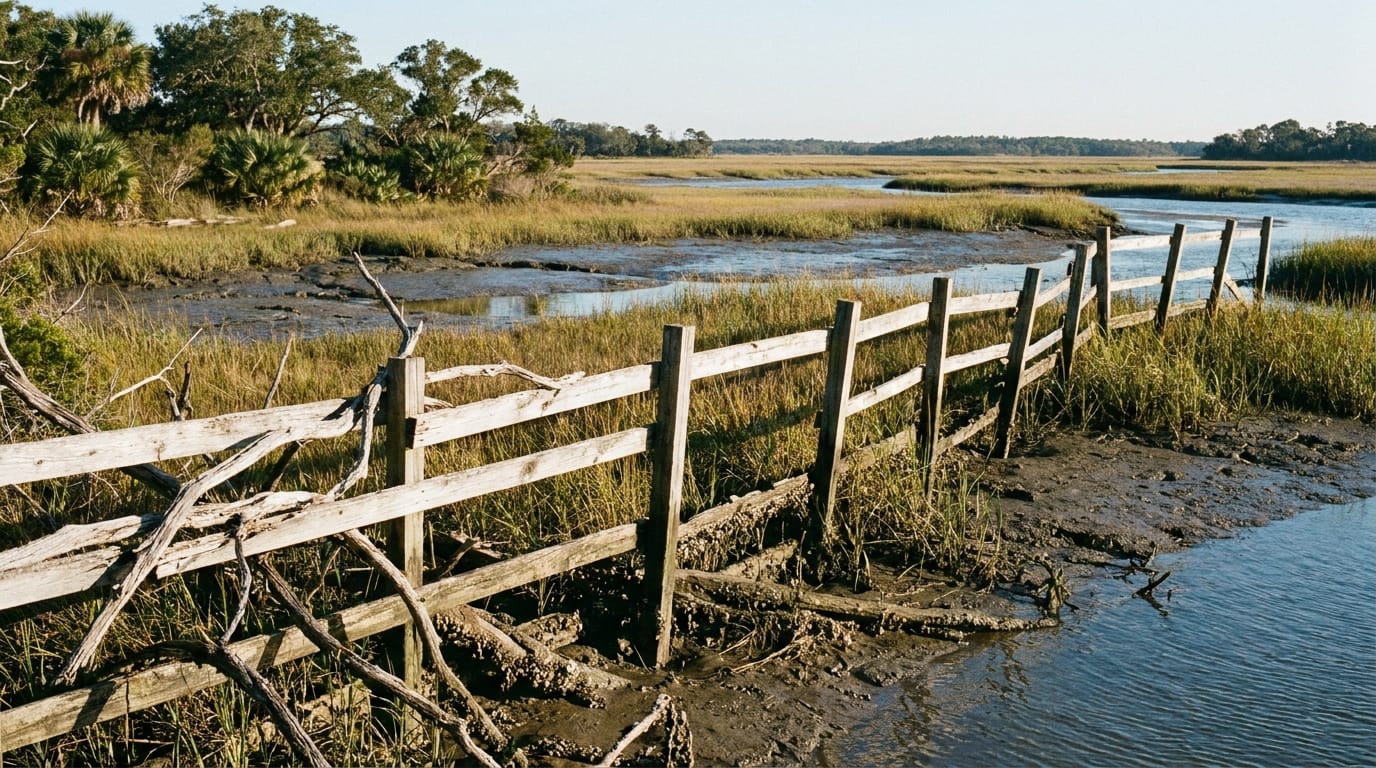
However, wood requires ongoing attention to withstand local weather conditions. Moisture and humidity cause wood to swell, shrink, warp, and split over time. Without regular treatment, pressure-treated pine is also susceptible to rot and termites, which thrive in our warm, damp soil. To maintain its structural integrity and appearance, a wood fence must be cleaned and stained or painted every two to three years. Neglecting this maintenance can shorten the lifespan of the fence to ten years or less.
Vinyl Fencing in the Lowcountry
Vinyl (PVC) fencing has grown in popularity due to its resilience against moisture-related damage. It is manufactured to withstand sun exposure and damp environments without degrading.
- Low Maintenance: Vinyl does not rot, warp, split, or suffer from termite damage. It never needs to be painted or stained.
- Easy Cleaning: While vinyl fences in shaded or highly humid areas will accumulate green algae or mildew, this buildup does not damage the material. It can be washed off easily with a garden hose, mild soap, or a gentle pressure wash.
- Longevity: A high-quality vinyl fence can last decades with minimal physical degradation.
The primary drawbacks of vinyl are its higher initial cost and its susceptibility to physical impact. While modern vinyl contains UV inhibitors to prevent fading and brittleness, extreme heat and sun can make older or lower-grade vinyl more fragile. If struck hard by a lawnmower, falling branch, or flying debris during a storm, vinyl panels can crack or shatter, and repairing them often requires replacing entire sections rather than individual pickets.
Cost Comparisons and Site Factors
The total cost of your fencing project depends heavily on your specific site conditions, such as ground slope, existing trees, soil composition, and ease of access for equipment.
- Wood Fencing Costs: Typically range from $25 to $45 per linear foot for standard residential heights and styles. While the initial investment is lower, you must factor in the recurring cost of sealant, stain, or paint over the life of the fence.
- Vinyl Fencing Costs: Typically range from $40 to $75 per linear foot. While the upfront cost is higher, the ongoing maintenance cost is virtually zero, which can make vinyl more cost-effective over a ten- to fifteen-year period.
Wind Resistance and Installation
Both wood and vinyl fences can be engineered to withstand the high winds common to coastal South Carolina, but proper installation is critical. Wood fences allow some wind to pass through the natural gaps between pickets, especially in shadowbox or semi-private styles. Vinyl fences, particularly solid privacy panels, act as solid sails in high winds. This means vinyl posts must be set deeper and anchored securely in concrete to prevent the fence from leaning or blowing over during severe weather.
Local Rules and HOA Considerations
Before choosing a material, you must verify the specific rules governing your property. Neighborhood associations (HOAs) throughout Charleston, Mount Pleasant, and Summerville often have strict covenants regarding fence materials, heights, and colors. Some HOAs ban vinyl entirely to preserve a historic or natural aesthetic, while others require specific vinyl colors or wood styles.
Additionally, municipal and county building departments have varying rules regarding permits, property line setbacks, utility easements, and wind-load requirements. Always consult your local municipality and your HOA board to obtain the necessary approvals before purchasing materials or scheduling an installation.