Process · 3 min read
Estimated Timeline for Building a New Backyard Fence
Published 9 September 2026
Understand the typical timeline for planning, permitting, and building a residential fence in the Charleston and lowcountry area.
When planning a new fence for your property in the Charleston area, the actual physical labor is only a small part of the overall schedule. Homeowners often expect the entire process to wrap up in a weekend. While the crews might only be in your yard for two to four days, the preparation phase takes significantly longer.
Understanding the steps involved helps you plan for pets, landscaping projects, and HOA submission deadlines. Here is a breakdown of what to expect from the day you sign a contract to the day the last gate latch is tested.
Phase 1: Pre-Construction and Approvals (2 to 6 Weeks)
Before a single post hole is dug, several administrative steps must happen. This is where most of the variance in project duration occurs.
- HOA Approvals (1 to 4 Weeks): If you live in a neighborhood with a homeowners association in Mount Pleasant, Summerville, or Moncks Corner, you will likely need design review board approval. Some boards meet monthly, while others review submissions weekly. Rules regarding height, material, and color vary widely by community, and installing a fence without written approval can lead to costly fines or mandatory removal.
- Permitting (1 to 3 Weeks): Municipal and county permit requirements differ. What is allowed in the City of Charleston may not be allowed in unincorporated Charleston County or Berkeley County. Some areas require a detailed site plan or plat showing exact setbacks and easements. You must check with your local building department to verify their specific requirements and current processing times.
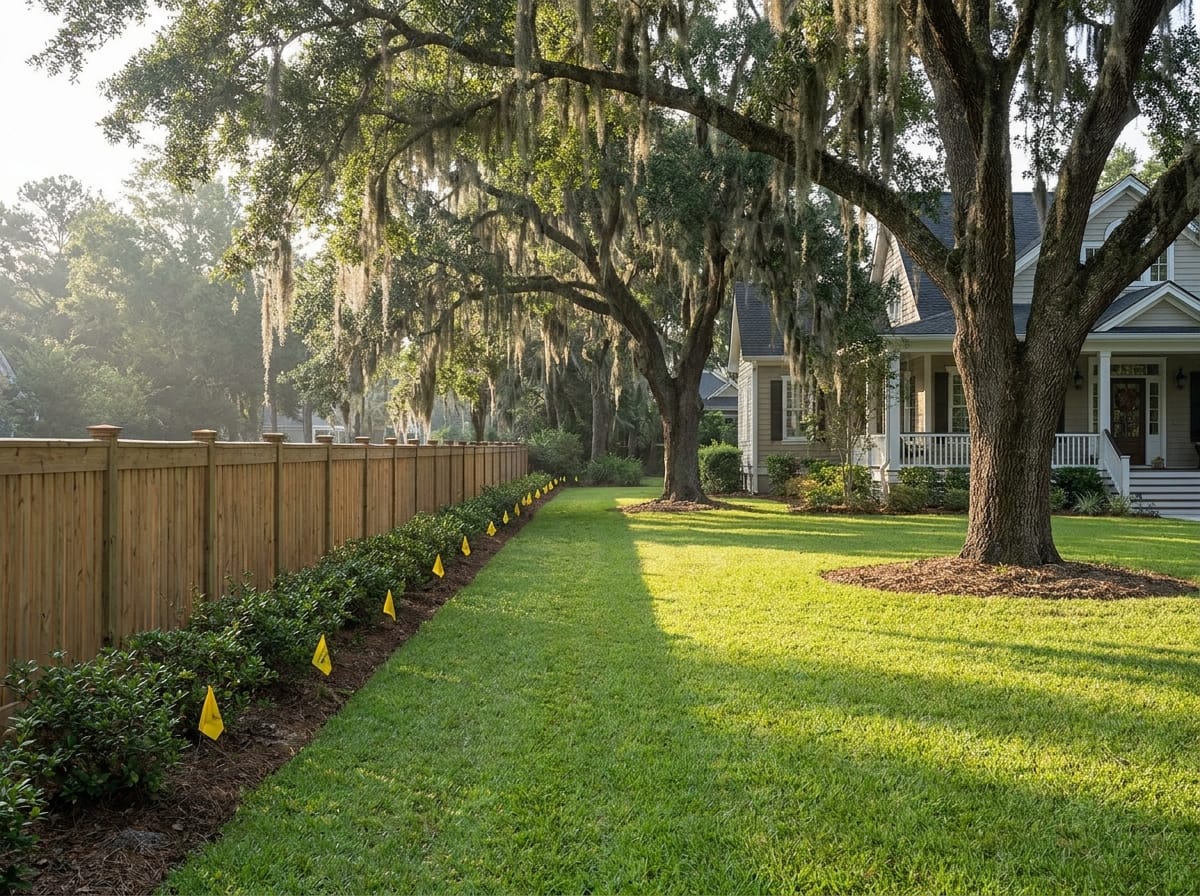
- Utility Marking (3 to 5 Days): South Carolina law requires calling 811 to mark underground utility lines before digging. This process takes a few business days. Crews cannot dig until all lines are marked to ensure safety and prevent service interruptions.
Phase 2: On-Site Construction (2 to 5 Days)
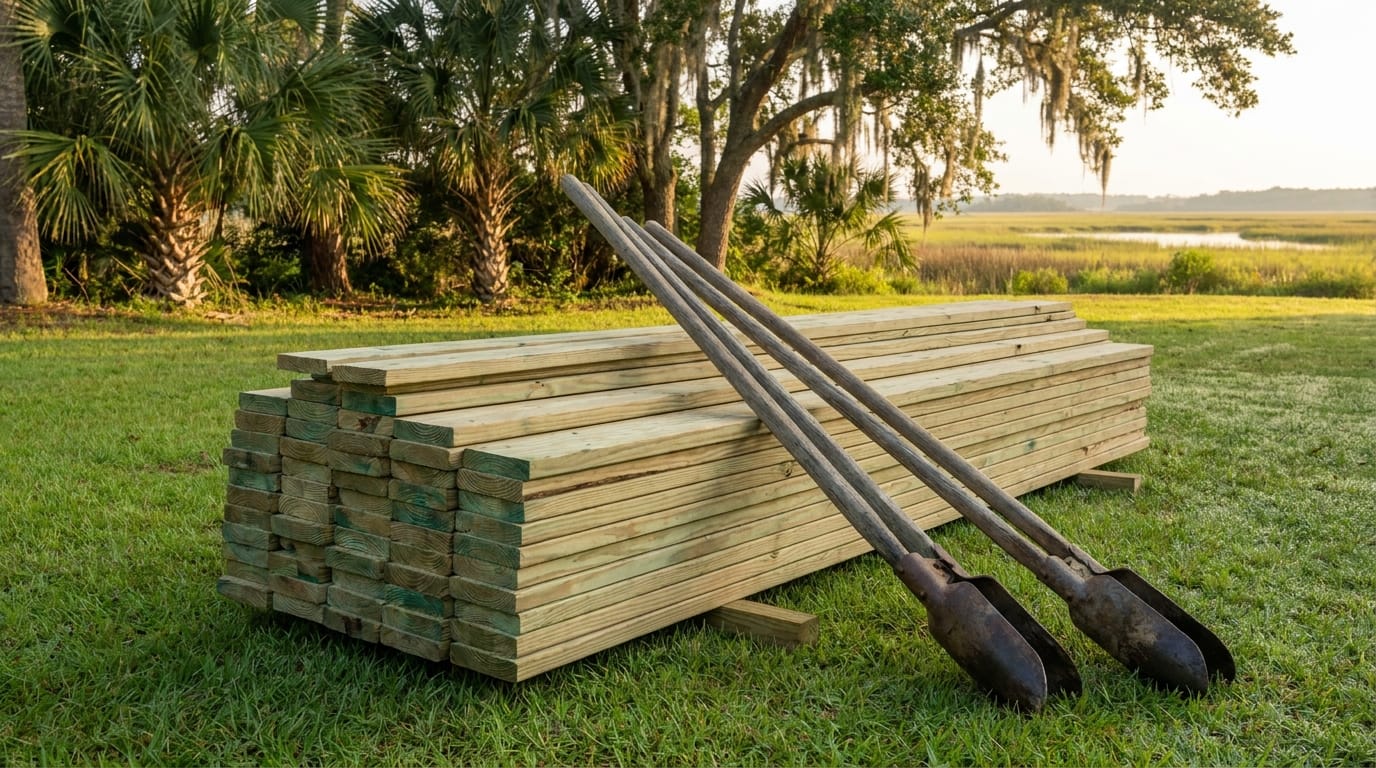
Once approvals are in hand and the materials are delivered, the physical work begins. For a standard residential yard of about 150 to 250 linear feet, the timeline generally follows this sequence:
- Day 1: Demolition and Post Setting: If there is an existing fence, the crew will tear it down and haul it away. They will then stake out the line, mark gate locations, dig the post holes, and set the posts in concrete.
- Day 2: Concrete Curing: In the humid lowcountry climate, concrete needs adequate time to cure before it is subjected to the weight and tension of the fence panels or rails. Depending on the weather and the specific concrete mix, this step might require a full day of waiting with no active construction on site.
- Days 3 and 4: Framing and Pickets: Once the posts are secure, crews install the horizontal rails and individual pickets (for wood fences) or assemble the pre-fabricated sections (for aluminum or vinyl).
- Day 5: Gates and Final Details: Hanging gates is a precise task. Crews will install the gate hardware, adjust the swing, trim any uneven picket tops, and clean up the work area.
Factors That Can Delay Your Project
While the standard timeline is predictable, local conditions in coastal South Carolina can introduce delays.
- Weather: Heavy summer rainstorms can quickly turn lowcountry sandy loam or clay into mud, making it impossible to dig clean holes or pour concrete. High water tables in low-lying areas can also require specialized post-setting techniques that add time.
- Site Preparation: If your property line is thick with live oaks, sweetgums, or dense underbrush, clearing the path for the fence will add labor hours.
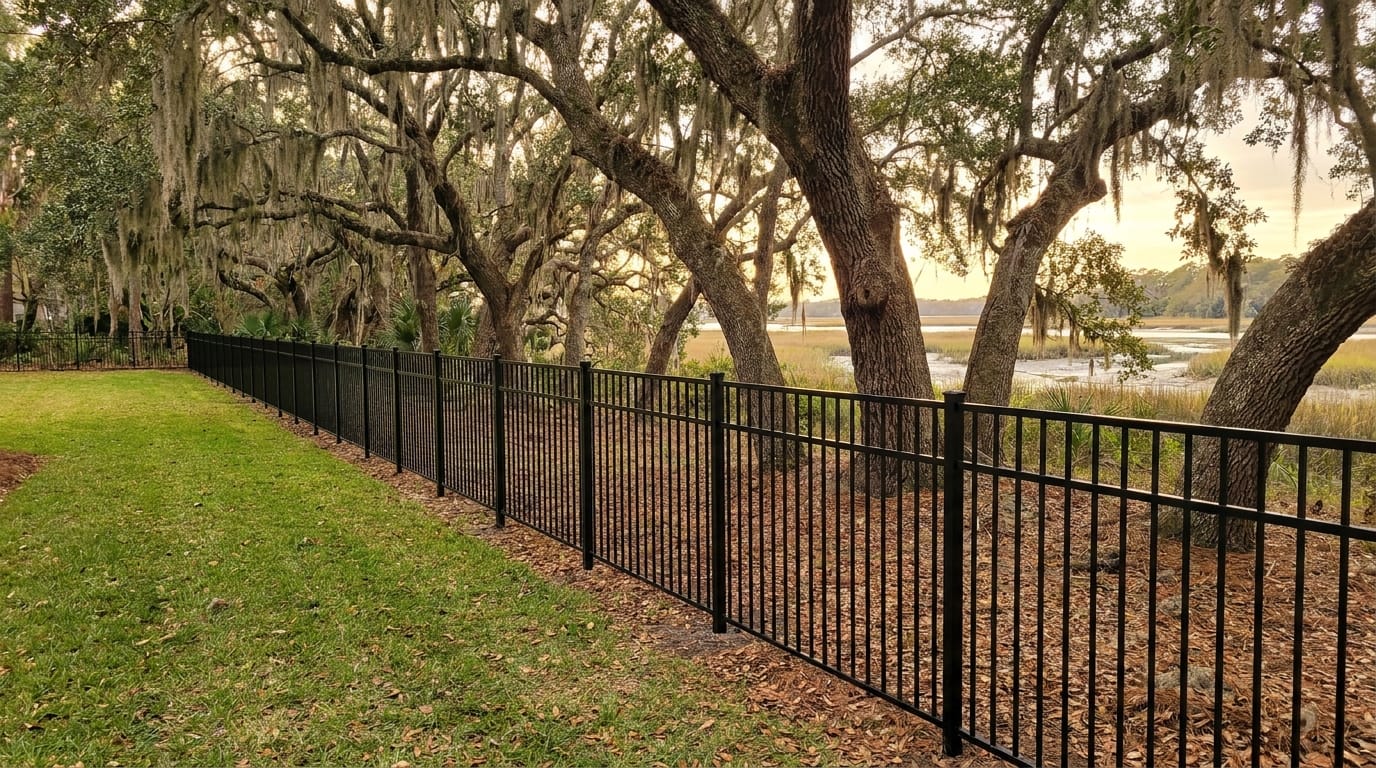
- Material Selection: Custom wood designs, horizontal custom builds, or specialty vinyl and aluminum styles may have longer manufacturing lead times compared to standard pressure-treated pine or black aluminum pickets.
Planning for Your Installation
To keep your project moving smoothly, you can prepare your property before the crew arrives. Ensure your property lines are clearly identified, ideally with a recent survey. Talk to your neighbors about the upcoming project, especially if you share a boundary line. Finally, make arrangements for pets to use alternative spaces while the yard is unsecured.