Materials · 4 min read
Fence Materials That Resist Coastal Salt and Humidity
Published 7 September 2026
Choosing the right fencing material for the Charleston area requires understanding how salt air and high humidity affect wood, metal, and vinyl.
Living near the South Carolina coast brings unique environmental challenges. For homeowners in Charleston, Mount Pleasant, Summerville, and Moncks Corner, the combination of high humidity, salt fog, intense summer sun, and active insect populations means that outdoor building materials face constant stress. A fence is a significant financial investment, often costing several thousand dollars. Choosing a material that cannot withstand the coastal environment can lead to premature failure, warping, or rotting within just a few years.
Evaluating fence materials for a humid, coastal climate requires balancing upfront costs against long-term maintenance requirements and structural lifespans.
Pressure-Treated Wood and Cedar
Wood remains a common choice due to its natural appearance and lower initial cost. However, wood reacts constantly to moisture levels in the air.
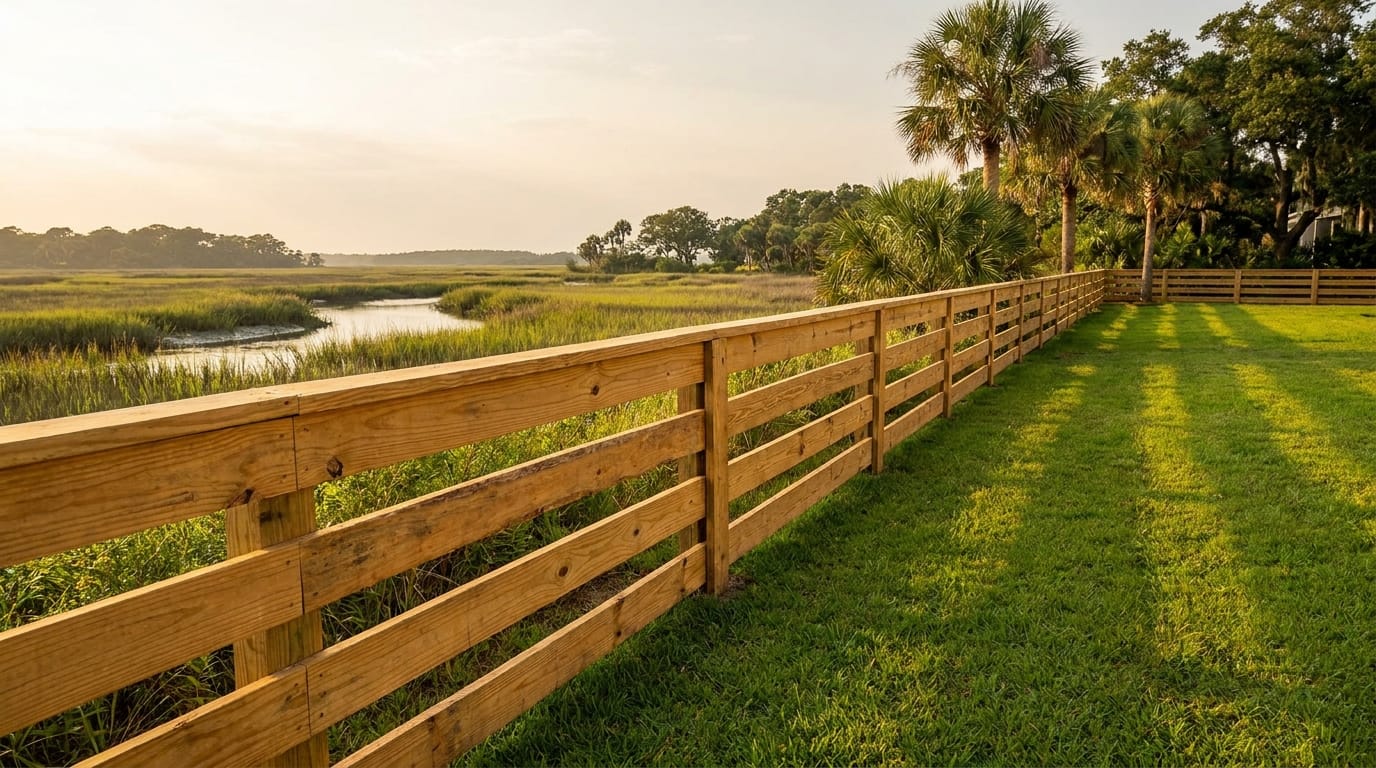
- Pressure-Treated Pine: This is the most common utility wood. It is chemically treated to resist rot and termites, which are highly active in wet coastal soils. However, the extreme humidity and heat of the Lowcountry cause pine to swell and shrink rapidly. This cycle leads to warping, cupping, twisting, and cracking. Pressure-treated pine fences typically cost between $25 and $45 per linear foot, depending on site conditions, clearing needs, and the specific design.
- Western Red Cedar: Cedar contains natural oils that resist rot and insects. It tends to stay flatter and warp less than pine in humid conditions. Over time, salt air will turn cedar a silvery-gray color unless it is regularly stained or sealed. Western Red Cedar generally runs between $40 and $70 per linear foot, depending on grade and site accessibility.
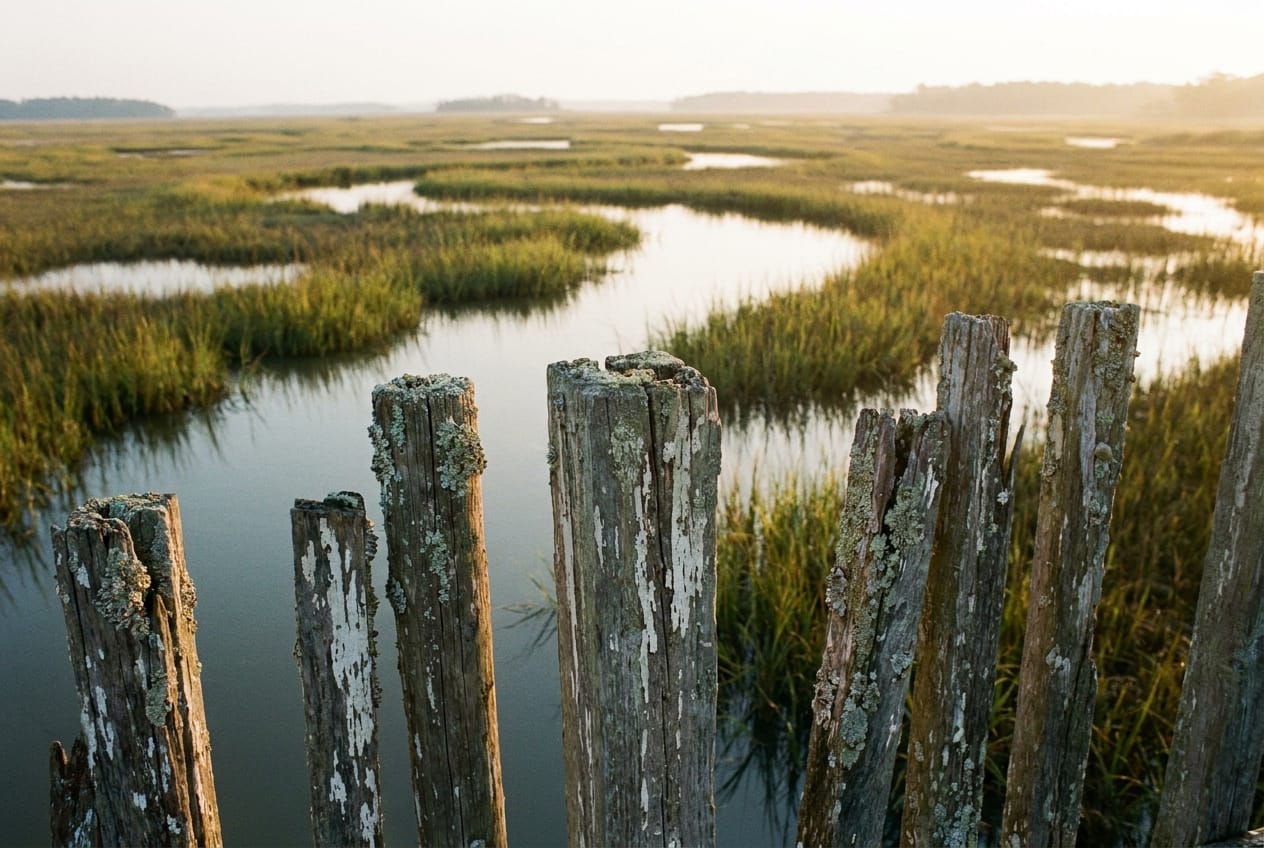
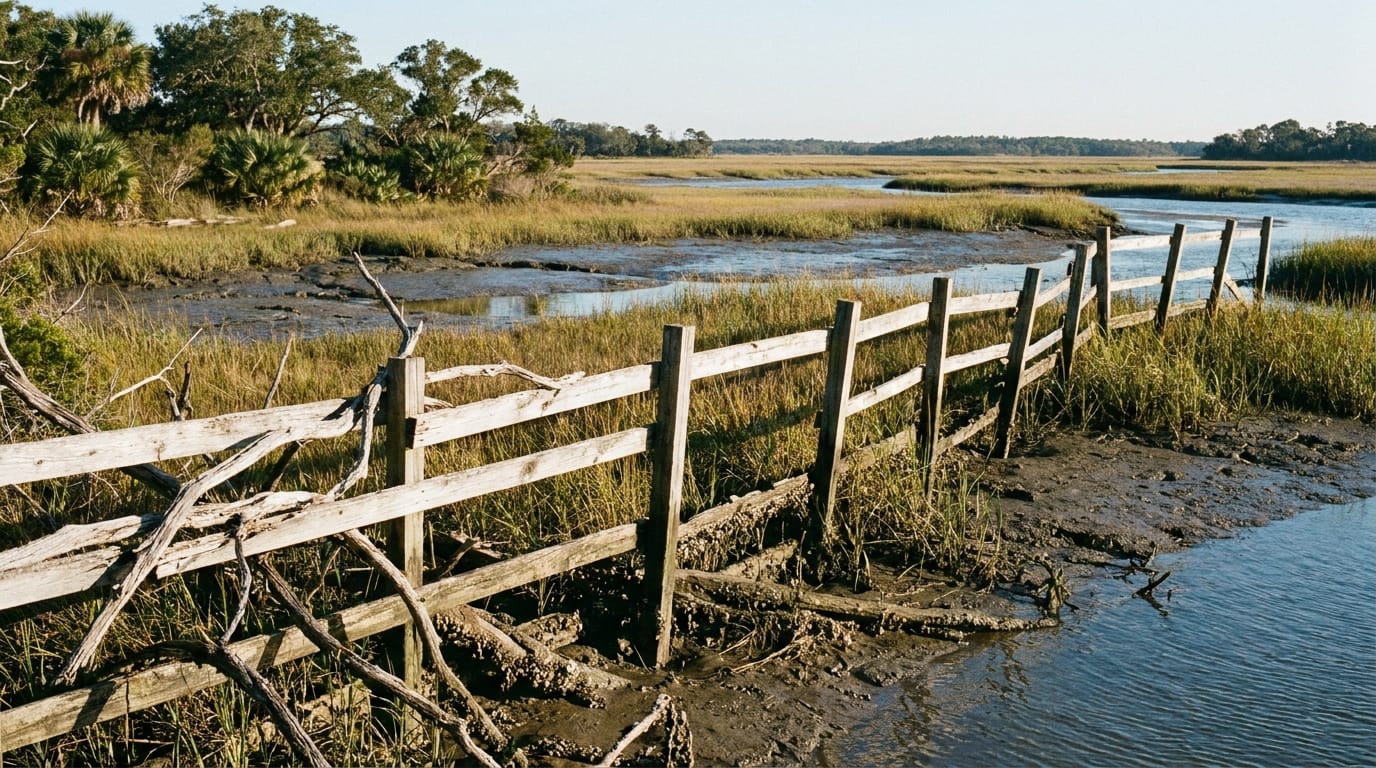
Any wood fence in a coastal environment will require ongoing maintenance, including washing and sealing every two to three years, to prevent mold, mildew, and structural decay.
Powder-Coated Aluminum
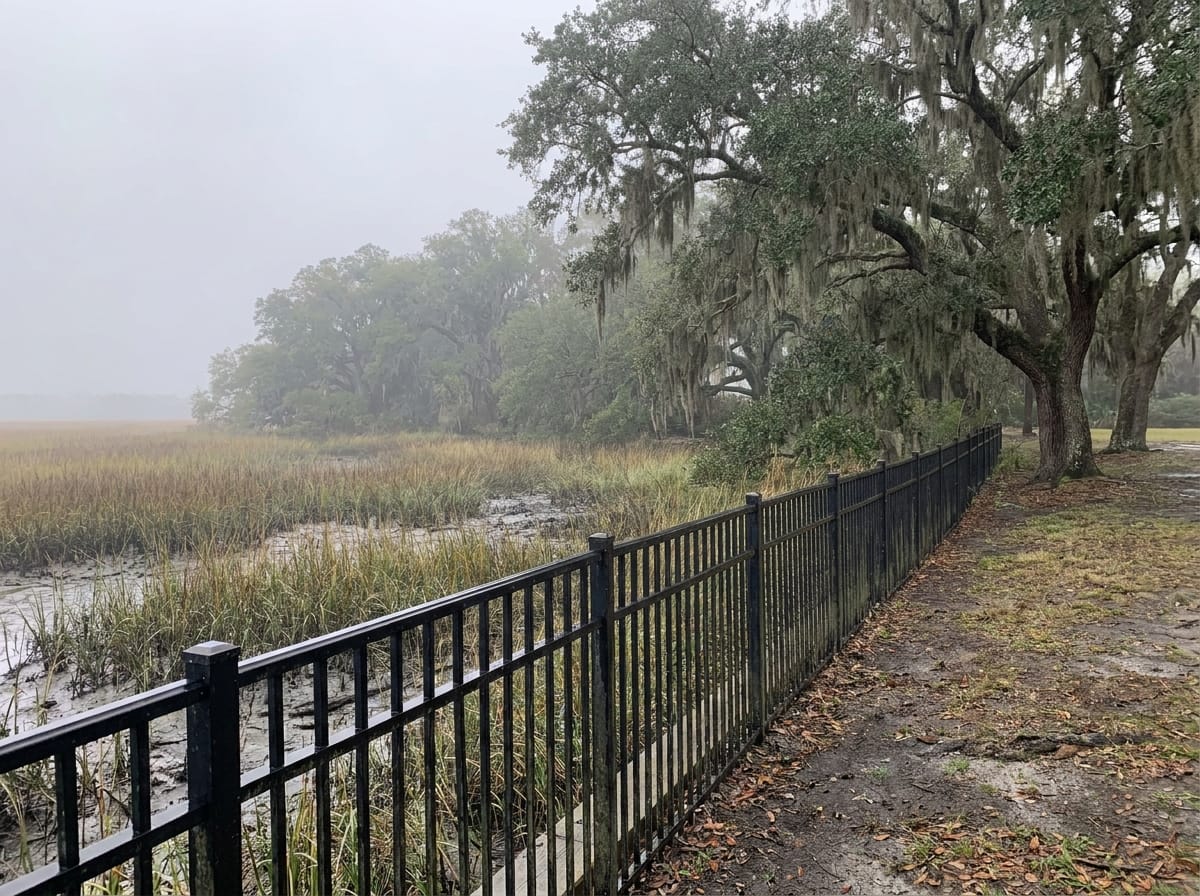
For homeowners seeking low maintenance and durability near salt water, aluminum is often a highly practical option. Unlike wrought iron or steel, aluminum does not rust when exposed to moisture and salt spray.
To perform well long-term, aluminum fencing must have a high-quality powder coating. This baked-on finish prevents the aluminum underneath from oxidizing and chalking when exposed to salty air.
Aluminum fencing generally costs between $35 and $60 per linear foot. The exact price depends on the height of the panels, the slope of the yard, and the number of gates required. While aluminum is exceptionally durable and requires almost no maintenance beyond occasional rinsing, it does not provide visual privacy. It is best suited for perimeter containment and preserving views of marshes, ponds, or landscaping.
Vinyl (PVC) Fencing
Vinyl is entirely unaffected by humidity, salt, and wood-boring insects. It will not rot, rust, split, or warp. This makes it a popular option for homeowners who want a solid privacy fence without the heavy maintenance schedule of wood.
However, the high humidity in South Carolina creates an ideal environment for algae, mold, and mildew growth. Dark green mold is highly visible on white vinyl fences, particularly in shaded areas. Homeowners should expect to pressure wash or scrub a vinyl fence at least once a year to maintain its appearance.
Additionally, wind resistance is a critical factor during coastal storm seasons. Vinyl fences act like sails in high winds, so proper post installation and heavy-duty internal post reinforcements are necessary. Vinyl fencing typically costs between $40 and $75 per linear foot, depending on the height, style, and the specific wind-reinforcement methods used.
Composite Fencing
Composite fencing is manufactured from a blend of recycled wood fibers and plastic polymers. High-quality composites are capped with a protective plastic layer that makes them highly resistant to moisture, fading, and staining.
Composite boards do not warp like traditional wood and do not require staining. However, they are a premium material. Composite fencing ranges from $60 to $100 or more per linear foot, depending on the manufacturer, color, and local site prep requirements.
Local Regulations and Wind Loads
Before selecting any material, it is important to consider local building rules. Wind load requirements, allowable fence heights, setbacks, and material restrictions vary significantly depending on whether a property is located in Charleston County, Berkeley County, or within specific municipal limits like Mount Pleasant.
Furthermore, individual Homeowners Associations (HOAs) often have strict guidelines regarding acceptable colors, heights, and materials. Always verify local municipal codes and HOA covenants before purchasing materials or scheduling an installation.