Design · 4 min read
Picket, privacy, or something between
Published 5 September 2026
A fence can enclose a garden without walling it in. What picket, privacy and mixed styles each actually give you, and where each one belongs on a lot.
The reflex when someone decides to fence a garden is a six-foot privacy fence all the way round. Sometimes that is right. Often it is more fence than the job needs, and it costs more and looks heavier than the alternative.
What a picket fence is for
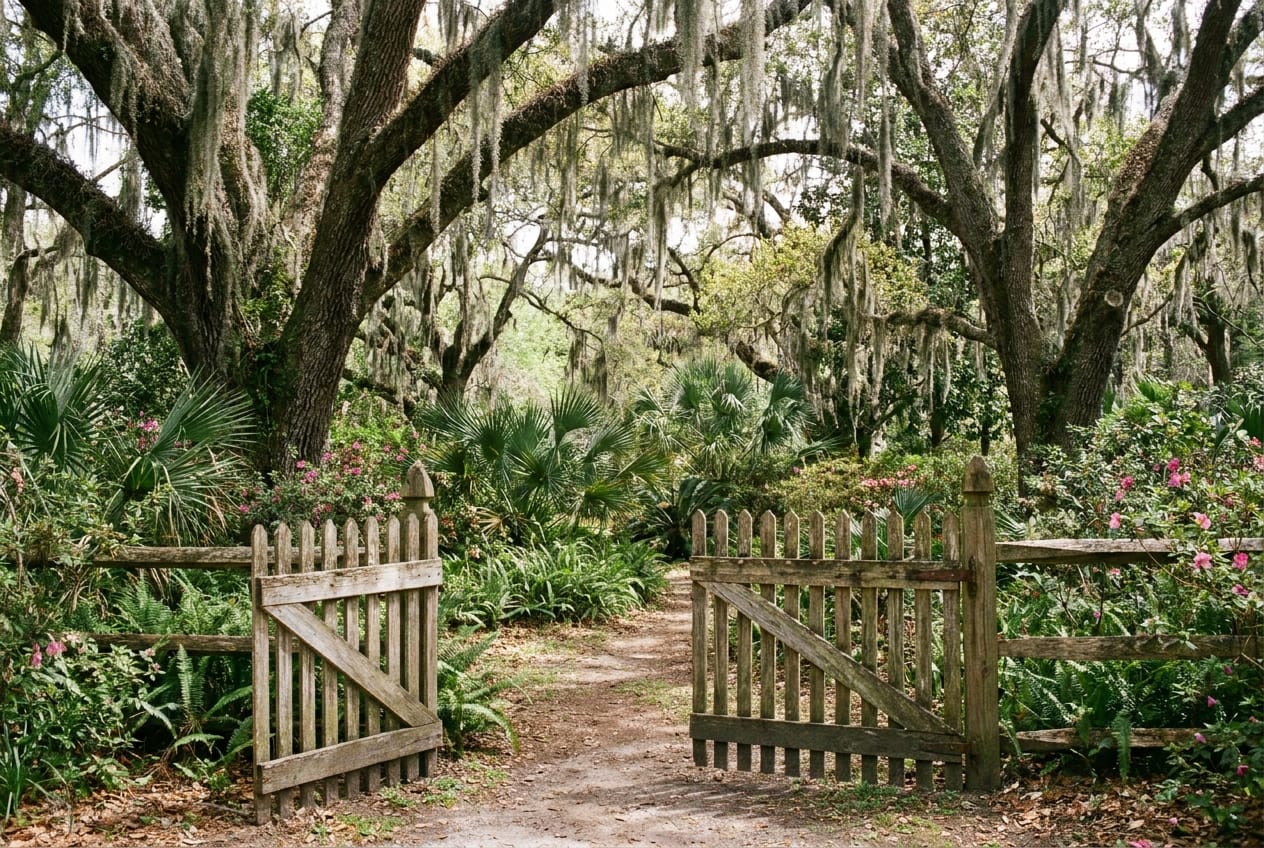
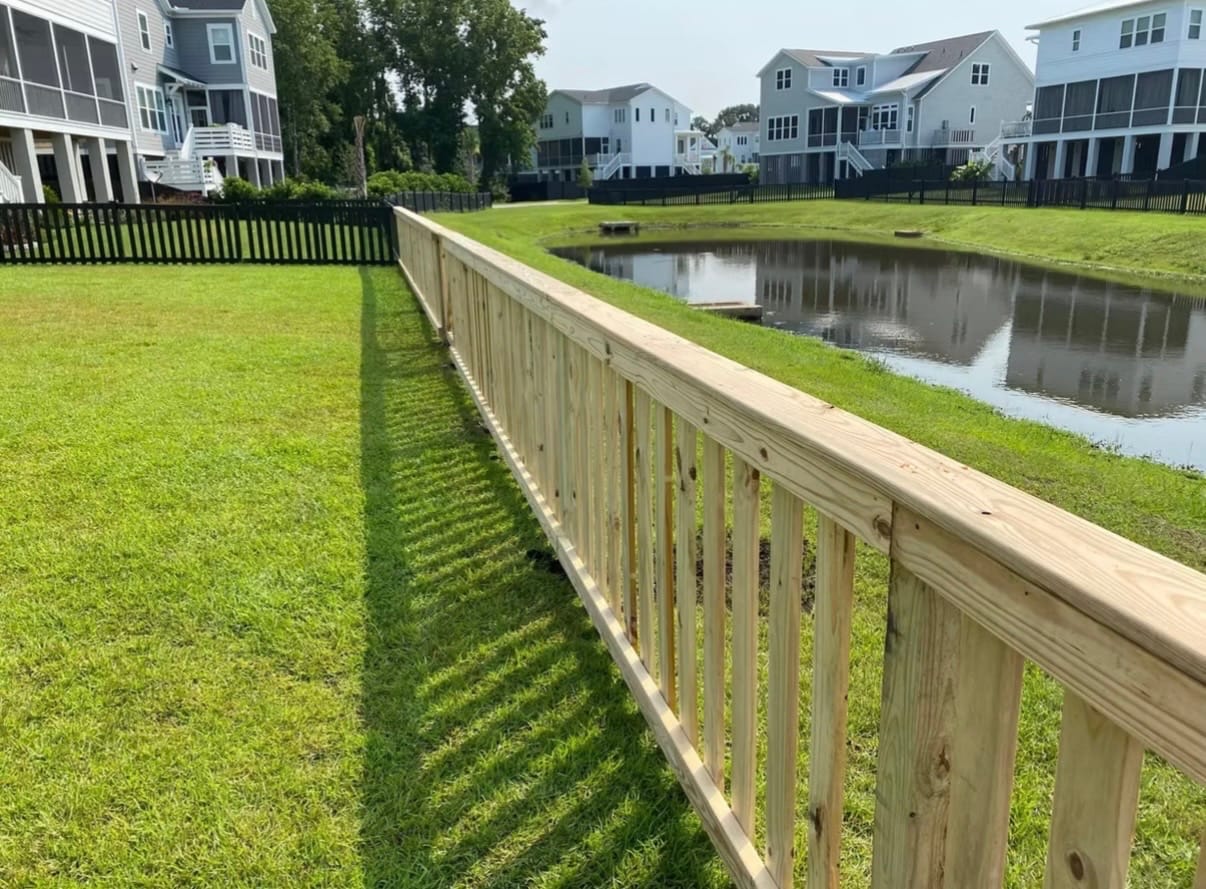
A picket fence marks a boundary, keeps a dog or a small child in, and does not block anything. You can see through it, light gets through it, and wind goes through it.
That last point matters on an exposed lot. A fence that wind passes through takes far less load in a storm than a solid one of the same height.
Where it works: front gardens, pond and marsh edges where the view is the point, anywhere you want the boundary read as a boundary rather than as a wall.
Where it does not: overlooked back gardens, pool enclosures with a privacy requirement, anywhere screening is the actual goal.
What a privacy fence is for
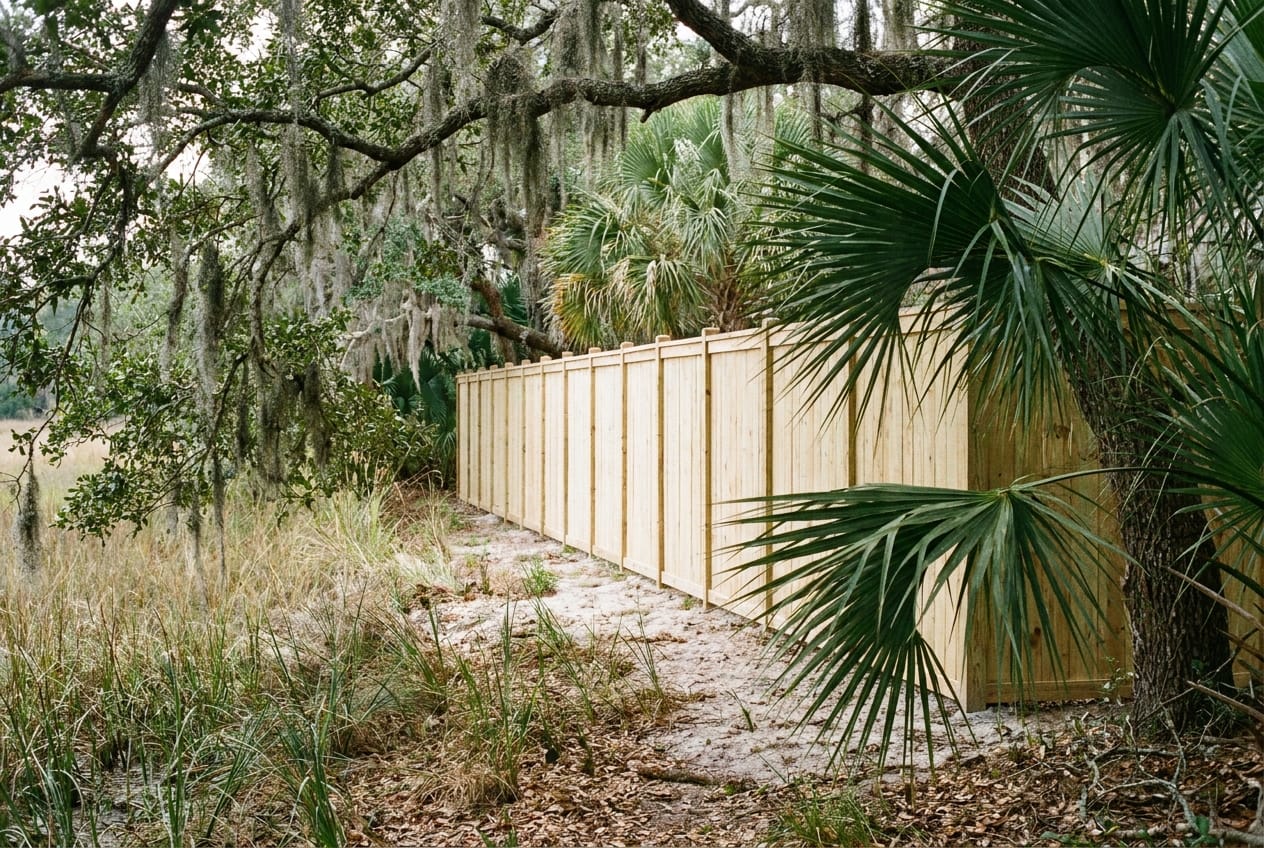
Screening. That is the whole argument, and it is a good one — a six-foot solid fence turns an overlooked patio into somewhere you will actually sit.
The costs are real though. It is more material per foot. It takes full wind load, so posts and footings have to be right. It casts shade, which matters if there is planting along it. And on a small lot it can make the garden feel smaller than it is.
The mixed approach
You do not have to pick one for the whole property, and on most lots you should not.
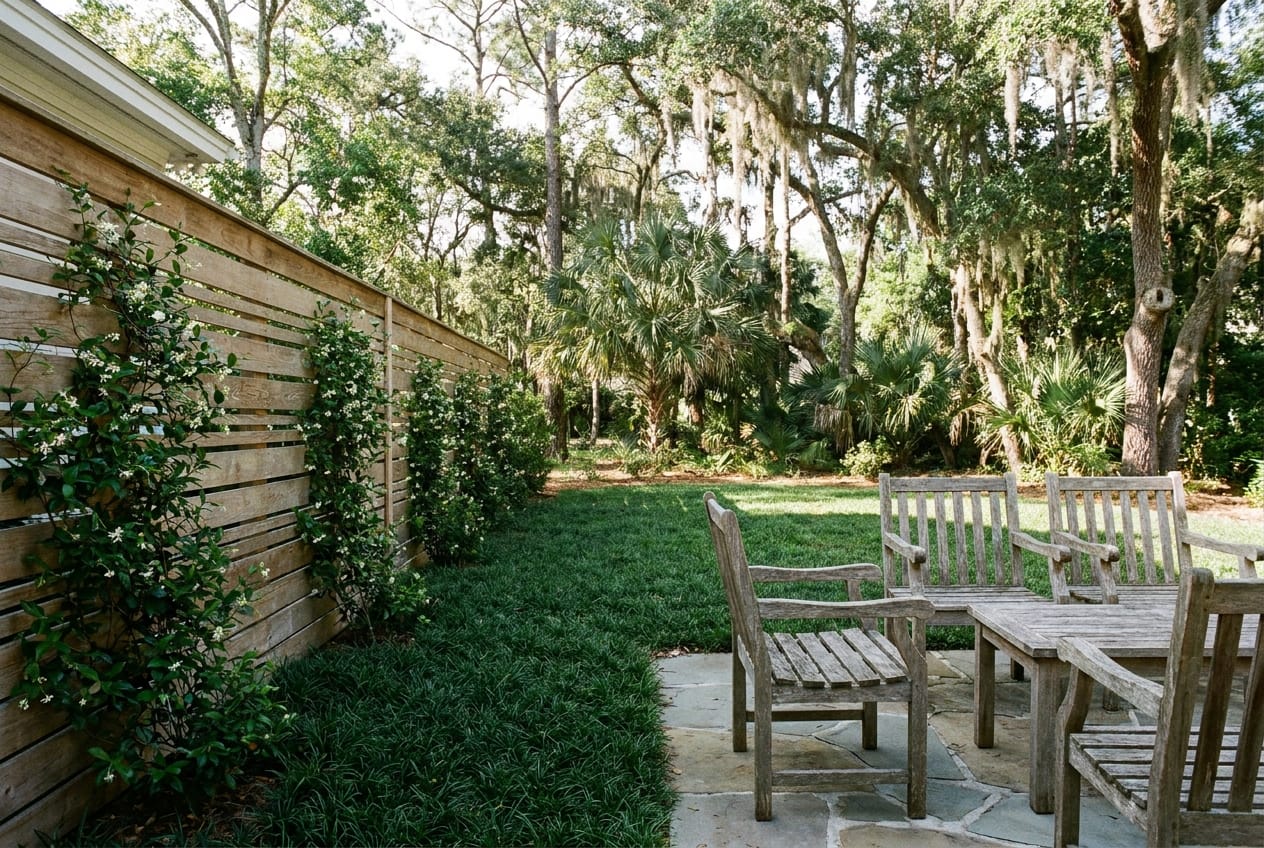
Privacy where you are overlooked — usually one or two sides, often just the stretch behind the patio. Picket or something lower where the boundary only needs marking, or where there is a view worth keeping.
This is generally cheaper than fencing everything at six feet, and it reads better: a garden with one solid screen and open sides feels larger than one enclosed on all four.
Heights
Towns in this area typically allow taller fences in back gardens than in front, and the front limit is often quite low. Those limits differ by municipality and can change, so confirm with your town rather than with your neighbour's fence.
Within whatever is permitted: six feet screens a seated patio from a neighbouring garden. Four feet contains a dog and marks a line without screening anything. Eight is unusual on a domestic lot and starts to bring wind load and post depth into the conversation seriously.
Where the gates go
Gates are the part you use every day, so it is worth putting them where you will actually walk rather than where the fence line makes them convenient.
Two things people wish they had done: a gate wide enough to get a mower or a wheelbarrow through, and a second gate on the other side of the house so you are not carrying everything round.
Deciding on the lot
This is a conversation that goes much better standing in the garden than looking at a plan. What is overlooked, where the sun is, what you want to see and what you would rather not — none of that is obvious from above.
We draw the line on satellite imagery so the quote has real footage in it, and then we walk it.