Materials · 4 min read
Selecting Storm-Resistant Fencing for Coastal South Carolina
Published 10 September 2026
Compare the wind resistance, durability, and costs of different fencing materials for properties in the storm-prone South Carolina Lowcountry.
Coastal South Carolina properties face regular threats from tropical storms and hurricanes. For homeowners in Charleston, Mount Pleasant, Summerville, and Moncks Corner, a fence is a significant financial investment. Choosing a fence that can withstand high winds requires understanding how different materials and designs perform under pressure. No fence is completely hurricane-proof, but certain choices significantly improve the likelihood of your fence surviving a major storm.
Wind Load and Fence Design
The primary force that destroys fences during a storm is wind load. When high winds hit a solid surface, they create immense pressure. If the fence cannot relieve this pressure, the force transfers to the posts, causing them to snap or pull out of the wet soil.
For this reason, the style of the fence is often more important than the material itself.
- Solid privacy fences act like sails, catching the full force of the wind.
- Spaced picket fences allow wind to pass through, drastically reducing the load on the structure.
- Shadowbox fences offer a compromise, providing semi-privacy while allowing some airflow through overlapping pickets.
Aluminum Fencing for Maximum Airflow
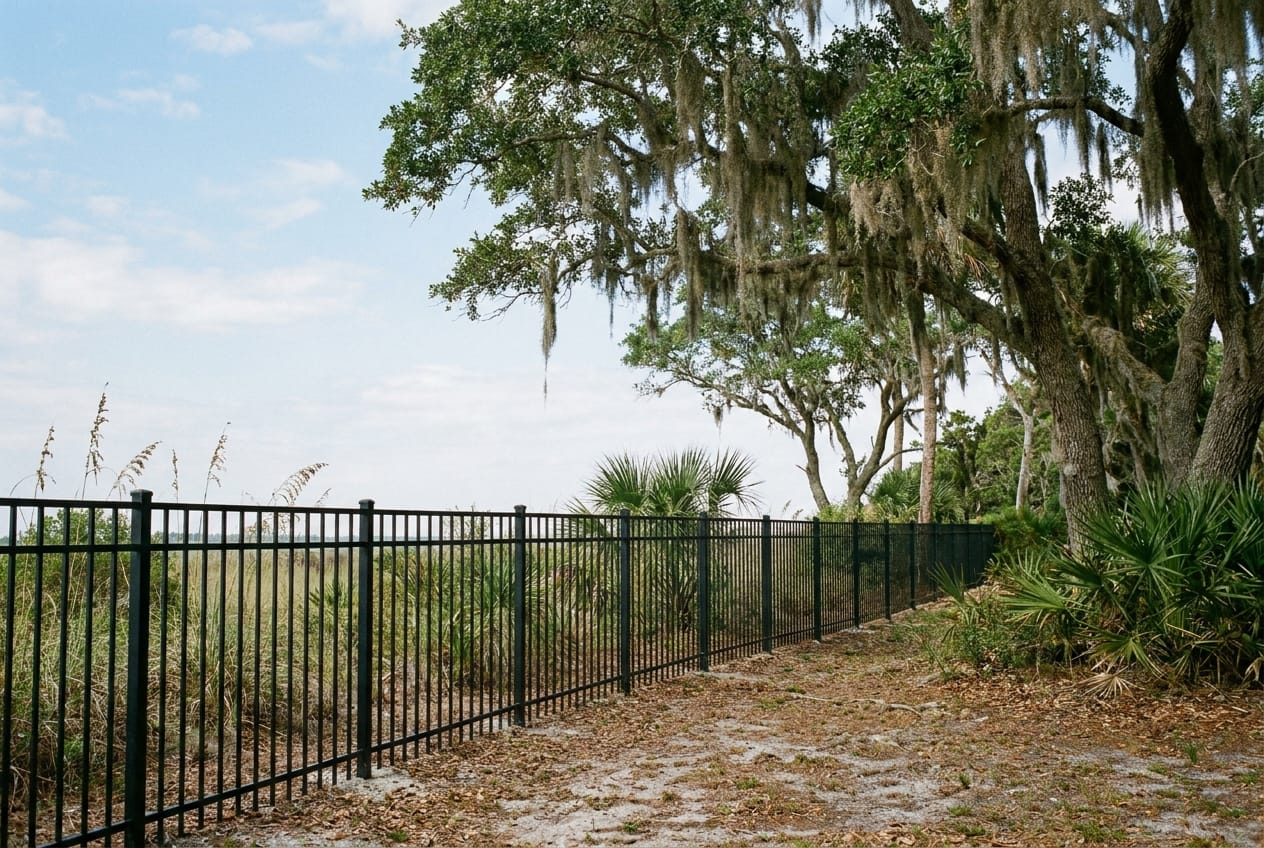
Aluminum is one of the most reliable materials for storm-prone areas. Because aluminum fences are almost exclusively designed with open pickets, they offer minimal wind resistance. The air passes directly through the fence, leaving the structure intact even in high winds.
In addition to wind resistance, aluminum does not rust, which is a critical benefit in the humid, salt-air environment of the Lowcountry. While it does not provide visual privacy, it secures the yard without blocking views or ocean breezes.
The cost for professional aluminum fence installation generally ranges from $35 to $65 per linear foot. These prices vary based on the height of the fence, the grade of the aluminum, and specific site conditions like slopes or dense vegetation.
Wood Fencing and Storm Survival
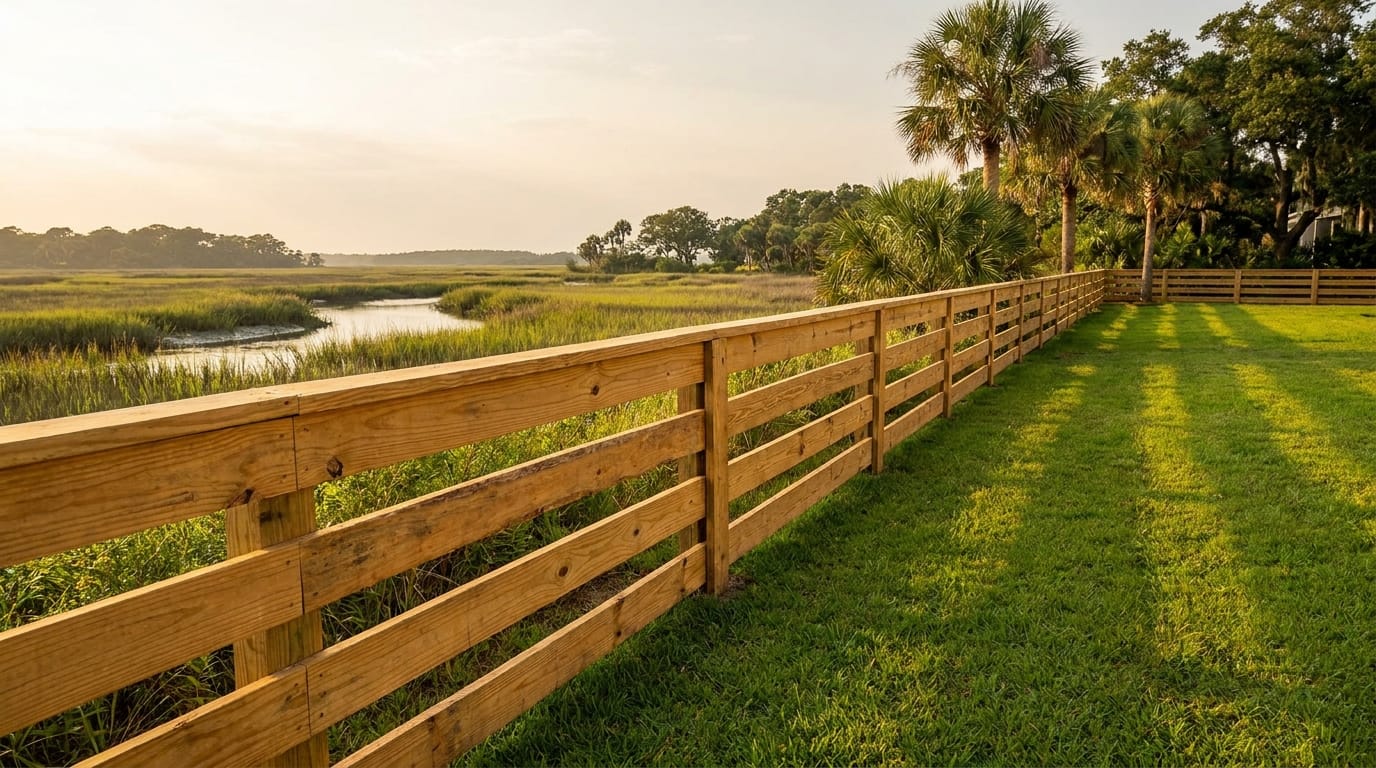
Wood remains a popular option due to its classic look and lower upfront cost. However, a standard wood privacy fence is highly vulnerable to high winds. To improve a wood fence's chances of surviving a storm, homeowners should consider alternative designs.
A shadowbox design or a spaced picket design will fare much better than a solid board-on-board fence. Additionally, the choice of posts is critical. Using pressure-treated wood posts set deep in concrete is standard, but some homeowners opt for heavy-duty steel posts hidden behind the wood pickets. These steel posts are engineered to withstand much higher wind loads than standard wood posts.
Wood fencing installations typically range from $25 to $45 per linear foot. Factors such as lumber market fluctuations, gate configurations, style choices, and clearing requirements on your property will affect the final cost.
Vinyl Fencing Under Storm Pressure
Vinyl fencing is valued for its low maintenance, but its performance in a hurricane depends heavily on how it is engineered and installed. Standard, budget-grade vinyl privacy fences can easily shatter or lose panels during high winds.
High-quality vinyl fences designed for wind resistance feature heavy-duty vinyl profiles and aluminum inserts inside the posts to provide structural rigidity. Some systems are designed so the panels can pop out under extreme pressure without breaking, saving the posts and frame from destruction.
Vinyl fencing generally costs between $40 to $70 per linear foot. The complexity of the layout, soil conditions, and the inclusion of wind-reinforcement kits or heavy-duty posts will influence the total price.
The Importance of Professional Installation
Even the strongest material will fail if the installation is poor. In the sandy or marshy soils common across the Lowcountry, securing fence posts is a challenge. During a hurricane, heavy rains saturate the soil, making it loose. When high winds pull on the fence, the saturated soil cannot hold poorly installed posts in place.
Professional installation addresses these soil challenges through several key methods:
- Post Depth: Posts must be buried deep enough to reach stable soil layers, resisting leaning when the ground becomes saturated.
- Concrete Footings: Using the correct volume of concrete around each post is essential to anchor the fence against lateral wind forces.
- Post Spacing: Reducing the distance between posts (for example, from eight feet to six feet) increases the overall strength of the fence by distributing the wind load across more support points.
Permitting and HOA Regulations
Before choosing a wind-resistant fence, you must check your local guidelines. Wind-load requirements, structural engineering mandates, setbacks, and allowable heights vary significantly depending on whether you live in Mount Pleasant, Summerville, Moncks Corner, or unincorporated Charleston County. Additionally, local Homeowners Associations (HOAs) often have strict rules regarding permitted materials, colors, and styles. Always consult your municipality and HOA before purchasing materials or scheduling installation.