Maintenance · 4 min read
Annual Wood Fence Maintenance in Coastal South Carolina
Published 27 September 2026
Keep your wood fence standing against Lowcountry heat, humidity, and storms with this realistic year-round inspection and cleaning schedule.
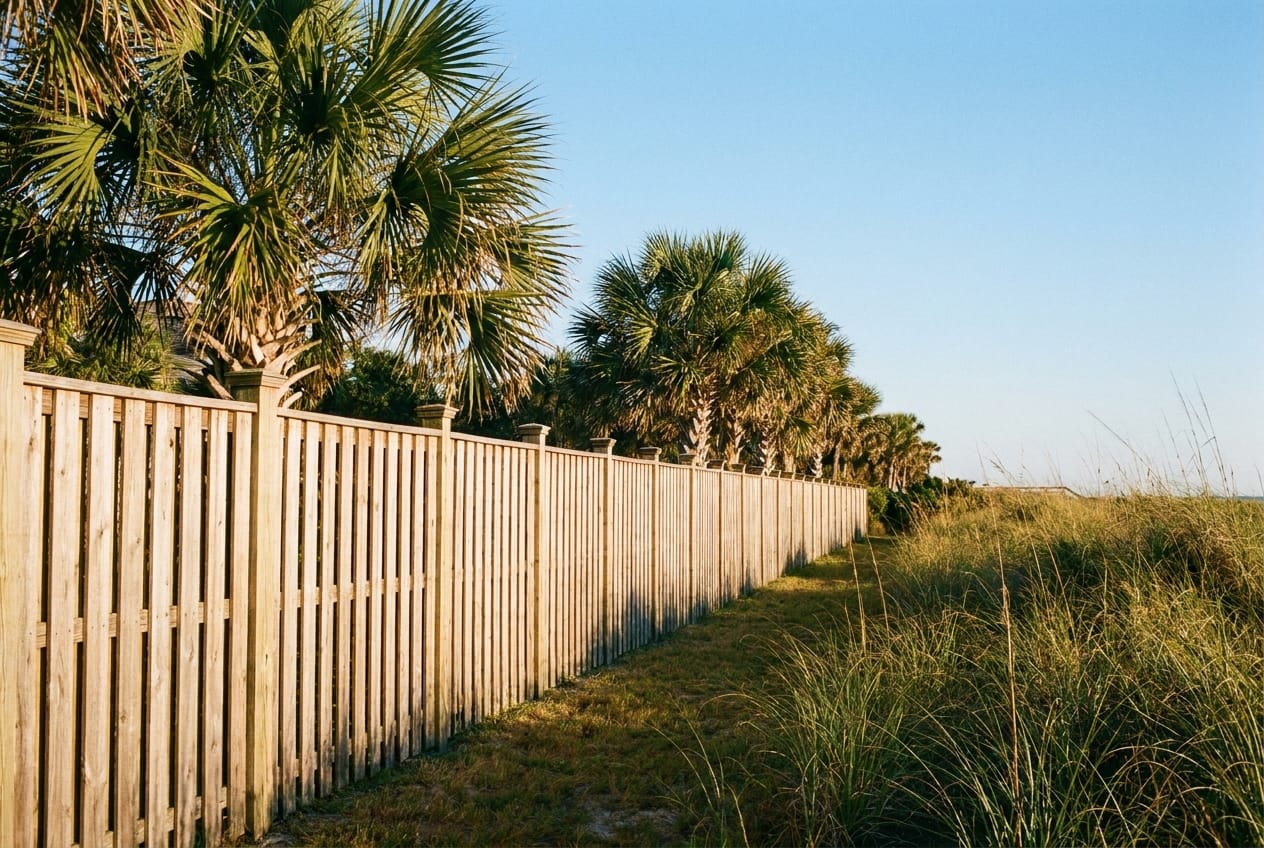
Wooden fences in coastal South Carolina face a harsh environment. High humidity, intense summer sun, salt air, and regular afternoon thunderstorms accelerate wood weathering. Without routine care, a pressure-treated pine or cedar fence can warp, rot, or turn gray prematurely. Establishing a realistic yearly maintenance schedule helps protect your investment and extends the lifespan of your property boundary.
Spring: Clean and Inspect
The humid winters in Charleston and Mount Pleasant often leave a layer of green algae or black mildew on wood surfaces by March. Spring is the time to clear away this organic growth before the summer heat bakes it into the wood fibers.
- Inspect the Structure: Walk the entire fence line. Look for loose pickets, popped nails, and posts that may have shifted during winter rains. Press against posts to ensure they remain structurally sound below ground level.
- Address Fasteners: Replace rusted steel fasteners with stainless steel or hot-dipped galvanized screws. Non-galvanized metal reacts with the natural tannins in wood, causing ugly black streaks.
- Perform a Gentle Clean: Use a specialized deck and fence cleaner or a mild outdoor oxygen bleach solution to kill fungal spores. If using a pressure washer, keep the pressure low (under 1,500 PSI) and use a wide-angle nozzle. High pressure can easily gouge soft wood, leaving permanent damage.
Summer: Monitor Moisture and UV Exposure
Intense July and August sun dries out wood rapidly, causing it to warp, crack, or cup. This is also when heavy summer thunderstorms put the most moisture stress on your fence.
- The Water Splash Test: Splash water onto the dry wood surface. If the water beads up and pools, your sealer or stain is still doing its job. If the water sinks immediately into the wood, the fence has lost its protective barrier and is ready for a fresh seal.
- Check Gate Alignment: Wood expands and contracts with humidity changes, which can cause heavy gates to sag or latches to bind. Adjust the hinges and gate hardware during the peak summer months to keep the gate operating smoothly without dragging against the ground.
Autumn: Stain and Seal
Once the extreme summer humidity breaks in Summerville and Moncks Corner, dry autumn days provide the ideal conditions for staining or sealing your wood fence.
- Allow for Proper Dry Time: Wood must be completely dry before applying any oil-based or water-based stains. Staining damp wood traps moisture inside, which quickly leads to internal rot and peeling finishes.
- Choose the Right Finish: Semi-transparent stains offer a balance of UV protection while still showing the natural wood grain. Solid stains offer more sun protection but can peel over time. Plan to apply a fresh coat of sealant or stain every two to three years depending on the level of direct sun exposure.
Winter: Ground Clearance and Vegetation Control
Our mild winters are the perfect time to handle landscaping maintenance along your fence line while plants are dormant.
- Clear Soil and Debris: Soil should never touch the bottom of your fence pickets. Keep a gap of at least one to two inches between the grass and the wood to prevent moisture from wicking upward. Clear away piles of fallen leaves or pine needles accumulated at the base of the fence.
- Cut Back Vegetation: Trim back heavy vines, shrubs, and low-hanging tree branches. Vegetation traps moisture against the wood, blocks airflow, and provides a direct bridge for wood-boring insects like termites.
Understanding the Costs of Fence Care
While a homeowner can handle most cleaning and minor repairs, professional staining or deep cleaning is an option for those without the time or equipment. Professional washing and staining services typically range from $15 to $35 per linear foot. Actual costs vary widely depending on the height of the fence, the type of stain used, vegetation clearing needs, and local site conditions.
Before applying a new color of paint or stain, or replacing large sections of a damaged fence, verify local guidelines. HOA rules and municipal codes vary significantly across Mount Pleasant, Charleston, and Summerville. Some neighborhoods restrict stain colors to specific earth tones or require permits for structural repairs. Always check with your specific HOA or county planning office first.