Maintenance · 4 min read
Cleaning Mildew Off Fences Without Damaging the Finish
Published 7 October 2026
Learn how to safely remove green and black mildew from your wood or vinyl fence in coastal South Carolina without ruining the stain or paint.
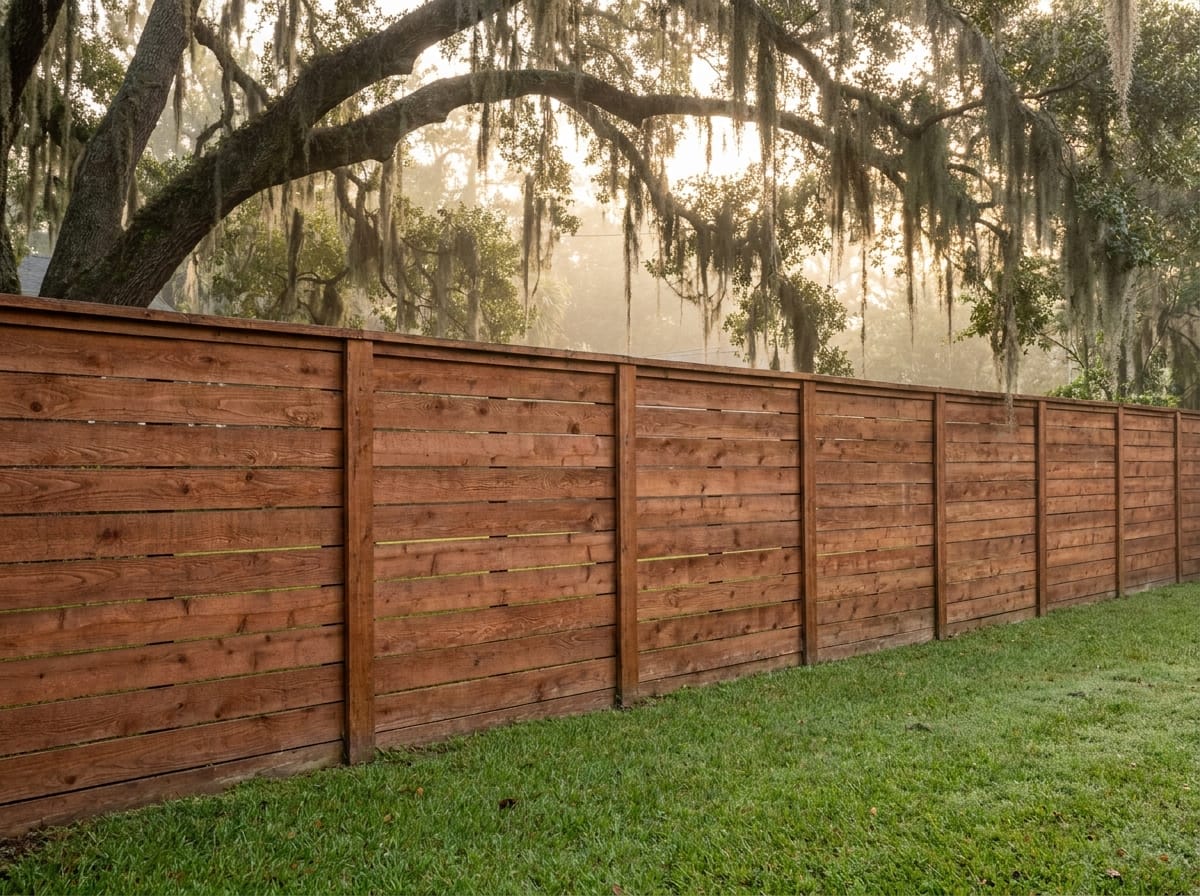
Humidity in coastal South Carolina is a constant challenge for homeowners. In Charleston, Mount Pleasant, Summerville, and Moncks Corner, the combination of high moisture, heat, and shade creates the perfect environment for mildew to grow on outdoor structures. When green algae or black mildew begins to cover your fence, your first instinct might be to blast it with a pressure washer. However, using high pressure can easily strip away paint, lift wood stain, and gouge the wood fibers themselves, leading to permanent damage.
Cleaning your fence without ruining its protective finish requires a gentler approach. By using the correct cleaning solutions and low-pressure rinsing techniques, you can restore the appearance of your fence while preserving its longevity.
Choosing the Right Cleaning Solution
The key to removing mildew without stripping the finish is chemical action rather than mechanical force. You want a solution that kills the organic growth so it can be easily rinsed away.
- Oxygen Bleach (Sodium Percarbonate): This is the safest option for wood finishes and surrounding landscaping. When mixed with water, it breaks down into hydrogen peroxide and soda ash. It targets organic stains and mildew without bleaching the natural color out of wood or stripping away quality oil-based stains.
- Diluted Chlorine Bleach (Sodium Hypochlorite): Household bleach is highly effective at killing mold and mildew spores instantly. However, it must be used with caution. An overly concentrated mixture can strip the color out of wood and damage paint or stain. If you use chlorine bleach, dilute it to a 1:4 ratio with water (one part bleach to four parts water) and add a small splash of mild dish soap to help it cling to vertical surfaces. Always wet down surrounding grass and plants before and after application to protect them.
- Vinegar Solutions: For light mildew on vinyl or aluminum fences, a mixture of equal parts white vinegar and water is often enough to clean the surface without risking any chemical damage to the material.
The Step-by-Step Soft Wash Process
Professional exterior cleaners use a method called 'soft washing' to clean delicate surfaces. You can replicate this process at home with a few basic tools: a garden pump sprayer, a soft-bristle scrubbing brush, and a standard garden hose.
First, prepare the area. Move any outdoor furniture away from the fence line. Generously wet down any nearby shrubs, flowers, or lawn grass with clean water. This prevents the plants from absorbing any cleaning runoff.
Second, apply your chosen cleaning solution using the pump sprayer. Start from the bottom of the fence panel and work your way up to prevent streaking. Allow the solution to sit on the surface for 10 to 15 minutes. It is crucial that you do not let the mixture dry on the wood. If it starts to dry, mist it lightly with more cleaning solution.
Third, scrub the surface gently. Use a soft-bristle nylon brush on a pole to lightly agitate areas with heavy buildup. You should see the green and black spots easily lift away. Do not use wire brushes or stiff scrub pads, as these will scratch paint and scour wood surfaces.
Fourth, rinse the fence thoroughly. Use a garden hose with a spray nozzle. If you choose to use a pressure washer, keep the pressure extremely low, under 800 PSI, and use a wide 40-degree fan tip. Keep the wand at least 12 to 18 inches away from the fence surface. The goal is to rinse away the loosened organic matter, not to blast the wood.
What to Avoid During the Process
To protect your investment, avoid these common cleaning mistakes:
- Avoid using high-pressure settings. Anything above 1,500 PSI can erode wood pulp, leaving a fuzzy texture that ruins the look of the wood and makes it more vulnerable to future rot.
- Avoid acidic cleaners like undiluted vinegar or harsh chemical pool shock unless specifically formulated for your exact fence material.
- Avoid cleaning your fence in direct, hot sunlight, which causes cleaning solutions to dry too quickly and leave unsightly chemical residue.
Prevention and Local Considerations
Once your fence is clean, you can take steps to keep mildew from returning quickly. Trim back overhanging tree branches and bushes to allow more sunlight and airflow to reach the fence panels. Keep in mind that rules regarding property lines and tree trimming vary significantly by county, city, and individual homeowners associations. Always check your local municipality and HOA guidelines before pruning vegetation near property boundaries.
If you prefer to hire a professional to clean your fence, costs generally range from $1.50 to $4.50 per linear foot. Actual pricing depends heavily on site conditions, the height of the fence, the severity of the mildew, and accessibility to water hookups.