Maintenance · 4 min read
Protecting a New Wood Fence with Stain or Sealer
Published 16 September 2026
Decide whether to stain or seal your new wood fence by comparing costs, longevity, and how each product handles the coastal South Carolina climate.
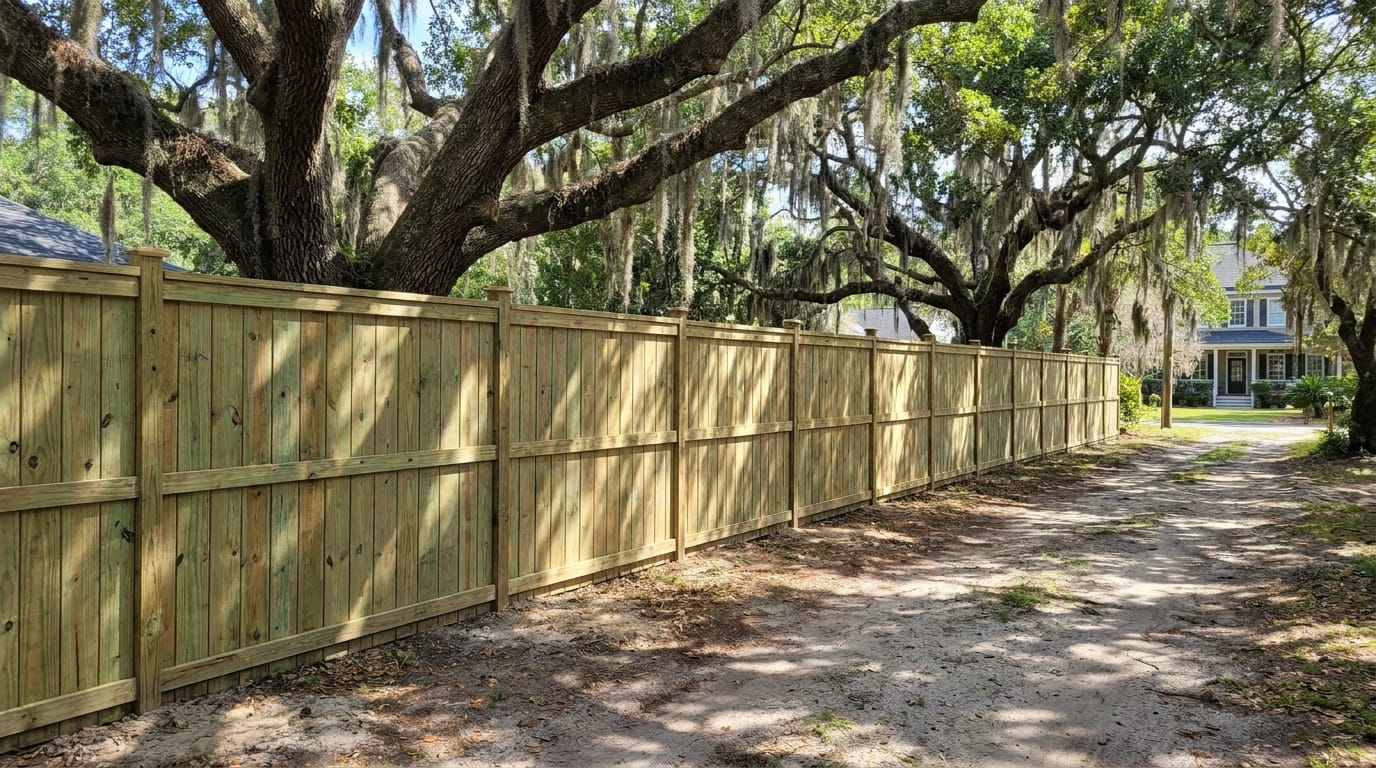
Installing a new wood fence is a significant investment for homeowners in the Charleston area, including Mount Pleasant, Summerville, and Moncks Corner. Once the construction is complete, the next critical decision is how to protect the wood from the elements. Leaving wood untreated in coastal South Carolina leads to rapid graying, warping, and splitting due to intense humidity, frequent rain, and strong sunlight.
To protect your investment, you will choose between sealing and staining. While both options prevent moisture damage, they function differently, cost different amounts to apply, and require distinct maintenance schedules.
What is a Wood Sealer?
A wood sealer is a clear coat applied to the surface of the fence. Its primary job is to keep water from penetrating the wood fibers. When rain hits a sealed fence, the water beads up and rolls off rather than soaking in, which prevents rot, warping, and mold growth.
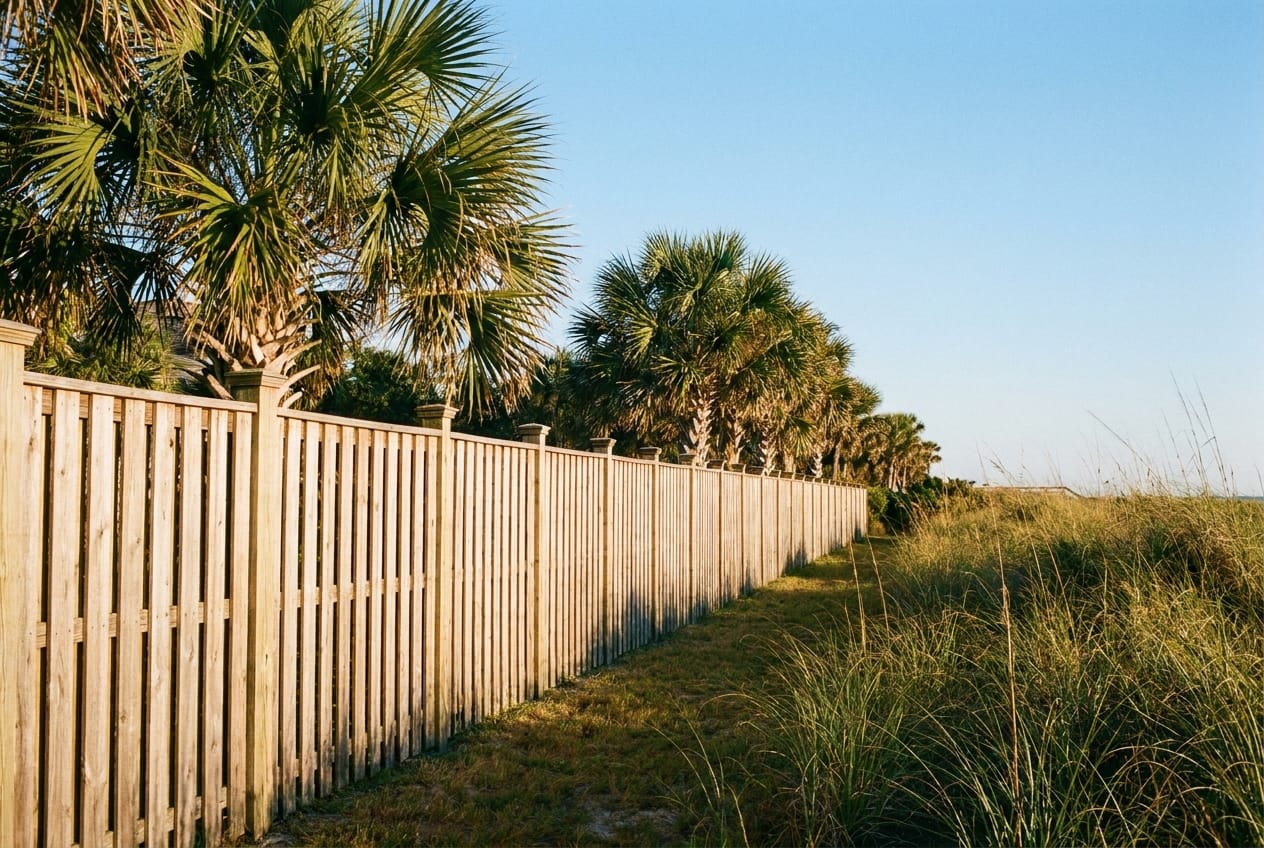
Clear sealers preserve the natural, freshly cut look of pine or cedar. However, because they lack pigment, they offer very little protection against ultraviolet (UV) rays from the sun. Under the South Carolina sun, the UV rays will break down the wood fibers beneath the clear coat, causing the wood to turn gray over time anyway.
What is a Wood Stain?
A wood stain contains both water-resistant sealers and pigments. The pigments act like sunscreen for your fence, blocking the UV rays that break down wood fibers and cause graying.
Stains come in several levels of opacity:
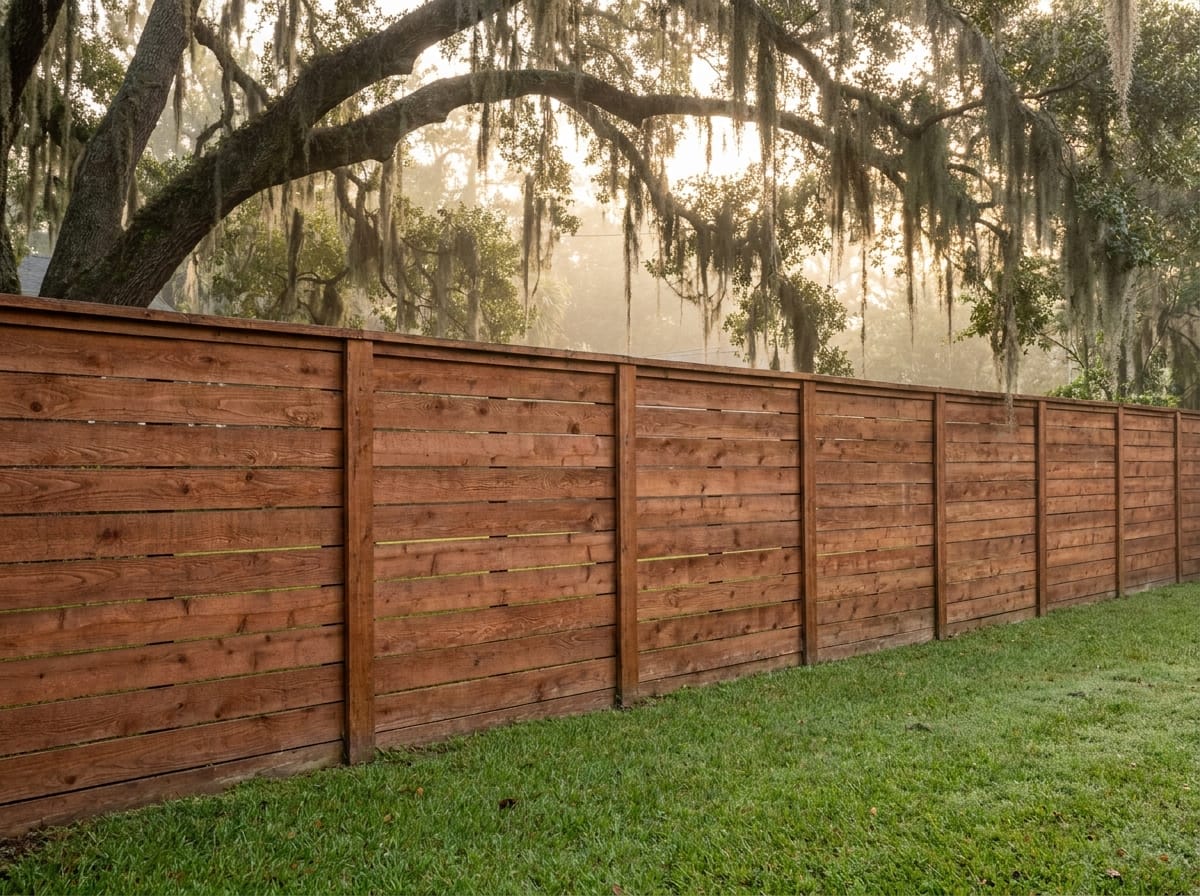
- Semi-Transparent Stains: These add a tint of color (like cedar, redwood, or brown) while still allowing the natural grain and knots of the wood to show through.
- Semi-Solid Stains: These contain more pigment, hiding more of the wood grain but offering stronger UV protection.
- Solid Stains: These look similar to paint. They completely cover the wood grain, though you can still feel the texture of the wood. They offer the highest level of UV protection but can peel if not applied correctly.
Comparing Longevity and Maintenance
The main practical difference between staining and sealing is how often you must reapply the product.
Clear sealers generally last one to two years on a vertical fence surface in our coastal climate. Because they lack UV blockers, you will need to clean and reseal the fence frequently to keep it looking new.
Stains last significantly longer. A quality semi-transparent stain can protect a fence for three to five years before needing a refresh. Solid stains can last five to seven years. When a stain finally needs maintenance, semi-transparent options usually wear away gradually, meaning you only need to clean the wood and apply a fresh coat. Solid stains, like paint, may flake or peel over time, requiring more labor-intensive scraping or sanding before reapplication.
Cost Considerations
The initial cost of materials and labor varies depending on your choice.
- Sealing Costs: Clear sealers are generally less expensive per gallon than high-quality stains. Professional application for a standard residential yard might range from $1,500 to $3,500, though this depends entirely on the total linear footage, fence height, and specific site conditions like landscaping obstacles or slope.
- Staining Costs: High-quality stains cost more per gallon due to the pigments and resins used. Professional staining might range from $2,000 to $5,500 or more, again heavily dependent on the size of the yard, the type of wood, and accessibility.
While sealing is cheaper upfront, the shorter maintenance cycle means you may end up spending more over a ten-year period in labor or DIY effort compared to staining.
Local Rules and Timing
Before applying any product, consult your local Homeowners Association (HOA). HOA rules regarding fence colors and finishes vary widely across developments in Mount Pleasant, Summerville, and Charleston. Some neighborhoods strictly require natural wood tones, while others permit specific solid stain colors or forbid staining entirely.
Timing is also critical for a new fence. Pressure-treated pine, commonly used in our region, is saturated with chemical preservatives during manufacturing. If you seal or stain the wood too quickly, the moisture trapped inside will prevent the product from adhering, causing it to peel or fail. Most new wood fences need to cure for several weeks or even months until the moisture level drops below 12 to 15 percent. A simple water-drop test—seeing if water droplets soak into the wood or sit on top—can help determine if the wood is dry enough to treat.