Design · 4 min read
Choosing a Privacy Fence Height in Mount Pleasant
Published 17 September 2026
Deciding how tall to build your privacy fence involves balancing local municipal regulations, HOA rules, wind loads, and your budget.
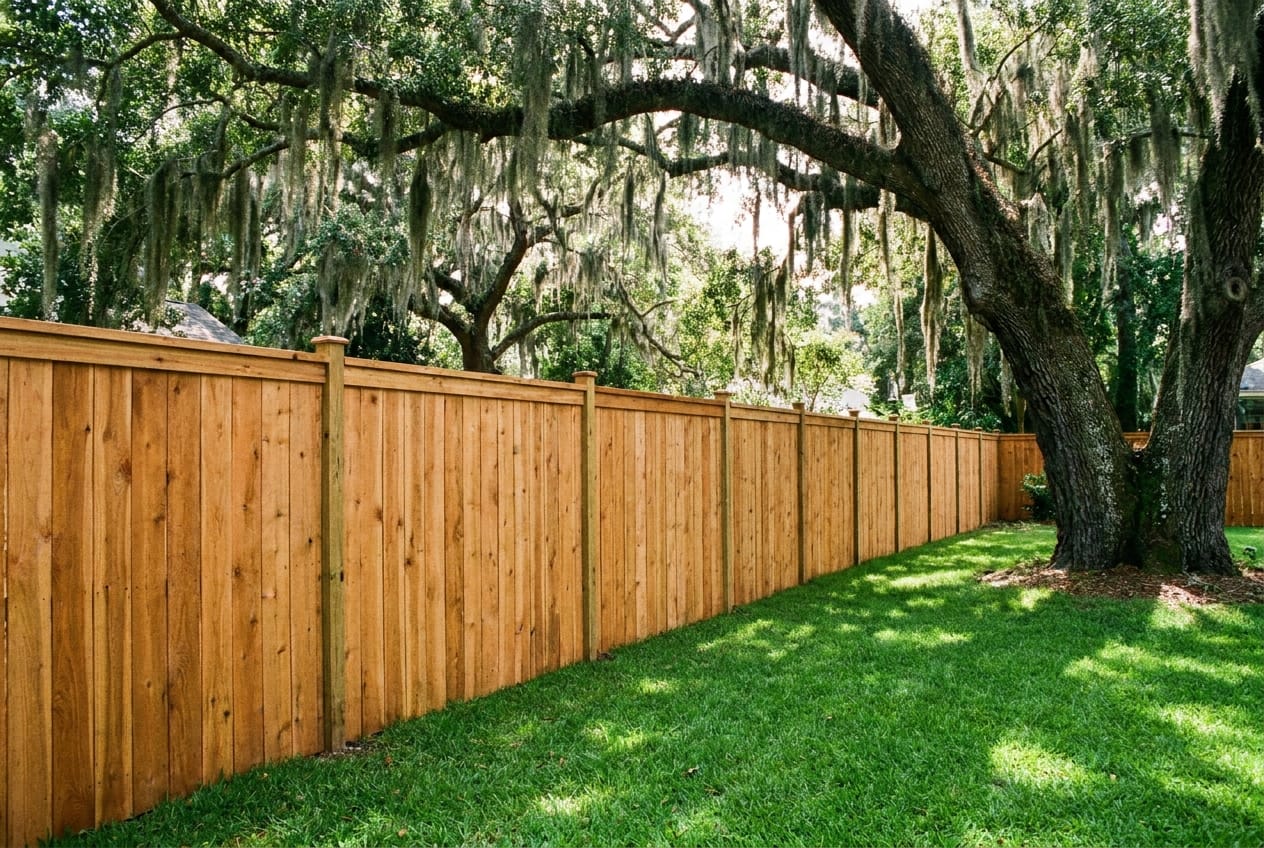
Homeowners in Mount Pleasant and the surrounding Lowcountry often install privacy fences to secure their yards, contain pets, and create quiet outdoor living spaces. Selecting the right height for your fence is one of the most important design decisions you will make. While a six-foot fence is the standard for most residential neighborhoods, the right height for your property depends on several variables, including local zoning laws, neighborhood rules, wind resistance, and your specific privacy needs.
Standard Privacy Fence Heights
Residential privacy fences are typically built at one of three heights:
- Six Feet: This is the most common height for residential backyards. A six-foot fence successfully blocks the line of sight for most standing adults, providing excellent privacy from next-door neighbors.
- Eight Feet: Homeowners often request eight-foot fences when their property sits lower than an adjacent road, if they have a two-story home next door, or if they live near a commercial area. An eight-foot fence offers maximum privacy but requires heavier structural support.
- Four to Five Feet: While less common for full privacy, shorter fences are sometimes used in front yards, along water features, or in neighborhoods where taller solid structures are restricted. These may feature semi-private spacing or decorative toppers to maintain an open feel.
Local Regulations and HOA Rules
Before choosing a fence height, you must determine what is legally and contractually permitted on your property. Rules vary significantly between municipalities like Mount Pleasant, Charleston, Summerville, and Moncks Corner, as well as individual subdivisions.
Many municipalities restrict backyard fences to a maximum height of six feet without a special variance. Front yard fences are often limited to four feet and may require a certain percentage of openness to ensure visibility for traffic. Furthermore, if your property borders a marsh, pond, or public easement, local zoning laws may restrict you to shorter heights or require transparent styles, such as aluminum or picket designs, to preserve views.
Homeowners association (HOA) rules are often much stricter than city or county codes. An HOA may dictate not only the maximum height but also the specific materials, colors, and styles allowed. Building a fence that violates these guidelines can result in costly fines or a requirement to tear down and rebuild the structure. Always check with your specific HOA board and local building department before finalizing your design.
Wind Loads and Structural Integrity
In coastal South Carolina, wind is a primary engineering consideration. A solid privacy fence acts like a large sail during high-wind events and tropical storms. The taller the fence, the more wind force it catches, and the stronger its support system must be.
For a standard six-foot wood fence, pressure-treated posts are typically set at least two feet deep in concrete. For an eight-foot fence, the wind load increases dramatically. To prevent the fence from leaning or blowing over, posts must be set deeper—often three to four feet into the ground—and may require heavier post dimensions or steel reinforcement. This structural necessity directly impacts your labor and material costs.
Terrain and Slope Considerations
Lowcountry yards are notoriously flat, but minor elevation changes, drainage swales, or property grading can affect how your fence height looks and functions. If your yard slopes, your builder will either slope the fence to follow the grade or step the panels in stair-step fashion.
Stepping a fence means that while some sections may measure exactly six feet from the bottom of the panel to the top, other sections might sit higher off the ground to keep the top line level. This can create gaps at the bottom of the fence that may require custom grading or kickboards to keep pets from escaping. Conversely, if your neighbor's yard is elevated slightly higher than yours, a standard six-foot fence might only feel like a five-foot fence from their perspective.
Cost Considerations
Fence height is a major driver of overall project cost. Taller fences require longer pickets, more framing rails, larger posts, and more concrete.
As a general estimate, a standard six-foot wood privacy fence typically ranges from $25 to $45 per linear foot, depending on the wood species and site conditions. Moving up to an eight-foot wood fence often increases that range to $35 to $60 or more per linear foot due to the additional structural requirements. Vinyl privacy fences, which offer low maintenance but higher upfront costs, generally range from $40 to $75 per linear foot for a six-foot height, with taller options costing significantly more. Site factors such as tree roots, old post removal, and difficult access will also influence your final estimate.