Design · 4 min read
Sizing Utility and Pedestrian Gates for Long-Term Use
Published 1 October 2026
Choosing the correct gate width during your fence installation prevents costly modifications when buying new lawnmowers or hiring landscapers.
When planning a new fence in the Charleston area, homeowners often focus heavily on the height, material, and style of the pickets. Gates are frequently treated as an afterthought, with many opting for a standard three-foot opening because it seems sufficient for a person to walk through. However, gate width is one of the most common sources of post-installation regret. Within a year or two, many homeowners find themselves unable to get a new lawnmower, a wheelbarrow, or a patio construction crew into their backyard.
The Limitations of Standard Three-Foot Gates
A three-foot-wide gate is the traditional default for pedestrian access. It easily accommodates a single person, a trash can, or a standard push mower. However, its utility stops there.
If you ever plan to bring larger items into your yard, a three-foot opening will quickly feel restrictive. Moving outdoor furniture, carrying large coolers, or navigating a wheelbarrow filled with mulch through a tight three-foot space requires precise maneuvering and often results in scraped knuckles or damaged gate frames. If you have children with large toys, or if you use a hand truck to move heavy potted plants, this narrow entry point will become a constant source of frustration.
Landscaping Equipment and the Four-to-Five-Foot Standard
For most residential properties in Mount Pleasant, Summerville, and Moncks Corner, a four-foot gate is the practical minimum for utility access. A four-foot opening easily accommodates residential walk-behind mowers and larger wheelbarrows without requiring perfect alignment.
If you employ a professional landscaping service, or if you plan to purchase a residential riding lawnmower, you will likely need to step up to a five-foot gate. Many commercial walk-behind mowers and small zero-turn mowers have deck widths ranging from 42 to 48 inches. A mower with a 48-inch deck cannot fit through a four-foot gate once you account for the discharge chute and the physical gate stops, which narrow the actual clearance by an inch or two. A five-foot single gate provides the necessary clearance for these mid-sized machines to pass through safely.
When to Choose Double Gates
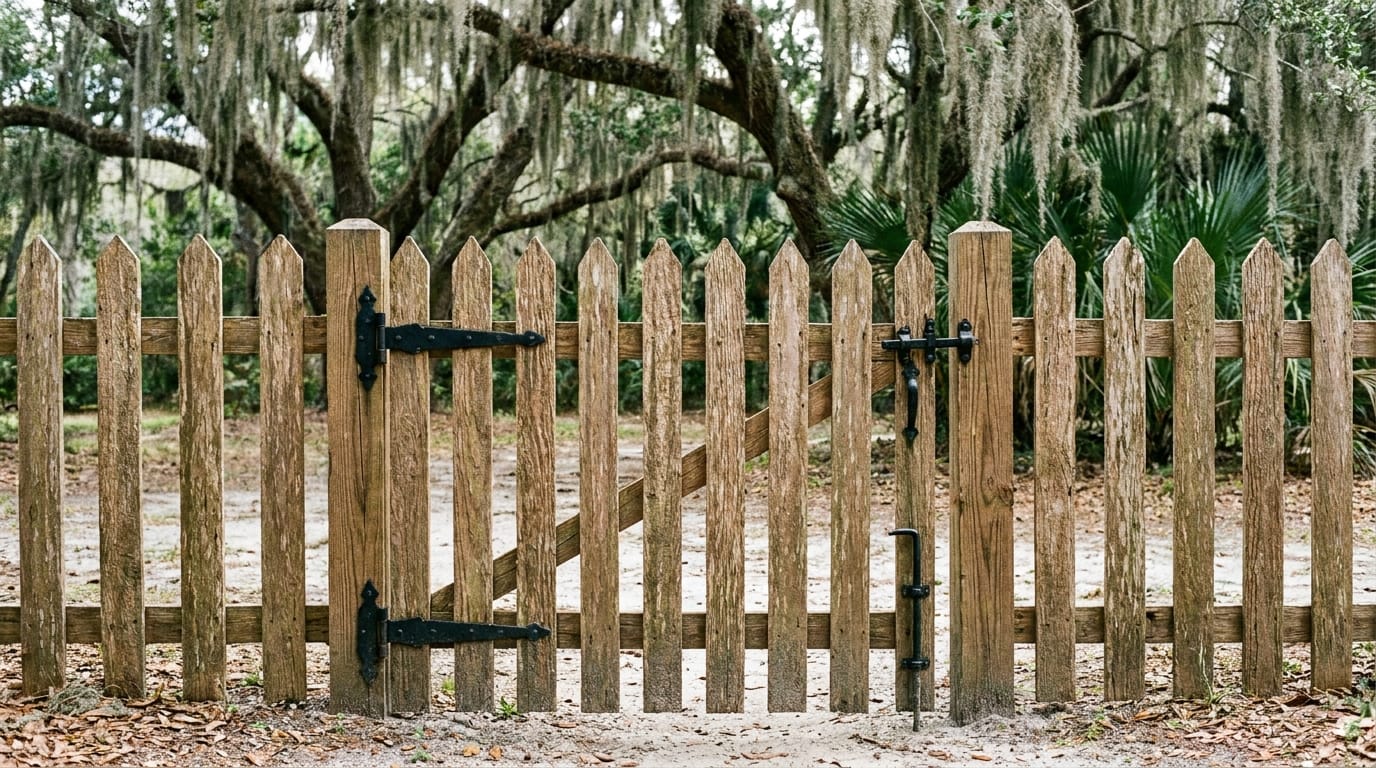
For properties that require vehicle access, boat storage, or major backyard construction projects, a single gate is rarely sufficient. In these cases, double gates are the standard solution. Double gates consist of two gate leafs that meet in the middle, secured by a drop rod into the ground.
- Eight-foot double gates: This size is ideal for small utility trailers, ATVs, and small compact tractors.
- Ten-to-twelve-foot double gates: If you plan to park a boat, an RV, or need to allow access for heavy machinery like skid steers for a future pool or patio project, a ten- or twelve-foot opening is necessary.
Without a wide double gate, a pool contractor or hardscaper may have to temporarily remove a section of your fence to get their equipment into your yard, which adds labor costs to your project.
Structural and Cost Implications of Wider Gates
As gates get wider, they get significantly heavier. This extra weight places continuous leverage on the hinge post, which can cause the post to lean and the gate to sag over time.
While a standard gate might use a standard post, a five-foot or six-foot single gate requires a heavier, thicker-walled post and deeper concrete footings to resist sag. Additionally, wider gates require heavy-duty hinges, drop rods, and diagonal bracing to maintain their structural integrity over years of use.
These structural upgrades affect your overall project cost. While a basic single pedestrian gate might add a modest amount to a fencing estimate, upgrading to a wide double gate with heavy-duty hardware and larger posts can add anywhere from $400 to over $1,200 to the project total, depending on the fence material, height, and specific site conditions.
Local Guidelines and HOA Variables
Before finalizing your gate sizes and locations, you must consider local regulations and neighborhood guidelines. HOA rules regarding gate widths, styles, and visibility vary significantly across different communities in the Charleston area. Some HOAs restrict the installation of double gates on the side of the home facing the street, while others have specific rules about where utility gates can be placed.
Furthermore, if you are installing a fence around a backyard pool, local municipal building codes require specific self-closing and self-latching gate mechanisms. The width of these pool gates may be subject to strict safety standards to ensure they close reliably under their own weight. Always check with your local municipality, county planning office, or HOA board to verify current rules before ordering materials.