Design · 4 min read
Placing Your Fence Line and Choosing the Finished Side
Published 26 September 2026
Learn how to position your new fence along property lines and navigate the choice of which direction the finished side should face.
Building a new fence is a significant investment for any homeowner in the Charleston area. Beyond choosing materials and budgeting, two of the most critical decisions involve exactly where the fence sits on your property line and which way the "good" side faces. Handling these details incorrectly can lead to expensive boundary disputes, forced removals, or strained relationships with your neighbors.
The Finished Side and the Framing Side
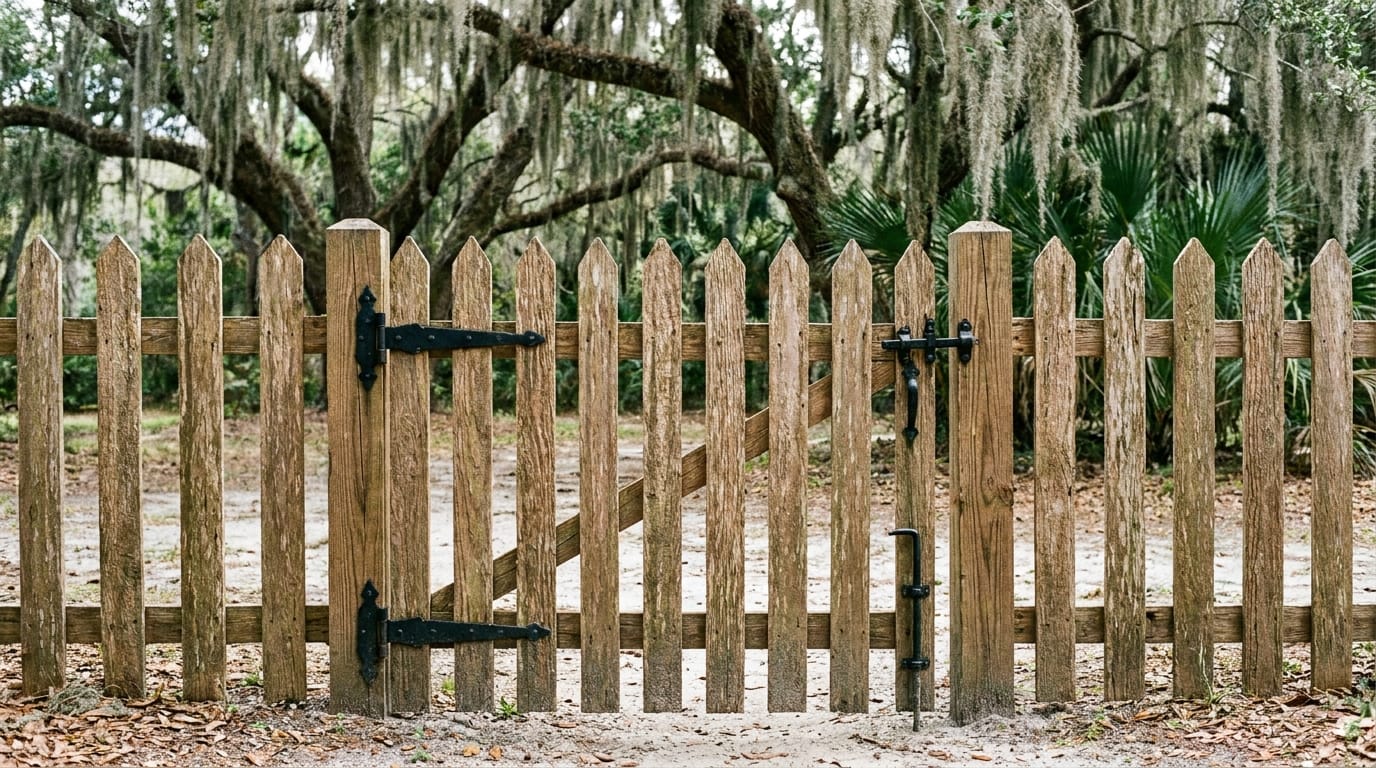
In fence construction, most traditional wood and vinyl privacy fences have a "good" side and a "back" side. The finished, or good, side is the smooth face where the pickets are attached. The back side reveals the horizontal rails and the vertical posts that support the structure.
Deciding which direction these faces should point is more than an aesthetic choice. While you might naturally want the clean, finished side facing your own home, standard construction practices and local guidelines often dictate otherwise. Facing the smooth side toward your neighbor or the street is generally considered the standard for curb appeal and neighborhood etiquette.
Local Ordinances and HOA Requirements
Before any posts are set in the ground, you must determine what local laws and neighborhood covenants require. There is no single rule that applies to every home in Mount Pleasant, Summerville, or Moncks Corner.
Many municipalities and local Homeowners Associations (HOAs) have strict guidelines regarding fence orientation. In some jurisdictions, local building codes mandate that the finished side of any fence facing a public right-of-way or an adjacent property must face outward. Other areas have no such rules, leaving the decision entirely up to the property owner.
Setbacks also vary widely. Some neighborhoods allow fences right up to the property line, while other areas require a setback of several inches or feet. Failing to verify these rules with your specific county, city, or HOA before building can result in fines or a requirement to tear down and rebuild the fence at your own expense.
The Importance of a Professional Survey
Guessing where your property line lies is a risky approach when installing a permanent structure. Even if there is an existing fence, you cannot assume it was placed accurately on the boundary.
Obtaining a professional property survey is the most reliable way to locate your actual property corners. A surveyor will find or place iron pins to mark the exact boundaries. This step protects your investment and provides clear documentation if a neighbor questions the fence placement. If you build even a few inches over your property line, your neighbor has the legal right to request its removal.
Talking to Your Neighbors
Open communication with your neighbors is essential before construction begins. A brief, polite conversation can prevent misunderstandings and foster goodwill.
- Give them a heads-up: Let them know you plan to build a fence, the style you are considering, and the estimated timeline.
- Discuss the boundary: Share the survey markers with them so everyone agrees on the line.
- Discuss the finished side: If you are required or choose to face the good side outward, explain this to them. If you prefer to face the good side inward and local rules allow it, ensure they are comfortable seeing the structural rails.
- Cost-sharing possibilities: In some cases, a neighbor may be willing to split the cost of the shared run of fencing, especially if it improves their privacy or replaces an old, failing structure.
Design Options with No "Bad" Side
If you want to avoid the "good side" debate entirely, several fence styles look finished from both sides. These options are highly popular in lowcountry neighborhoods where properties sit close together.
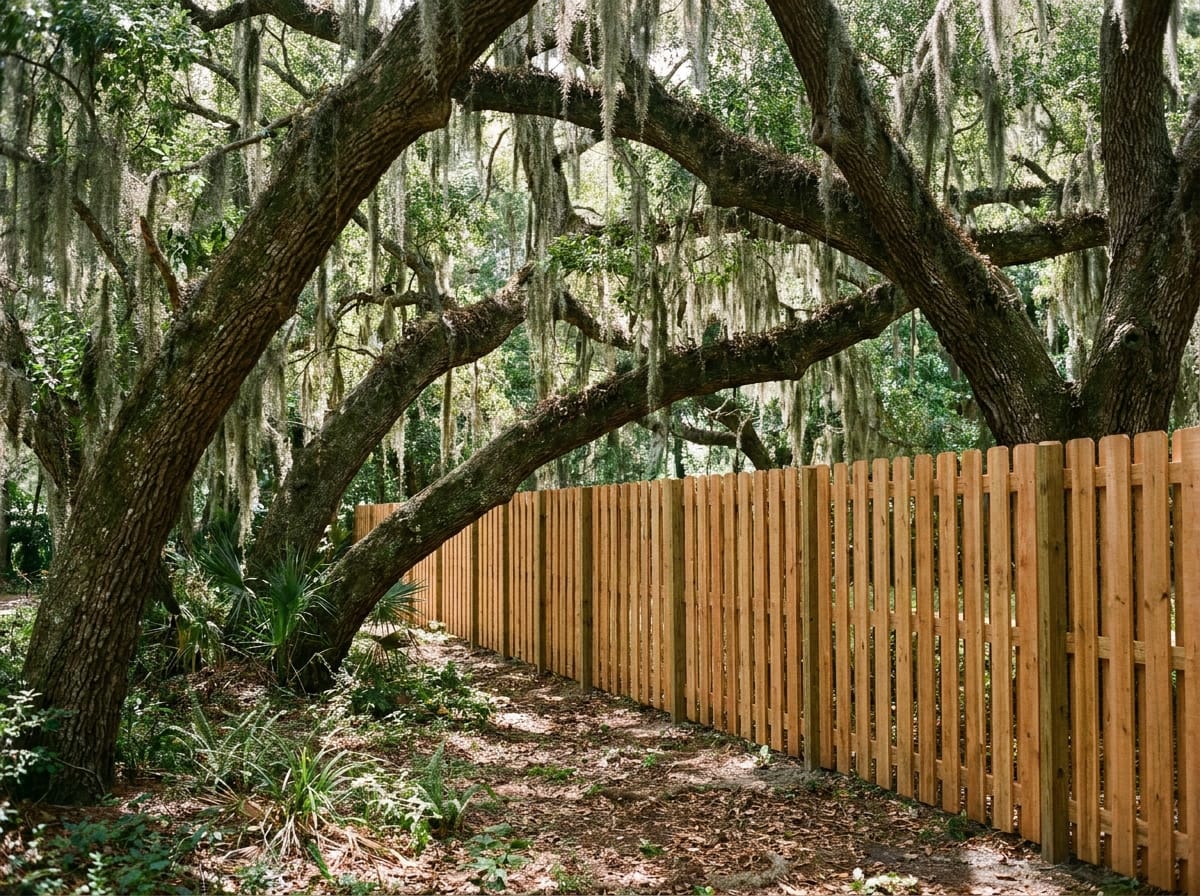
- Shadowbox (Board-on-Board): This style alternates pickets on the front and back of the horizontal rails. It provides excellent privacy while allowing airflow, and both sides look identical.
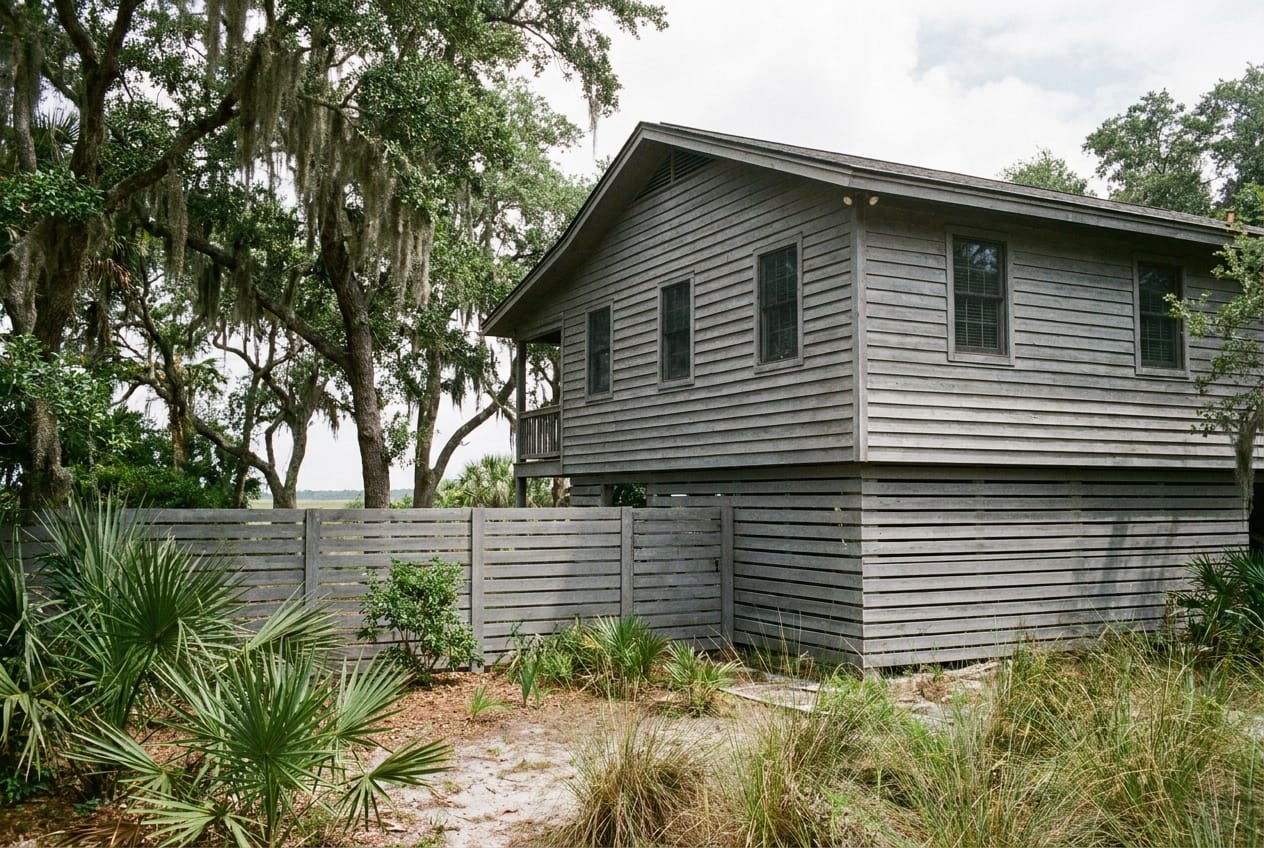
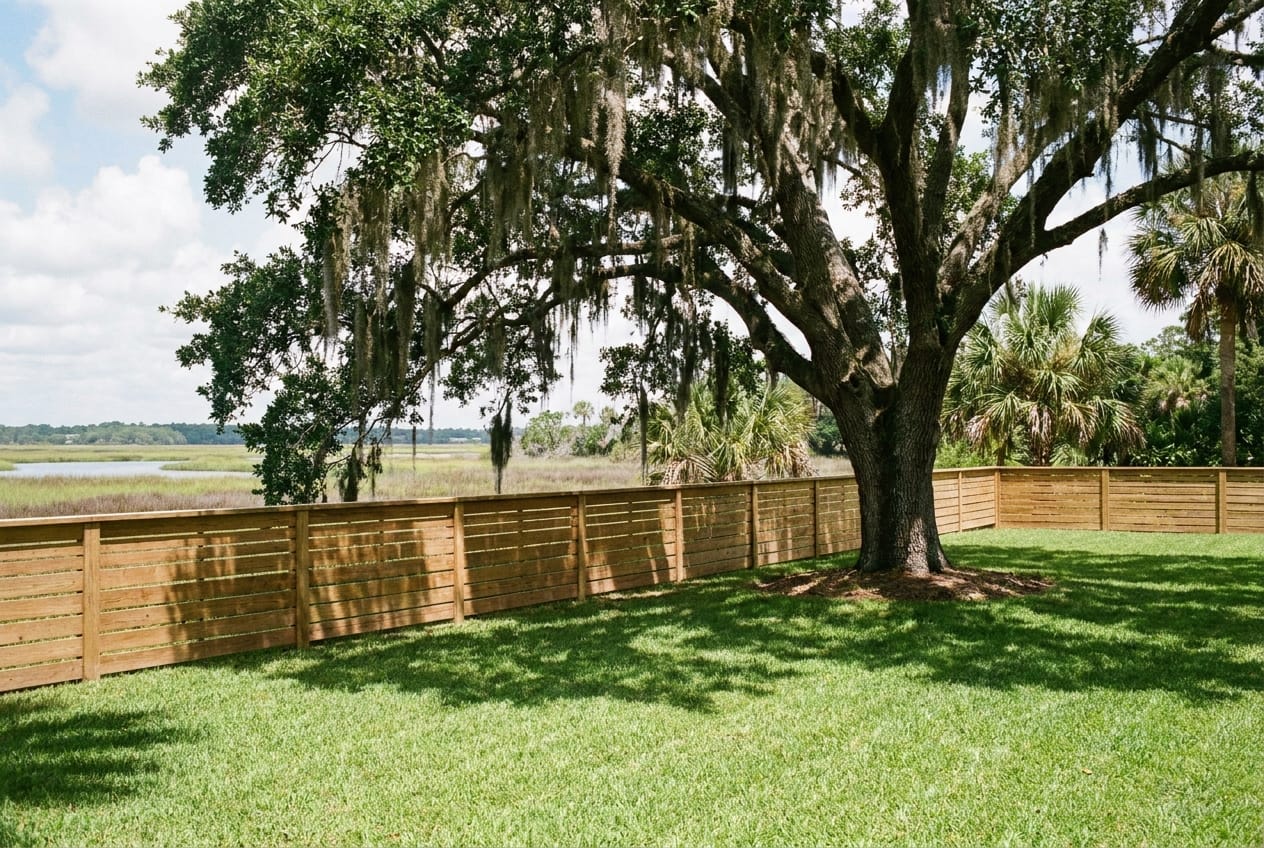
- Horizontal Slats: A modern horizontal fence looks clean and symmetrical from both the inside and the outside.
- Double-Sided Privacy: Some premium wood or vinyl systems use tongue-and-groove boards framed by posts on both sides, ensuring a polished look for both yards.
Cost Considerations
Opting for a style that looks finished on both sides will affect your overall budget. While a standard wood privacy fence might range from $25 to $45 per linear foot depending on site conditions, a shadowbox or double-sided design typically adds $5 to $15 more per linear foot.
Site conditions, such as heavy undergrowth, live oak roots, or sloping terrain, will also impact installation costs and placement. Always obtain a detailed, site-specific estimate that accounts for these variables.