Materials · 4 min read
Comparing Fence Maintenance: Wood vs. Vinyl vs. Composite
Published 20 September 2026
Understand the long-term maintenance tasks and ongoing costs of wood, vinyl, and composite fences in the humid South Carolina Lowcountry.
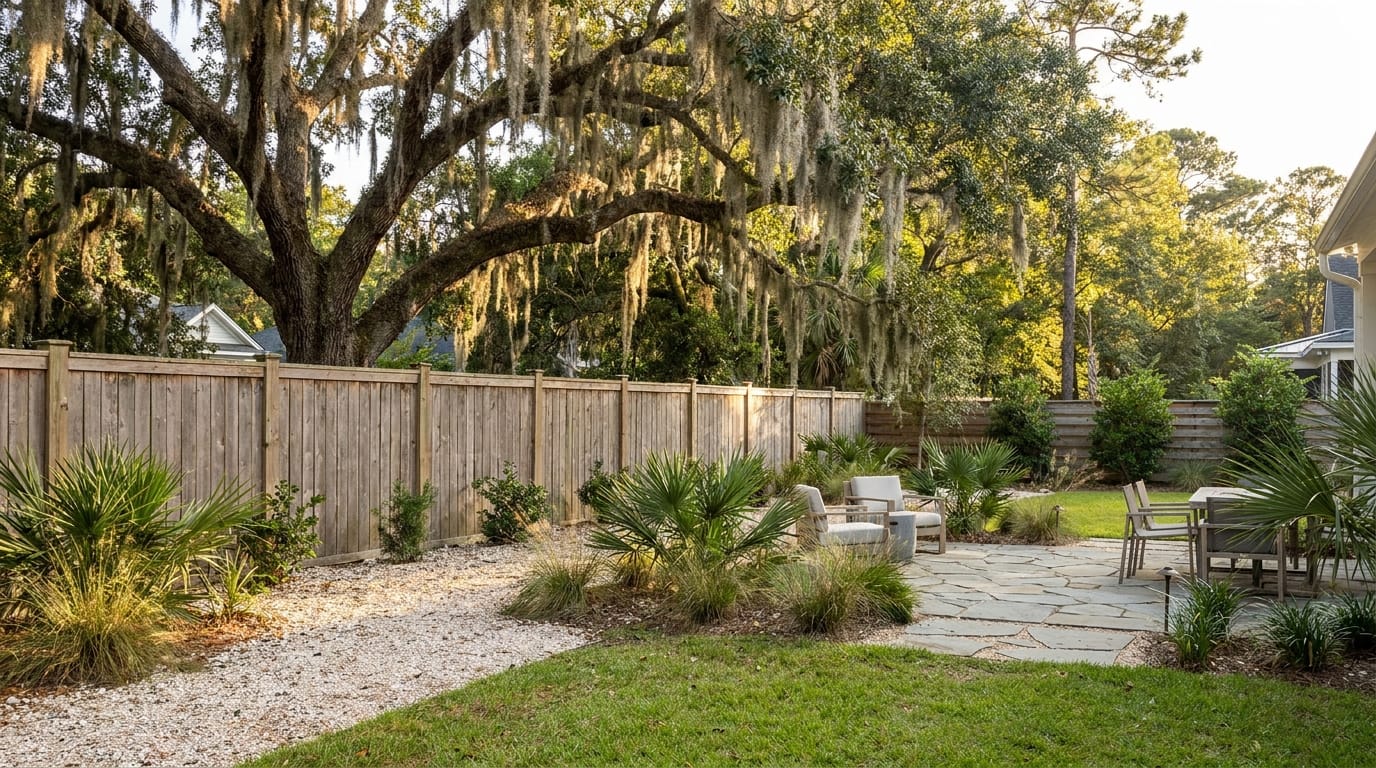
When planning a new fence in coastal South Carolina, the initial price tag is only part of the financial equation. The climate in the Charleston region—characterized by high humidity, intense summer heat, salt air, and frequent rain—exerts constant stress on outdoor materials. Over a ten-to-fifteen-year period, the time and money required to maintain a fence can reshape its actual cost.
Understanding the long-term upkeep of pressure-treated wood, vinyl, and composite can help you make a more practical decision for your property.
The Upkeep Reality of Wood Fences
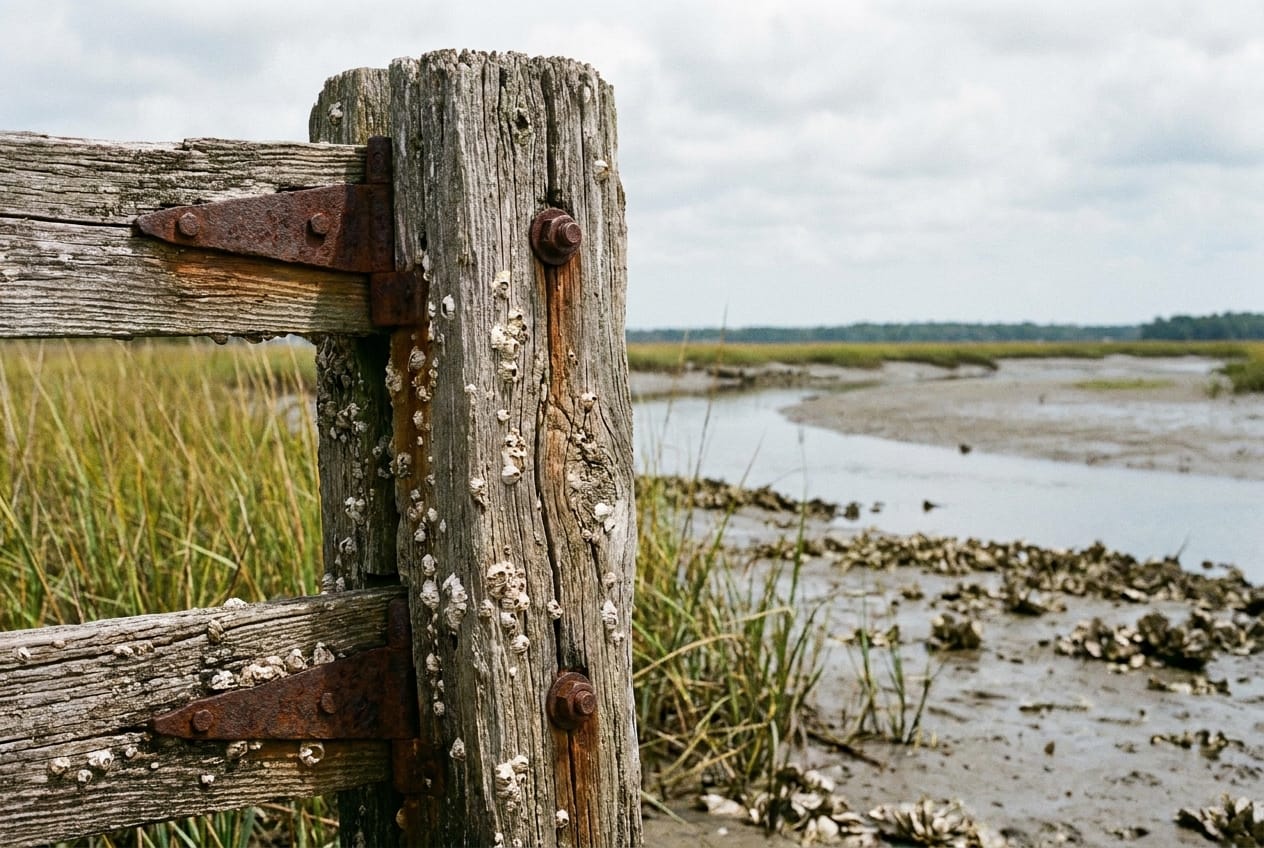
Pressure-treated pine is the most common wood fencing material due to its low upfront cost. However, wood is an organic material that reacts continuously to moisture and temperature changes.
In our humid climate, wood fences require consistent intervention to prevent deterioration:
- Sealing and Staining: To prevent water absorption, wood must be sealed or stained. This process generally needs to be repeated every two to three years. If left untreated, the wood will turn gray, crack, and warp.
- Physical Repairs: Over time, individual pickets or posts may warp, twist, cup, or split. Replacing damaged sections is a routine part of owning a wood fence.
- Pest and Rot Prevention: Ground-contact posts are vulnerable to rot and subterranean termites, even when treated.
The financial cost of this maintenance adds up. While you can save money by staining the fence yourself, purchasing quality stain and renting equipment still costs several hundred dollars per cycle. Hiring a professional to clean, prep, and stain a standard residential fence typically ranges from $1,500 to $4,000 per application, depending on the fence's total linear footage, height, and specific site conditions. Over fifteen years, you may end up paying for the fence two or three times over in maintenance costs alone.
Cleaning and Managing Vinyl Fences
Vinyl (PVC) fencing represents a shift toward low-maintenance outdoor living. It does not absorb moisture, meaning it will never rot, warp, split, or suffer from insect damage. It also never requires sanding, painting, or staining.
However, 'low maintenance' does not mean 'zero maintenance.' In the Lowcountry, the primary challenge for vinyl is organic growth:
- Algae and Mold: The combination of shade, high humidity, and afternoon showers creates an ideal environment for green algae and mildew to grow on vinyl surfaces.
- Discoloration: While the algae does not damage the vinyl structurally, it is highly visible, especially on white fences.
Maintaining a vinyl fence involves washing it at least once a year. This can usually be done with a garden hose, a soft-bristle brush, and a mild biodegradable cleaner or vinegar solution. If you hire a professional pressure washing service to clean your fence, expect prices to range from $250 to $600, depending on the length of the fence and accessibility.
Composite Fencing Performance
Composite fencing is manufactured from a blend of wood fibers and recycled plastics. It is designed to mimic the texture and appearance of natural wood without the structural vulnerabilities.
Like vinyl, composite does not rot, warp, or attract termites. Its maintenance profile is similar to vinyl but has a few distinct characteristics:
- Surface Cleaning: Because composite contains wood fibers, surface pollen and dirt can allow mold to take root if not washed away. Capped composites (which have a protective polymer shell) are highly resistant to staining and fading, but they still require an annual wash with soapy water to keep clean.
- Scratch Resistance: Unlike vinyl, which has a smooth surface, composite has a textured finish. While highly durable, deep scratches cannot be sanded out easily without altering the texture, though minor blemishes often blend in over time due to weathering.
The maintenance cost for composite is primarily limited to occasional cleaning supplies or a basic wash service. It requires no staining, sealing, or painting throughout its lifespan.
Comparing the Long-Term Investment
When choosing between these materials, consider how you value your weekends and your long-term budget. A wood fence saves money on day one but demands regular labor or professional service fees to stay structurally sound and visually appealing. Vinyl and composite require a higher initial investment but offer predictable, minimal costs over the next twenty years.
Additionally, material choices are often influenced by local regulations. HOA covenants in neighborhoods across Summerville, Mount Pleasant, Awendaw, and Moncks Corner vary significantly; some strictly prohibit vinyl, while others mandate specific colors or wood styles. Local municipal permitting rules and setback requirements also differ by city and county. Always verify your local guidelines before finalizing your material choice.