Materials · 4 min read
Gate Hardware That Stands Up to Coastal Salt Air
Published 25 September 2026
Salt air and high humidity quickly corrode standard gate latches, but choosing the right marine-grade metals prevents premature failure.
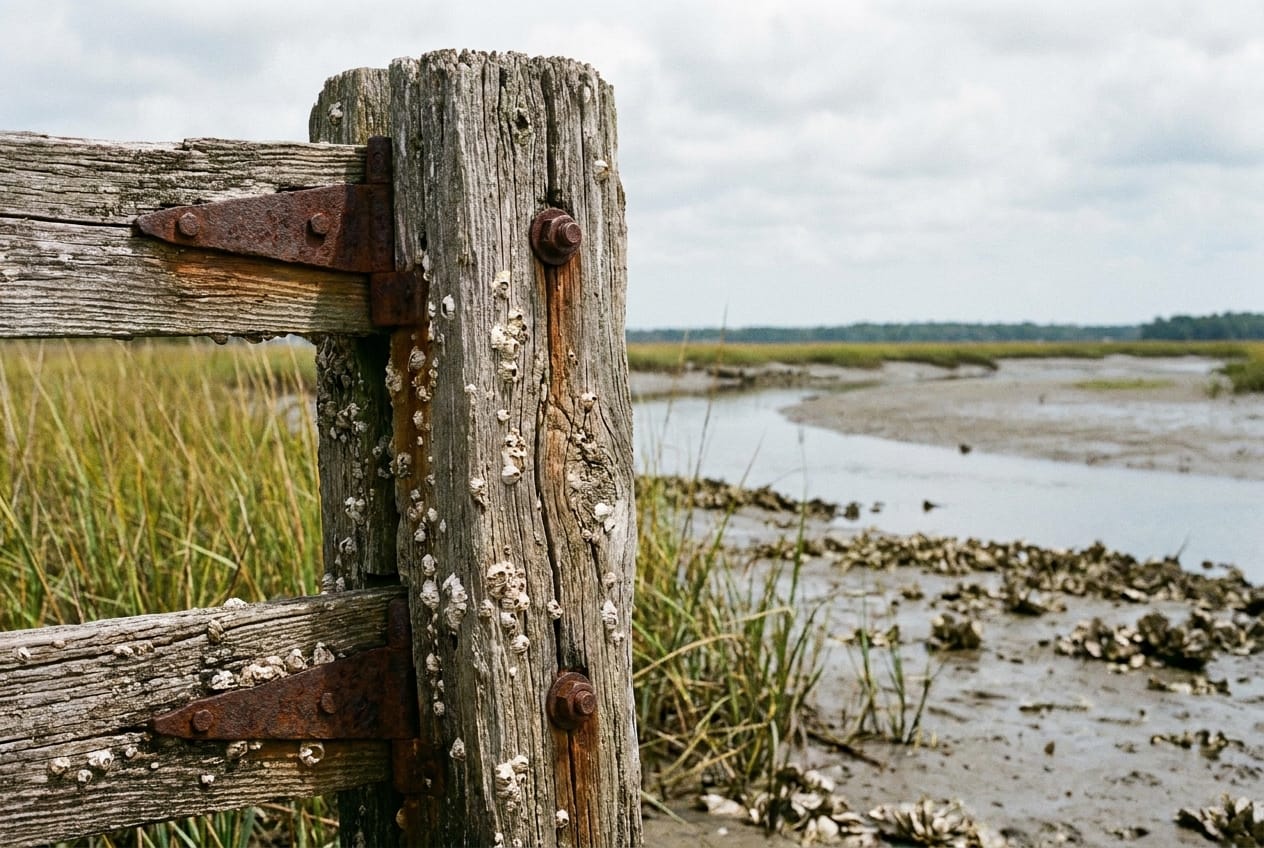
The salt air in coastal South Carolina is relentless. If you live in Charleston, Mount Pleasant, or nearby coastal areas, you have likely seen gate hardware covered in thick red rust within a year of installation. Standard gate latches and hinges designed for inland climates quickly seize up, sag, or snap under the combined influence of high humidity, salt spray, and intense heat.
Choosing the right hardware is not just about aesthetics. A failing gate poses safety risks, especially if you have a pool or pets. Understanding which materials actually survive the Lowcountry climate can save you from replacing your hardware every few seasons.
The Science of Coastal Rust
Standard gate hardware is often made of mild steel with a thin zinc plating or a basic painted finish. In our coastal environment, moisture and salt break down these protective barriers within months. Once the raw steel beneath is exposed to oxygen and salt, iron oxide (rust) forms rapidly.
Another common issue is galvanic corrosion. This happens when two different metals touch in the presence of salt water, such as a stainless steel screw driven into a galvanized steel hinge. The weaker metal corrodes at an accelerated rate, causing the joint to fail.
Top Hardware Materials for Salt Air
To prevent premature failure, you must select materials specifically engineered to resist salt-water corrosion.
- 316 Marine-Grade Stainless Steel: While standard 304 stainless steel offers some protection, 316 stainless steel contains molybdenum. This element significantly increases resistance to chloride pitting and crevice corrosion, making it the industry standard for marine environments.
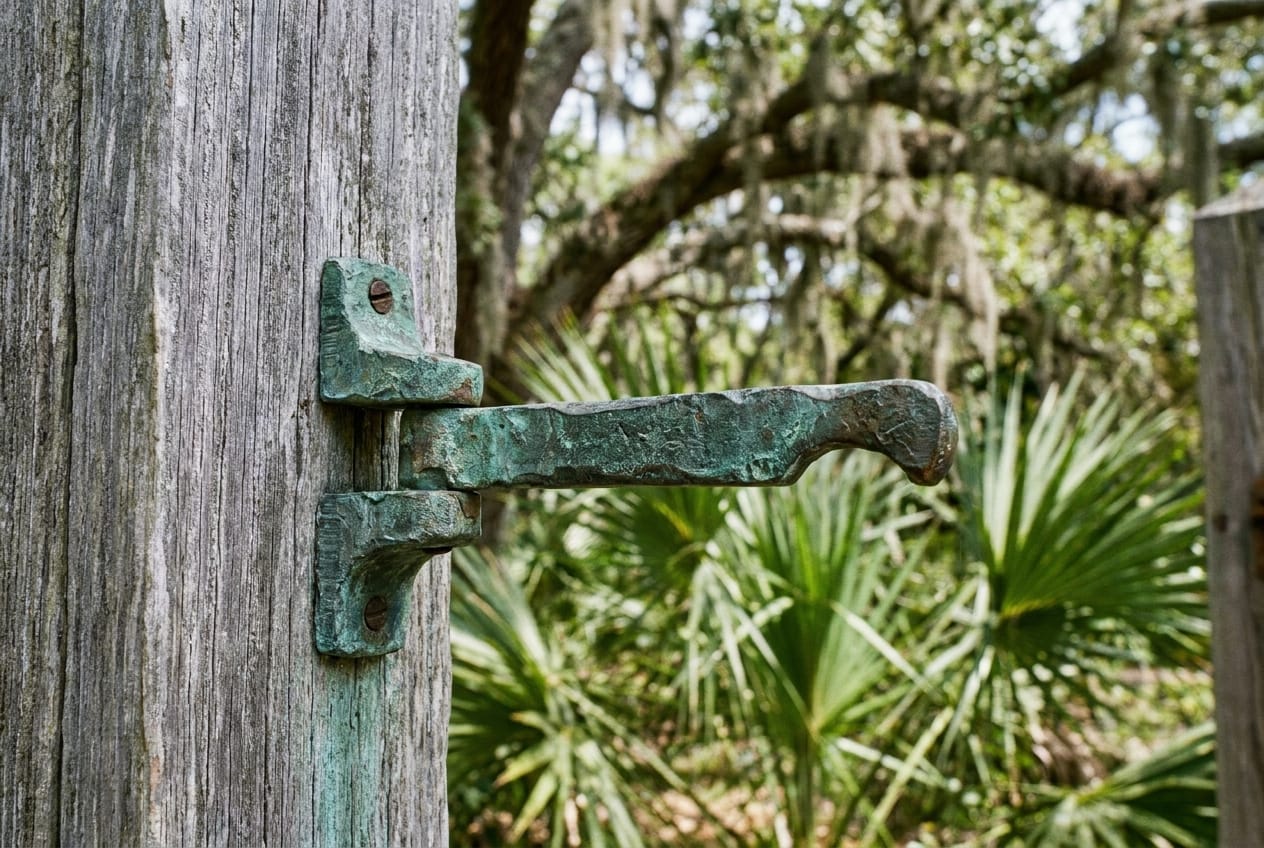
- Solid Bronze and Brass: These copper alloys do not rust. Instead, they develop a natural green-brown patina over time when exposed to the elements. This patina actually protects the underlying metal from further degradation. Bronze hardware is exceptionally heavy and durable, though it represents a higher upfront investment.
- Heavy-Duty Engineered Polymers: For high-traffic gates and pool gates, marine-grade polymer hardware is highly effective. These components do not rust, bind, or require lubrication. Many feature internal stainless steel springs to ensure reliable self-closing operation.
- Anodized or Powder-Coated Aluminum: High-quality aluminum hardware with a thick, architectural-grade powder coating can withstand salt air well. However, if the coating chips or scratches down to the bare metal, bubbling can occur.
Hinges and Latches: What to Look For
Hinges bear the constant physical stress of the gate's weight and wind loads. If a hinge begins to rust, it creates friction, causing the gate to drag, sag, or fail to latch properly. For heavy wood or vinyl gates, look for heavy-duty ball-bearing hinges made of 316 stainless steel or solid bronze.
Latches must remain functional to keep your property secure. Gravity latches and magnetic latches made of polymer or marine-grade stainless steel are the most reliable choices for coastal properties. If you are installing a gate for a pool enclosure, self-closing hinges and self-latching devices are generally required, but you must verify the specific local codes for your municipality.
Cost Expectations for Marine-Grade Hardware
Upgrading to coastal-grade hardware increases your initial project cost, but it saves money over time by avoiding replacements and repairs.
- Standard Utility Hardware: A basic steel latch and hinge set can cost between $30 and $75. In a coastal environment, expect to replace these every 1 to 3 years.
- Polymer and Stainless Steel Sets: Quality self-closing polymer or mid-grade stainless steel hardware typically ranges from $150 to $300 per gate.
- Premium Marine-Grade or Solid Bronze: For heavy, custom gates, high-end 316 stainless steel or solid bronze hardware packages can range from $400 to more than $1,000.
Total costs always depend on site conditions, including gate size, wind exposure, and whether the gate requires automation or specialized access control.
Local Rules and Maintenance
Keep in mind that rules regarding gate heights, self-closing mechanisms, and lock placements vary significantly depending on whether you live in Charleston, Mount Pleasant, Summerville, or Moncks Corner. Homeowners associations (HOAs) also frequently regulate the color, style, and material of your gate hardware. Always check with your local building department and HOA board before purchasing or installing new hardware.
Even the best marine-grade hardware requires minor maintenance. Periodically rinse your gate hardware with clean fresh water from a garden hose to wash away salt crystals. Avoid using harsh chemical cleaners or steel wool, which can damage protective coatings and leave behind tiny iron particles that will rust.