Materials · 4 min read
Corrosion of Outdoor Hardware in Coastal Climates
Published 5 October 2026
Learn how salt air and pressure-treated lumber cause standard outdoor fasteners to rust and fail long before your wood deck or fence does.
The Chemistry of Coastal Metal Decay
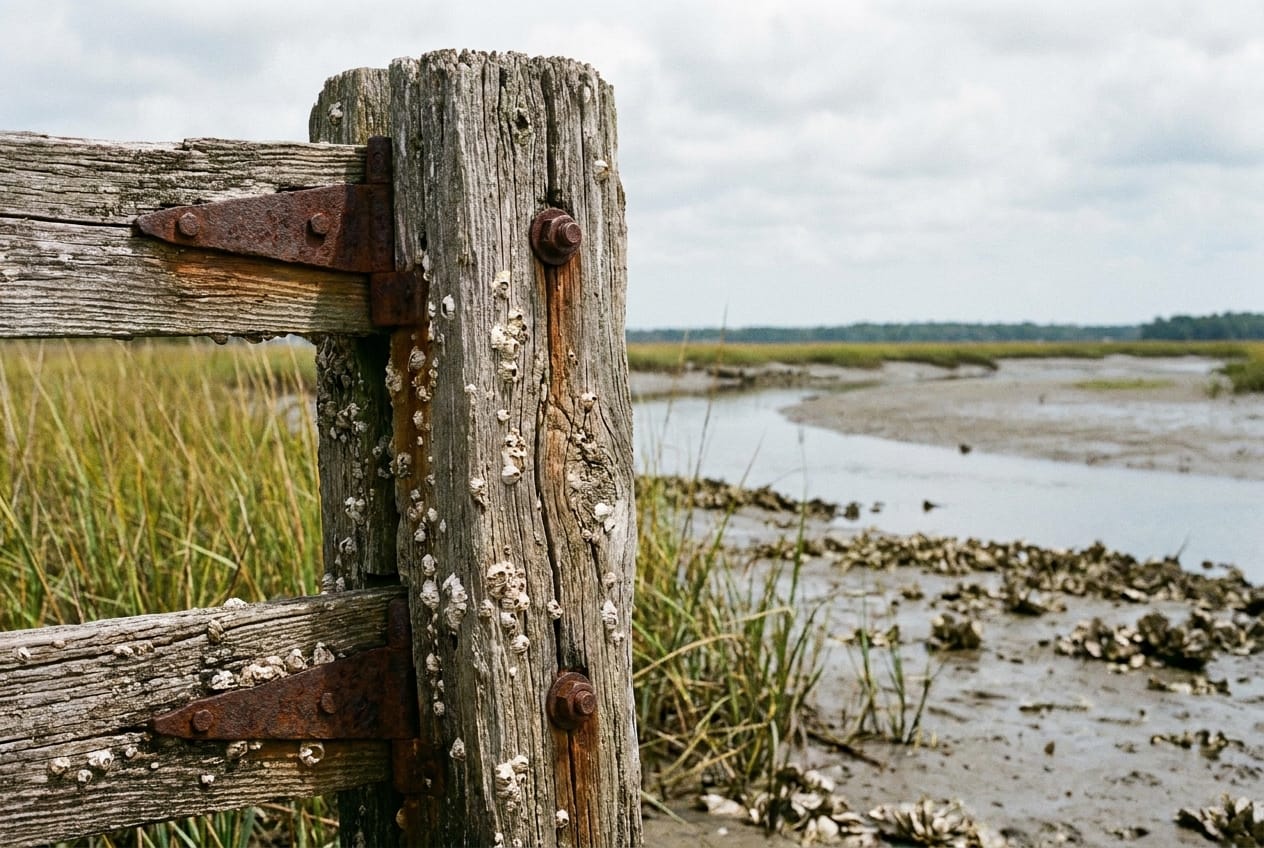
In the South Carolina Lowcountry, the combination of high humidity, warm temperatures, and salt-laden air creates a highly corrosive environment. Salt water from the ocean and tidal creeks aerosolizes into tiny airborne particles. These particles settle on outdoor structures in areas like Mount Pleasant and West Ashley. Salt is hygroscopic, meaning it attracts and holds moisture from our humid air. This creates a persistent, salty film on metal components, acting as an electrolyte that accelerates the natural oxidation of steel.
While wooden pickets and posts can withstand these conditions for decades when properly treated, standard steel fasteners will begin to oxidize within months. The resulting rust not only looks unsightly with orange streaks running down clean wood, but it also compromises the structural integrity of the fence or deck.
Galvanic Corrosion and Pressure-Treated Lumber
The wood itself can also contribute to the rapid failure of metal fasteners. Most outdoor structures in our region use pressure-treated southern yellow pine. Modern wood preservation methods use copper-based chemicals, such as Alkaline Copper Quaternary (ACQ) or Copper Azole (CA), to protect the wood from rot and termites.
When copper-treated wood gets wet from rain or humidity, the copper ions in the wood become mobile. If standard steel or zinc-coated fasteners are driven into this wood, a galvanic cell is created. Because steel and zinc are less noble metals than copper, they sacrifice themselves to the copper. This electrochemical reaction causes the fastener to corrode from the inside out, right where the metal meets the wet wood fibers. This is why a screw can snap off inside a perfectly solid board.
Selecting the Right Fastener Materials
To prevent premature failure, you must match the fastener material to the local environment.
- Standard Carbon Steel: Uncoated or lightly plated steel should never be used outdoors in coastal South Carolina. It will fail rapidly under both atmospheric and galvanic corrosion.
- Electro-Galvanized Steel: These fasteners have a very thin layer of zinc applied electronically. While fine for interior drywall or dry inland framing, they do not have enough zinc thickness to survive the corrosive environment of coastal outdoor spaces.
- Hot-Dip Galvanized (HDG): These fasteners are dipped in molten zinc, creating a much thicker, dull grey protective layer. HDG fasteners perform reasonably well in drier inland areas like Summerville or Moncks Corner, but they can still degrade over time when in direct contact with high-copper treated wood or salt spray.
- Grade 304 Stainless Steel: This alloy contains chromium and nickel, which form a self-healing chromium oxide layer that resists rust. It is highly resistant to both salt air and the corrosive chemicals in pressure-treated wood.
- Grade 316 Stainless Steel: Often called marine-grade stainless, this alloy contains molybdenum, which provides superior resistance to chlorides (salt). If your home is located waterfront or within a few miles of the ocean, 316 stainless steel is the standard choice to prevent rust.
Hardware and Gate Components
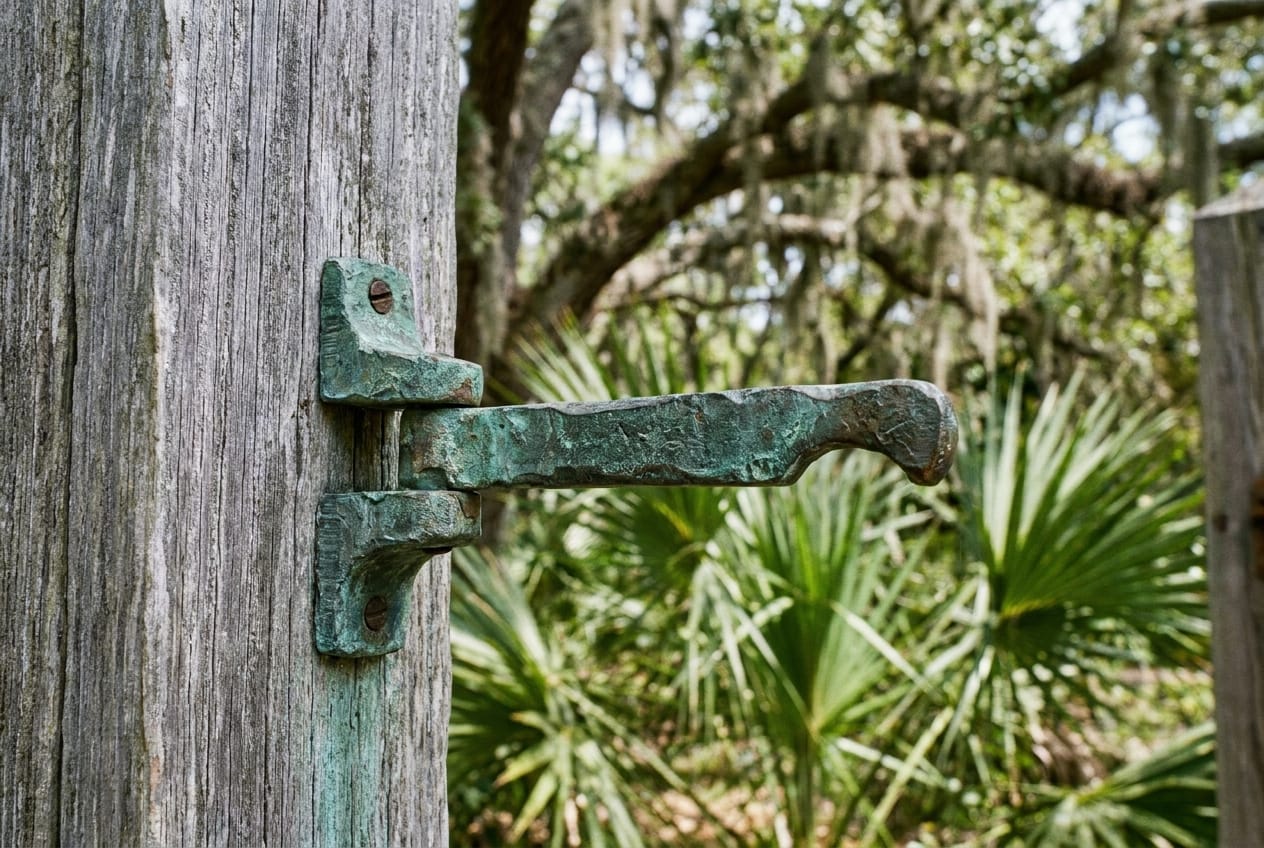
Fasteners are not the only metal components at risk. Gate hinges, latches, and structural connectors like joist hangers face the same environmental hazards. A sagging gate is rarely a wood problem; it is usually caused by hinges that have rusted, seized, or pulled loose because the screws securing them failed.
Powder-coated steel hardware is common, but the durability depends on the metal underneath. If the powder coating chips or scratches, salt moisture will get underneath and rust the raw steel rapidly. For coastal gates, heavy-duty hot-dip galvanized hardware or stainless steel components are required to ensure the gate operates smoothly for years.
Cost Differences and Local Regulations
Using stainless steel fasteners and marine-grade hardware adds to the initial cost of building a fence or deck. Depending on the size of the project, stainless steel fasteners can cost double or triple what hot-dip galvanized options cost. However, replacing a failed fastener pattern or rebuilding a collapsed section of a fence costs far more in labor and replacement lumber.
Building codes regarding fastener types vary significantly depending on whether you live in Charleston, Mount Pleasant, or unincorporated areas of the county. High-wind zones often mandate specific structural connectors and corrosion-resistant fasteners. Always check with your local building department or homeowners association to verify the exact requirements for your specific address before starting a project.