Materials · 4 min read
Selecting Pressure-Treated Pine Grades for Coastal Decks
Published 30 September 2026
Learn how structural wood grades and chemical treatment levels affect the lifespan of decks and fences in the wet South Carolina Lowcountry.
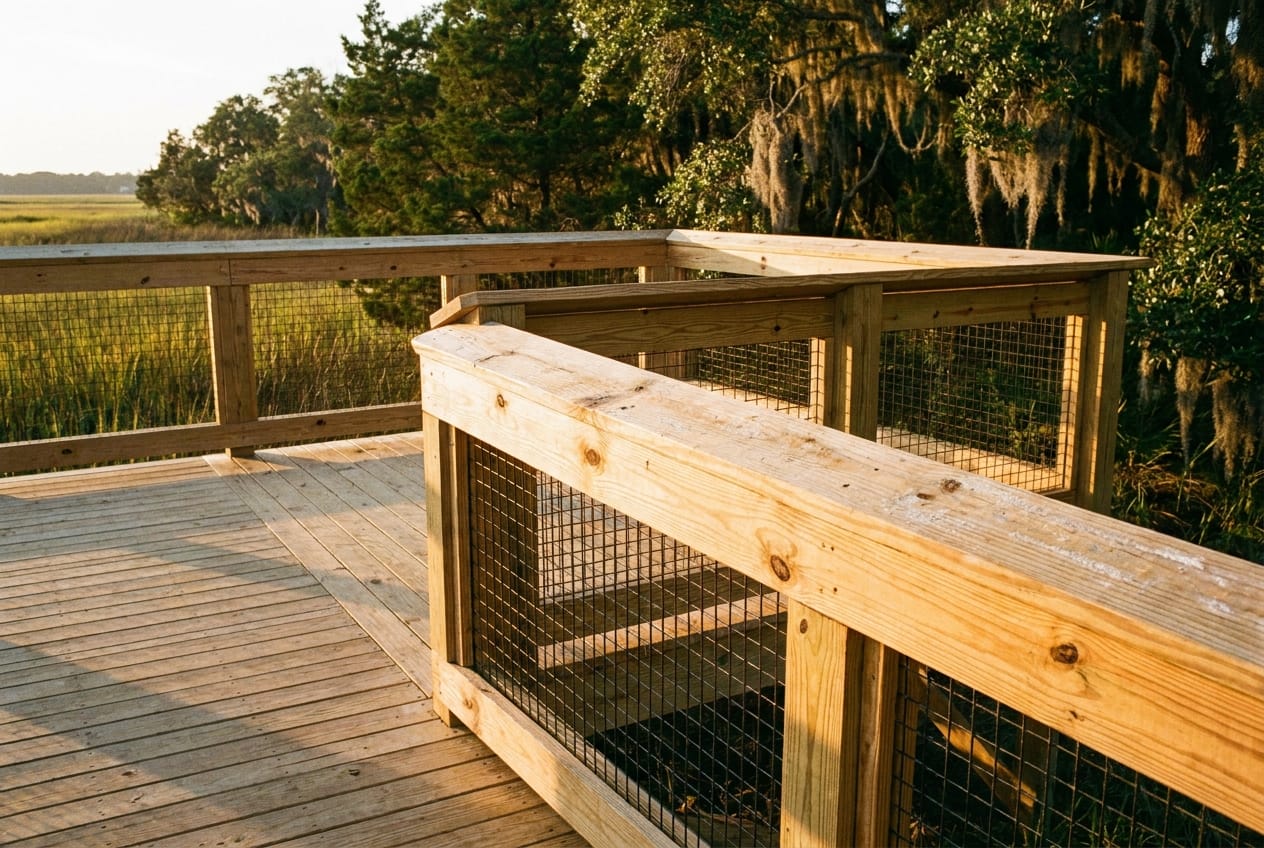
Selecting the right lumber for a new deck, fence, or outdoor structure in the coastal South Carolina climate is a balance between upfront cost and long-term durability. Pressure-treated Southern Yellow Pine is the standard building material in our region, but walking into a local lumber yard reveals a confusing array of stamps, grades, and chemical ratings.
Understanding what these grades mean and how they perform in our humid, wet environment will help you decide where to invest your budget and where you can safely save.
Structural Grades: Number 1 vs. Number 2
Lumber grades primarily measure the strength and appearance of the wood based on the number and size of knots, slope of the grain, and other natural defects.
- Number 1 (#1) Grade: This wood has fewer and smaller knots. It is structurally stronger and has a cleaner appearance. It is often used where both strength and looks are important, such as framing headers or visible posts.
- Number 2 (#2) Grade: This is the standard construction grade. It contains more knots, larger knots, and occasionally "wane" (bark on the edge of the board). While structurally sound for general framing, it is more prone to warping and twisting as it dries.
- Prime Grades (#1 Prime or #2 Prime): The "Prime" designation means the boards have been sorted for appearance. A #2 Prime board has the structural capacity of #2 but fewer cosmetic defects on the wide faces, making it a common choice for decking boards where budget is a concern.
For most residential projects, #2 grade is sufficient for structural framing that will be hidden from view. However, for visible deck boards, railings, or fence pickets, upgrading to #1 or Prime grade reduces the risk of boards splitting or cupping under the hot coastal sun.
Treatment Levels: Above Ground vs. Ground Contact
Beyond the physical grade of the wood, pressure-treated pine is categorized by the amount of chemical preservative forced into the wood fibers. This is measured by retention levels, governed by the American Wood Protection Association (AWPA).
- Above Ground (UC3B): This lumber is treated for use in applications where the wood is not in contact with the soil, is well-ventilated, and can dry out quickly between rain events. It typically has a lower concentration of preservatives.
- Ground Contact (UC4A): This wood is treated with a higher concentration of chemicals. It is designed to be buried in the dirt, touch the ground, or be placed in areas where freshwater splash, poor ventilation, and constant moisture exist.
In areas like Charleston, Summerville, and Mount Pleasant, the distinction between these two is critical. Our high water tables and heavy summer downpours mean that even wood not physically touching the dirt is often subjected to ground-like conditions.
Why the Lowcountry Climate Demands Higher Standards
The climate in coastal South Carolina is particularly harsh on pressure-treated pine. High humidity, intense heat, and active termite populations accelerate wood decay.
If you use Above Ground (UC3B) lumber for a low-profile deck, even if the joists are technically three inches above the soil, the lack of airflow and constant moisture rising from the ground will cause the wood to rot prematurely. For this reason, using Ground Contact (UC4A) lumber for all framing, including joists, beams, and ledger boards, is highly recommended. The price difference for the raw materials is relatively minor, often adding only 10% to 15% to the framing lumber costs, but it can double the lifespan of the substructure.
What Is Worth the Investment?
When planning your project, you do not need to buy the highest grade of lumber for every single component. Strategically allocating your budget yields the best results:
- For Fence Posts and Deck Posts: Always use Ground Contact (UC4A) or heavy-duty ground contact (UC4B) if the posts will be set in wet soil. Look for #2 grade or better for structural integrity.
- For Deck Framing (Joists and Beams): Use #2 Ground Contact (UC4A) lumber. The extra chemical protection prevents rot in the damp crawlspace under your deck.
- For Deck Boards and Railings: This is where you should invest in #1 Grade or Prime. Because these boards are directly exposed to the sun, lower-grade wood will warp, crack, and pop screws much faster.
- For Fence Pickets: A standard dog-ear fence can use #2 pressure-treated pine, but expect some twisting. Upgrading to premium or clear grades will yield a flatter, more consistent fence line over time.
Depending on current lumber market conditions and your specific site, upgrading a standard 12x16 deck from basic #2 Above Ground framing to #2 Ground Contact framing with #1 Prime decking may add roughly $600 to $1,800 to your total material costs.
Local Rules and Planning
Before purchasing materials or starting construction, consult with your local municipality or homeowners association. Building codes, permit requirements, and setback rules vary significantly between Charleston County, Berkeley County, the City of Charleston, and individual master-planned communities in Mount Pleasant or Moncks Corner. Some HOAs restrict the use of certain lumber grades or require specific stain colors to be applied to pressure-treated pine within a set timeframe. Always verify these guidelines to avoid costly reconstruction or fines.