Costs · 4 min read
Factors That Drive Residential Fence Installation Costs
Published 14 October 2026
Property grade, soil conditions, access constraints, and layout complexity drive the cost of installing a fence on a specific lot.
When budgeting for a new fence, two neighbors with identical lot sizes can receive vastly different estimates. Material choice plays a significant role, but the physical characteristics of your specific property dictate much of the labor, equipment, and material volume required. Understanding these land variables helps clarify where your investment goes.
Total Linear Footage and Layout Complexity
The overall perimeter measurement is the starting point for any job. Fencing materials and labor are generally calculated per linear foot. However, the shape of the enclosure matters just as much as total footage.
A simple four-corner rectangular yard requires fewer corner posts, less measuring, and fewer custom cuts. Each corner or angle added to a layout requires an extra terminal post, which must be set in concrete and aligned precisely. A yard with multiple turns, cutouts around air conditioning units, or soft curves requires extra hardware and additional labor time per foot compared to a long, straight run.
Ground Slope and Elevation Changes
Flat lots allow crew members to work quickly using standard installation methods. When a yard slopes, additional planning and labor are required to keep the fence structurally sound and visually appealing.
Installers generally handle slopes in one of two ways:
- Stepped installation, where panel sections step down sequentially like stairs, leaving triangular gaps beneath the bottom rail on sloped sections.
- Sloped or racked installation, where the rails follow the natural contour of the ground while the posts remain vertically plumb.
Racking panels or custom-building wood fencing on a steep grade requires cutting individual pickets and setting posts at varying depths. Steep terrain slows down installation, which increases labor costs compared to working on a level surface.
Soil Conditions and Digging Obstacles
Post holes must be dug deep enough to anchor the structure against wind and soil movement. What lies beneath the topsoil directly affects how fast holes can be dug and how much concrete is needed.
In the coastal Lowcountry, soil composition varies wildly across short distances:
- Loose sand allows fast digging but often requires wider holes and extra concrete to stabilize post footings.
- Heavy clay or dense marsh mud holds moisture and requires extra physical effort or heavy hydraulic augers to break through.
- Underground tree roots from mature live oaks or pine systems frequently block post locations, requiring manual hand-digging, root cutting, or offset post placement.
- High water tables can cause post holes to fill with water during digging, requiring specialized concrete mixtures or pumping.
If underground utility lines run along the planned fence line, crews must dig around them carefully by hand, adding labor hours to the project.
Property Access and Clearing Needs
Contractors must move heavy equipment, posts, concrete bags, and panel sections from the delivery truck to the installation zone.
Limited access points, such as a narrow alley between houses, tight gates, or steep side yards, mean materials must be carried manually in wheelbarrows or by hand rather than using motorized machinery. Longer walk distances from the staging area to the fence line add cumulative labor hours.
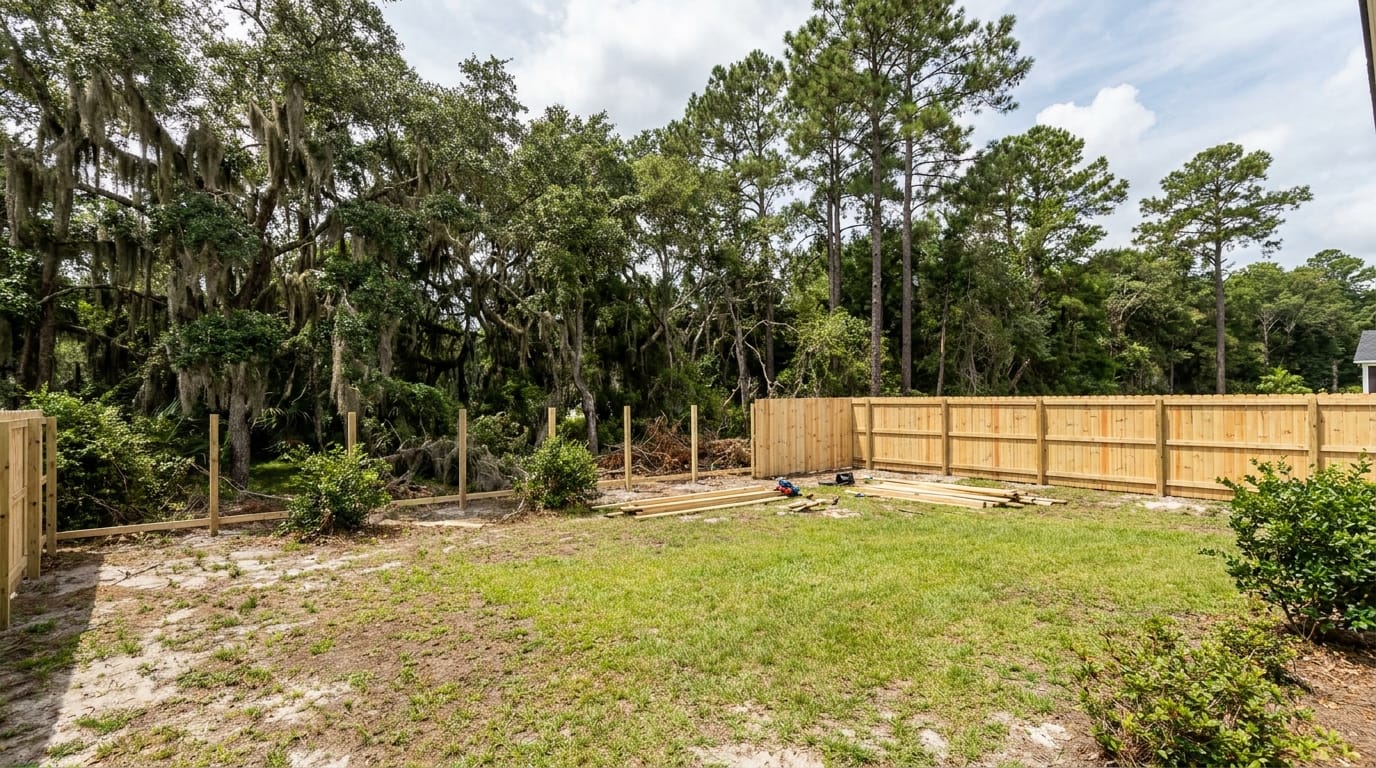
Overgrown vegetation along the property line also impacts the final price. Heavy brush, vines, low-hanging tree branches, or old fencing materials must be cleared before post holes can be marked and dug. If a contractor performs site clearing or old fence removal, those services will add to the overall site cost.
Gates and Custom Hardware
Gates are high-stress points on a fence line and require heavier posts, specialized hardware, and careful alignment. Adding multiple access points increases costs faster than adding extra feet of standard fence paneling.
Double-drive gates designed for vehicles or ride-on mowers require reinforced post footings, drop rods, and heavy-duty hinges. High-frequency pedestrian gates need durable latches and self-closing mechanisms. Each gate opening breaks up a continuous run, requiring precise layout adjustments that consume extra installation time.
Local Rules and Site Requirements
Permitting requirements, setback rules, maximum height limits, and construction guidelines vary significantly between municipalities, counties, and homeowners associations across Mount Pleasant, Charleston, Summerville, and Moncks Corner.
Some local authorities or HOAs require specific post depths, professional land surveys to verify property lines, or engineer-stamped plans for taller structures. Certain communities mandate specific styles, finishes, or gate hardware. Always verify the rules with your local building department and HOA before finalizing a project budget, as non-compliance can result in costly adjustments.