Costs · 4 min read
Phasing Your Fence Installation to Fit Your Annual Budget
Published 24 October 2026
Building a fence in stages allows you to secure critical areas now while spreading total project costs across multiple financial years.
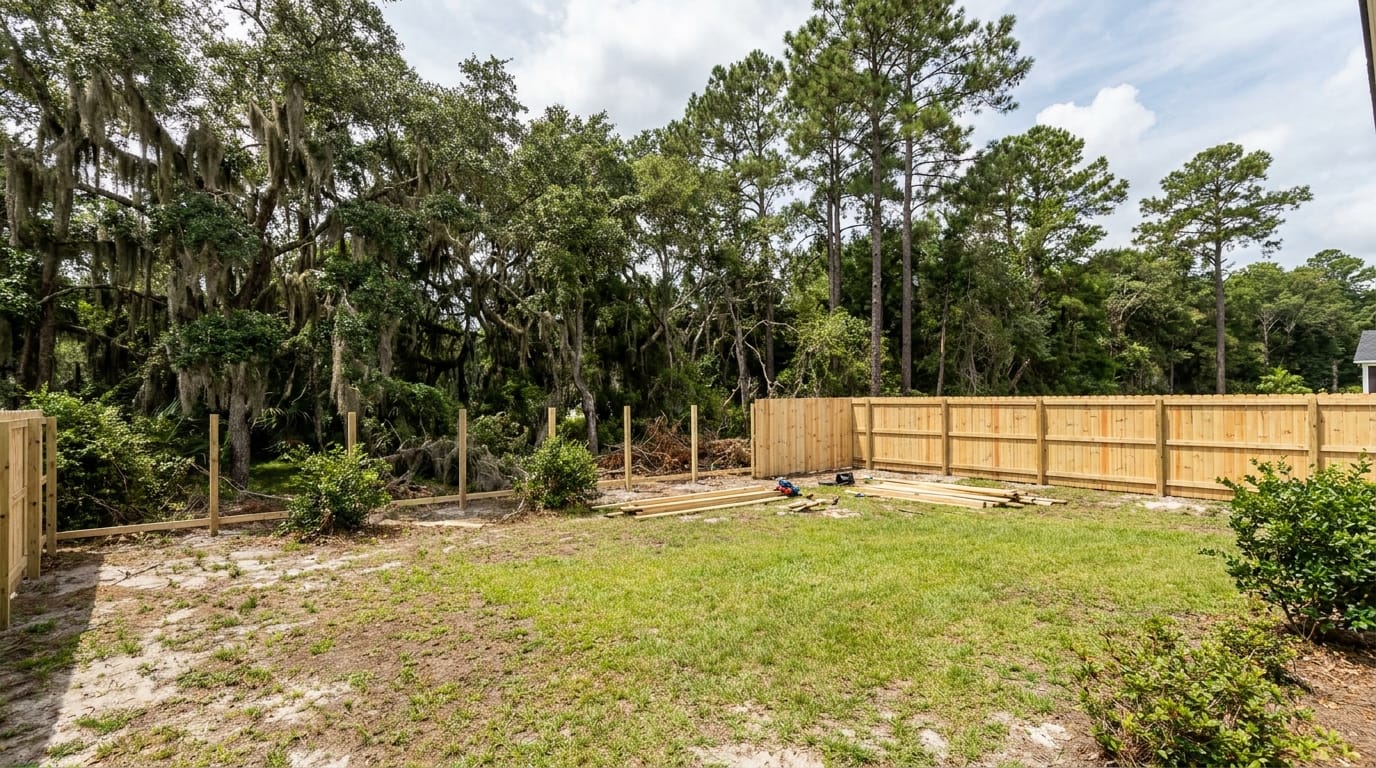
Installing a perimeter fence around a residential lot in the Lowcountry often involves hundreds of linear feet. If property lines stretch across large parcels in places like Awendaw or Summerville, the upfront cost of completing the entire enclosure at once can exceed a household's current budget. Splitting the project into distinct phases allows you to secure critical portions of your property now while deferring remaining expenses to future budget cycles.
Prioritizing Key Sections First
When breaking a fence project into phases, determine which sections solve your immediate functional needs first rather than trying to build equal lengths each year.
- Privacy for outdoor living spaces: Closing in the area immediately around a back porch, deck, or patio gives you immediate functional outdoor space without paying to border the entire property right away.
- Containment for pets or children: Enclosing a smaller side yard or immediate rear run allows pets to be turned loose safely while you save for the larger outer boundary.
- Property line delineation: Setting primary runs along shared neighbor lines helps establish boundaries early, especially if neighboring properties are under construction.
- Pool enclosures: If a pool is being installed, pool safety barriers must take absolute priority. Local municipal codes and HOA rules strictly dictate pool safety specifications, so this section cannot be delayed or compromised.
Engineering the Layout for Future Expansion
Phasing requires extra attention to structural termination points. A fence cannot simply stop midway down a stretch of yard without proper end posts.
Every phase must end on a heavy terminal or corner post designed to handle line tension and structural weight. When your contractor knows a section will be extended later, they will set appropriate terminal posts that allow future rails or panels to connect cleanly without tearing down existing structures.
Gate placement also requires early planning. Gates require heavy gate posts anchored deeply in concrete. Installing your primary entry gate in Phase 1 ensures functional access for lawn equipment and future construction vehicles needed for Phase 2.
Estimating Costs and Budgeting Variables
Fencing costs are typically calculated by the linear foot, but total price tags depend heavily on site conditions. In coastal South Carolina, dense roots, high water tables, soft sand, and uneven grading all influence labor and concrete requirements.
A typical wood privacy fence might range from $22 to $38 per linear foot installed, while aluminum or vinyl can range from $30 to $55 per linear foot depending on style, height, and grade. However, splitting a job into two visits usually means paying contractor mobilization fees twice. Contractors incur transport, equipment setup, and crew dispatch costs for every site visit.
Material costs also fluctuate over time. Lumber prices rise and fall based on market trends, and synthetic materials like aluminum and vinyl adjust based on raw manufacturing costs. A section built next year may cost slightly more or less per foot than the section built today.
Additionally, natural weathering affects appearances. Cedar or pressure-treated pine installed in Phase 1 will turn gray or dry out after six to twelve months of local sun and humidity. When Phase 2 is installed, the new wood will look significantly brighter until it weather-matches the older section over several seasons.
Permits and HOA Clearances Across Multiple Phases
Permitting rules, setback requirements, maximum height limits, and fee structures vary significantly between Charleston County, Berkeley County, local municipalities, and individual homeowners associations.
Never assume a permit or HOA approval for Phase 1 automatically covers Phase 2. Some jurisdictions require separate building permits for each construction phase, while others allow a master permit valid for a set window of time. HOAs may also have strict guidelines regarding unfinished fence runs or temporary end caps. Always check with your local building department and HOA board before setting the first post.
Access for Future Construction
A common mistake during Phase 1 is blocking construction access for Phase 2. Crew members, concrete mixers, post-hole augers, and material delivery trucks need clear pathways to reach the back or side property lines.
If Phase 1 encloses the only wide access point to your yard with a narrow four-foot pedestrian gate, getting materials and machinery into position for Phase 2 will require extra manual labor, increasing total installation costs. Leave at least one wide double gate or an open access corridor until all construction phases are fully completed.