Costs · 4 min read
Homeowner Tasks That Lower Fence Installation Costs
Published 9 October 2026
Learn which preparation and finishing tasks you can handle yourself to reduce the labor costs of a professional fence installation.
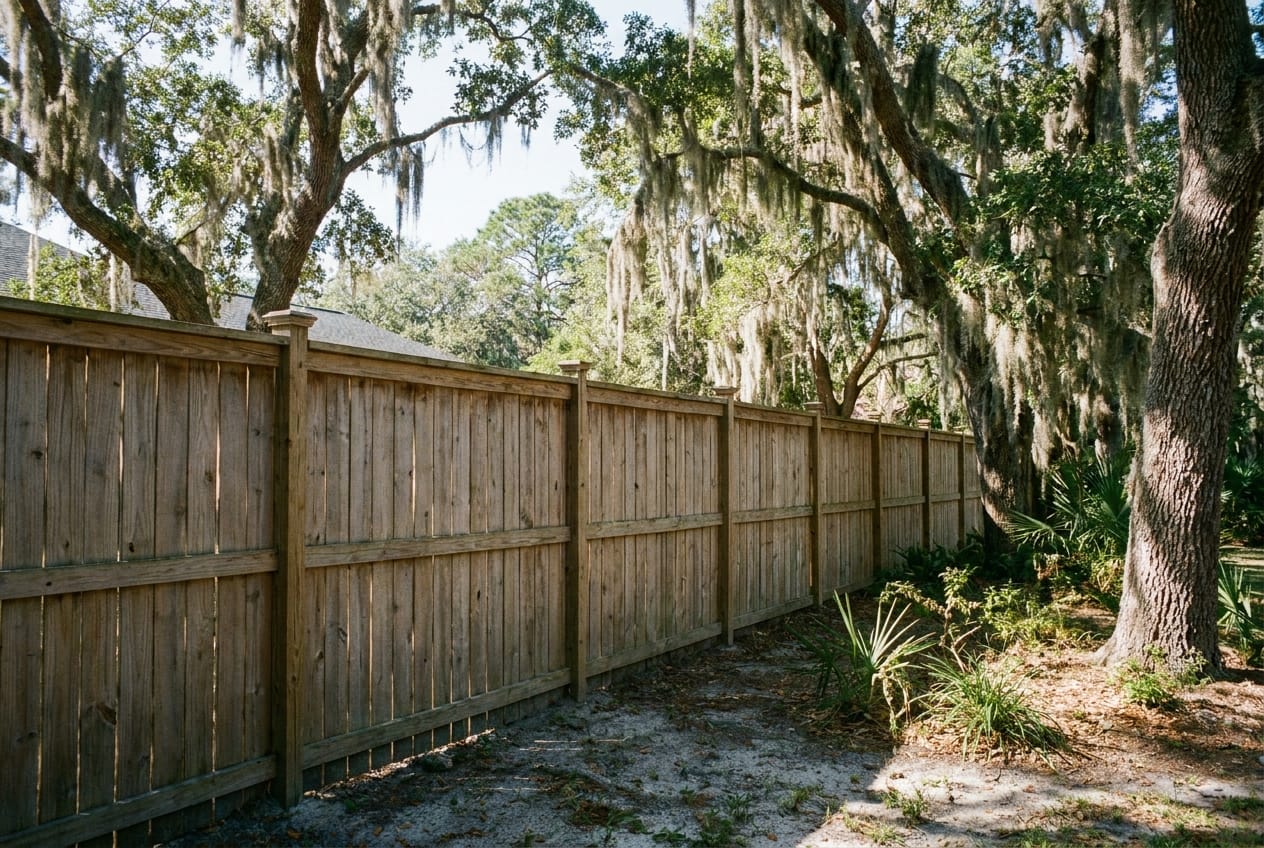
Installing a new fence or outdoor living structure represents a significant investment for homeowners in the Charleston area. While the core structural work, such as setting posts in concrete and ensuring plumb lines, is best left to professionals to ensure longevity, there are several labor-intensive tasks you can handle yourself to lower the overall project cost.
Contractors calculate estimates based on labor hours, equipment use, and disposal fees. By taking over some of the preparatory and finishing phases, you can reduce the billable hours on your estimate.
Clear the Fence Line Yourself
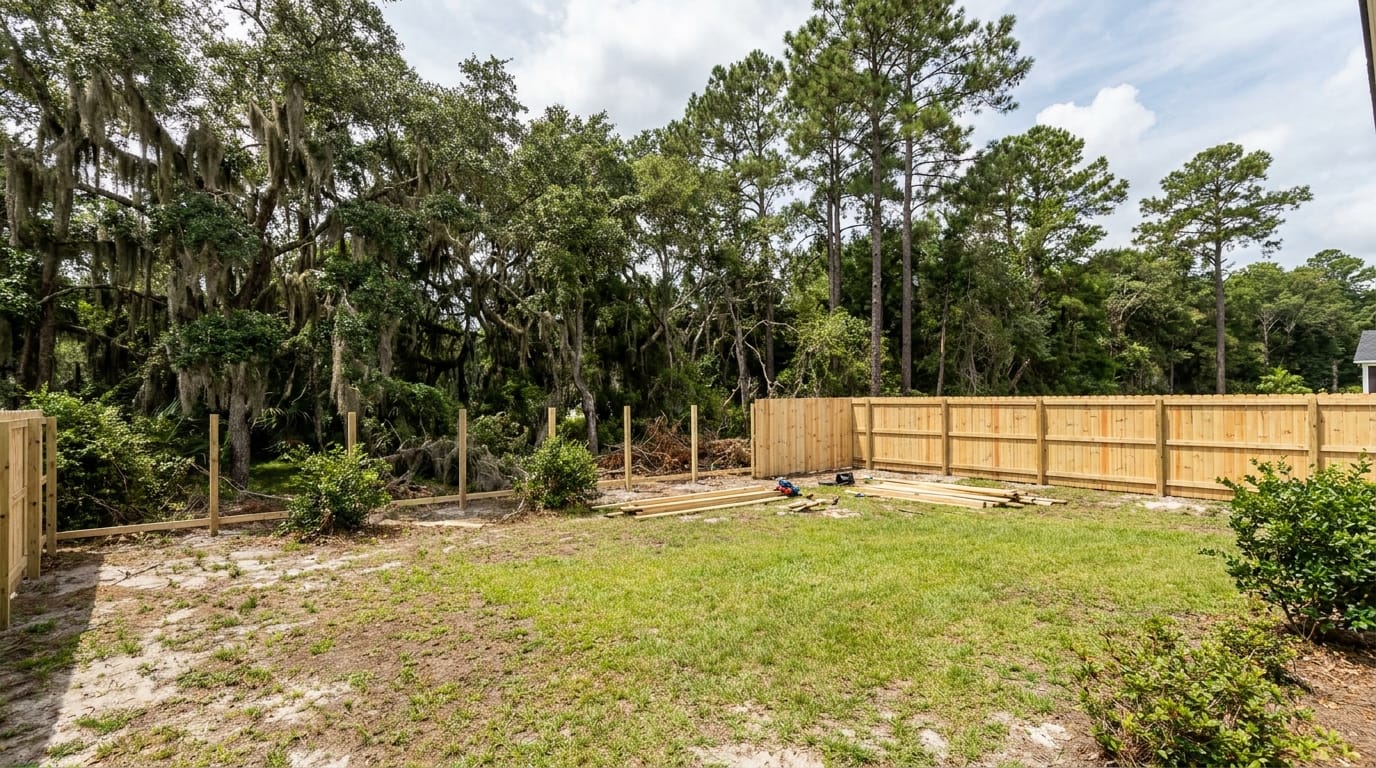
Before a crew can begin digging post holes, the path of the new fence must be completely clear of obstructions. If a contractor arrives and finds thick brush, low-hanging tree limbs, or heavy vines along the property line, they will charge a labor fee to clear it.
Clearing a dense fence line can add $300 to $1,500 to an estimate, depending on the thickness of the vegetation and the length of the run. You can save this money by clearing a path at least three feet wide on both sides of the proposed fence line. Cut back limbs, pull up vines, and remove any large rocks or decorative landscaping elements.
Tear Down and Dispose of the Old Fence
If you are replacing an existing fence, the old materials must be dismantled and hauled away. Demolition and disposal are highly labor-intensive. Contractors typically charge between $5 to $15 per linear foot for tear-down and haul-away services, though this range varies widely based on site conditions, fence material, and local landfill fees. For a 200-foot fence, this task alone can add $1,000 to $3,000 to your total.
You can reduce or eliminate this cost by taking down the old fence yourself. If you have a truck or a utility trailer, you can haul the debris to the local county landfill. Alternatively, some municipalities offer bulk trash pickup services that will collect old fencing if it is cut down to specific lengths and stacked at the curb. Be sure to check with your local waste management service for their specific rules and schedule.
Handle the HOA and Permitting Legwork
Many neighborhoods in Mount Pleasant, Summerville, and Moncks Corner are governed by Homeowners Associations (HOAs) with strict rules regarding fence height, material, style, and color. Additionally, local building departments require permits for new structures.
While many contractors offer to handle the permitting and HOA approval process, they often charge an administrative fee of $100 to $300 to cover the time spent filling out paperwork, gathering property plats, and waiting for approvals.
You can save this administrative fee by managing the submissions yourself. Because permit rules, zoning setbacks, fees, and HOA guidelines vary significantly from one municipality to another, you should contact your local town or county building department and your HOA board directly to verify the exact requirements for your property.
Stain or Seal the Wood Yourself
If you choose a wood fence, such as pressure-treated pine or western red cedar, it will require staining or sealing to protect it from the humid Lowcountry climate. If you contract the installer to apply the stain, they will need to schedule a return visit weeks or months after the installation to allow the wood to dry and cure properly. This second trip adds mobilization costs and professional painting labor to your invoice.
Staining a fence is a straightforward project that requires minimal specialized equipment. By purchasing the stain, rollers, brushes, or a rental sprayer, you can complete this task over a weekend once the wood is ready. This can save you anywhere from $1,000 to $3,000 depending on the size of the fence.
Provide Clear Access to the Work Area
Contractors lose valuable time when they have to navigate around obstacles in your yard. Before the crew arrives, ensure they have a clear path from their trucks to the work site.
- Move patio furniture, grills, and children's toys out of the work area.
- Clear away firewood piles or garden hoses.
- Trim back any bushes near the gate or access point.
- Ensure your pets are kept indoors and clean up any pet waste in the yard.
Making the site easy to navigate allows the crew to work faster, which can reduce the labor hours billed to your project, particularly if you are paying on a time-and-materials basis.
Taking on these preparatory and finishing tasks requires an investment of your own time and physical labor, but it is one of the most effective ways to make a professional fence installation fit a tighter budget. By handling the site prep, debris disposal, administrative paperwork, and final sealing, you keep the contractor's crew focused strictly on the skilled construction work. This division of labor ensures you still get a structurally sound, professionally built fence while keeping the final invoice as low as possible.