Costs · 4 min read
Hidden Fees and Omissions in Initial Fence Estimates
Published 19 October 2026
Low fence quotes often leave out critical labor and site work that end up on mid-project change orders.

Getting a lower estimate for a new fence or outdoor structure can seem like an immediate win. However, contractors who submit bids significantly below market average often leave necessary work out of the initial scope. Once the project begins, those missing items return as change orders, driving the final cost up to or beyond the higher bids you initially rejected. Understanding where low quotes trimmed their line items helps you evaluate estimates accurately before signing a contract.
Clearing and Site Preparation
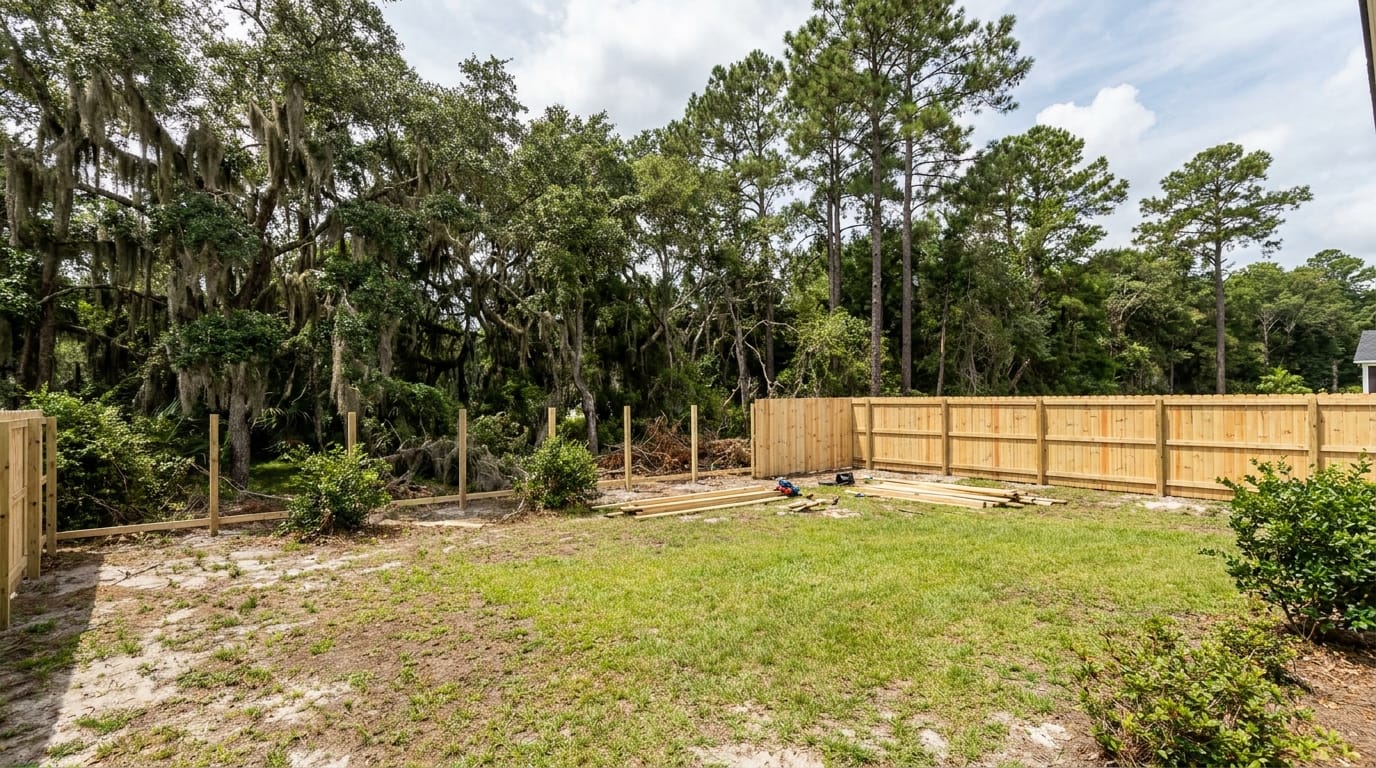
A baseline fence bid usually assumes a flat, clear line of dirt. In places like Charleston and Mount Pleasant, property boundaries often run through heavy brush, sweetgum roots, or old landscape beds.
If clearing is not explicitly detailed in your contract, the crew may stop work on day one when they encounter thick underbrush or an old fence line. Adding site clearing after work starts typically costs between $300 and $1,500, depending on the density of the vegetation and whether debris needs to be hauled away. If an existing fence must be torn down and disposed of, verify that demolition and dump fees are clearly itemized in the quote.
Underground Obstacles and Soil Conditions
Lowcountry soil varies drastically across short distances. You might encounter soft sand near the coast, dense clay in Summerville, or thick limestone marl in Moncks Corner. Standard estimates assume normal soil conditions using a basic hand auger or light power auger.
When diggers hit heavy root systems, old concrete footings, or dense marl, hand digging or specialized equipment becomes necessary. A low-bid contract often includes a clause stating that hard digging incurs extra hourly rates or equipment rental fees. These charges can add $20 to $50 per post hole. On a 200-linear-foot fence requiring 25 to 30 posts, unexpected hard-digging fees can quickly add $500 to $1,500 to your bill.
Unmarked Underground Utilities
Before any digging begins, public utilities are marked via the 811 system. However, public locate services only mark lines owned by utility companies up to the meter. They do not locate private lines, such as:
- Underground propane lines running to outdoor kitchens or fire pits
- Low-voltage landscape lighting wires
- Lawn irrigation mainlines and zone pipes
- Secondary electrical runs to sheds or detached garages
Low-cost bids usually state that the installer is not responsible for damage to private underground lines. When an auger cuts through an irrigation pipe, fixing it on the spot or hiring an irrigation technician becomes your financial responsibility. Clarifying who handles private line location and pipe repairs before installation prevents surprise repair bills.
Gate Hardware and Post Depth Specifications
Gates are the primary mechanical component of a fence and the most common point of failure. A low quote often lowers its price by using undersized posts, shallow footings, or residential-grade hardware that sags under the weight of a wide gate frame.
Standard line posts may be set 24 inches deep, but gate posts carrying heavy wood panels require deeper footings, often 36 inches or more, along with additional concrete. If a low estimate treats all post holes identically, you may face a change order to upgrade to larger posts or deeper concrete footings once the installer realizes the specified hardware cannot support the gate width. Retrofitting or upgrading post sizes midway through construction can add $150 to $400 per gate.
Grading and Ground Clearance
Rarely is a residential yard completely level. If your lot slopes, a fence installer must either step the panels down the grade or rack the fence so it follows the contour of the ground.
When a low estimate does not account for elevation changes, the installer may leave large gaps beneath the fence panels where soil dips. To fix these gaps so pets cannot escape, you might be asked to pay for extra bottom rails, custom panel cutting, or dirt infill.
HOA Approvals and Permitting Requirements
Permitting rules, setback requirements, post-depth codes, and HOA guidelines vary significantly across Awendaw, Moncks Corner, Mount Pleasant, Charleston, and Dorchester County. Never assume a low quote covers permit fees or submission drawings unless stated in writing.
If a permit or structural review is required and omitted from the contract, the project may be paused mid-build. Obtaining permits retroactively or modifying a design to meet local setbacks or HOA material rules can trigger administrative fees, engineering costs, or teardown expenses. Always check directly with your local building department and HOA board to confirm what approvals are necessary before starting work.
Reviewing line items line-by-line allows you to compare quotes fairly and ensure the total price reflects the complete job.