Maintenance · 4 min read
Identifying Fence Post Rot at the Ground Line
Published 22 October 2026
Catching wood fence rot where the post meets the dirt saves money and prevents complete structure failure.
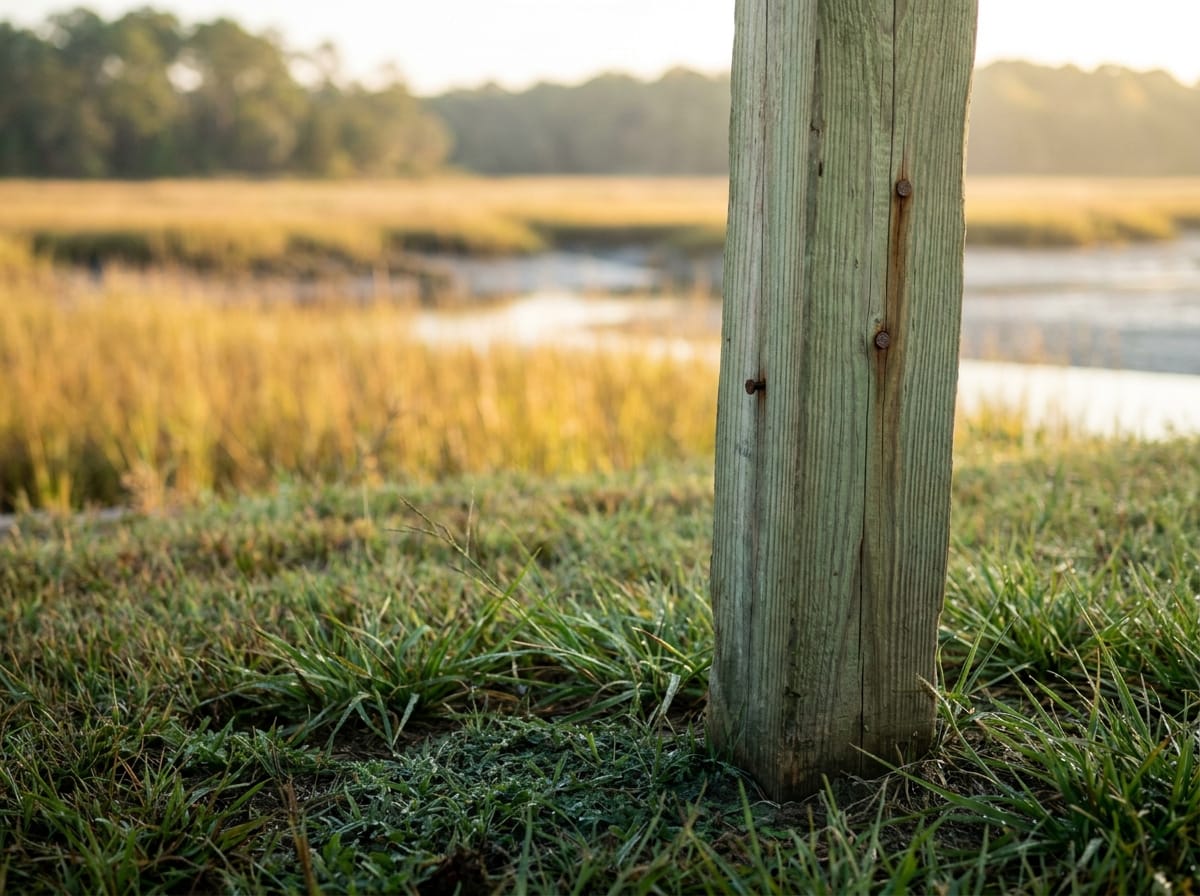
Wooden fences face demanding environmental conditions across coastal South Carolina. High humidity, frequent seasonal rain, and damp soils create an environment where wood decay thrives. While fence pickets often show surface weathering or fading first, the critical structural vulnerability of any wooden fence sits lower down. The point where a fence post transitions from underground dirt or concrete to exposed air is ground zero for decay.
Catching post rot early allows you to address localized damage before a strong storm causes a complete structural failure.
Why Rot Concentrates at the Ground Line
Wood decay is caused by microscopic fungi that require three basic elements to survive: moisture, oxygen, and mild temperatures. Deep underground, oxygen levels are limited, which slows fungal growth. Higher up on a fence post, sunlight and natural airflow quickly dry out the wood after heavy rains.
The ground line sits at the exact intersection of all these factors. Moisture continuously wicks up from the surrounding damp soil, pine straw, or mulch. At the same time, air exposure provides the oxygen fungi need to break down the wood fibers. Pressure-treated posts are chemical-treated to resist this process, but over years of exposure, natural ground moisture and ground contact eventually weaken that barrier.
Early Signs of Post-Line Rot
By the time a fence post visibly leans or sags, decay has usually hollowed out the core of the wood beneath the surface. Spotting early signs requires examining the base of the posts directly.
Key warning signs include:
- Darkening or softening of the wood right where it meets the turf or landscape bed.
- Small clusters of mushrooms or a fine, white web-like fungal coating on the wood base.
- Wood fibers that flake or crumble when gently scraped.
- Dirt or mulch packed high against the post base, creating permanent dampness.
- A post that shifts or gives slightly when pushed, even if the top half looks solid.
Simple Checks You Can Perform
Checking your fence posts once or twice a year can catch problems before a section collapses.
The Screwdriver Test: Take a flathead screwdriver and gently push the tip into the wood at the soil line. On a healthy pressure-treated post, the wood feels dense and firm. If the tip sinks easily into the post or leaves a mushy indentation, rot has begun breaking down the internal structure.
Clear the Landscape Line: Pull back pine straw, mulch, or overgrown turf from around the base of several posts. Inspect the wood for visible shrinkage or indentations. As wood rots inside, the base often contracts slightly, creating a pinched appearance right at ground level.
Check Saturated Posts After Rain: Walk the fence line an hour or two after a heavy rain. While the top sections of the posts dry out in the breeze, posts suffering from internal decay tend to remain dark, saturated, and wet right at ground level long after surrounding surface moisture has evaporated.
Preventing Ground-Line Decay
You cannot eliminate humidity, but straightforward maintenance habit changes can extend the life of wooden fence posts:
- Keep landscape beds away: Ensure pine straw, topsoil, and mulch stay two to three inches away from post bases. Stacking organic material against a post traps water against the wood grain.
- Maintain drainage paths: Make sure rainwater moves away from your fence line rather than forming standing puddles around post bases.
- Trim surrounding vegetation: Cut back heavy grass, weeds, and creeping vines around post bottoms. Allowing air and sun to reach the base helps the wood dry properly after storms.
Repair Options and Cost Expectations
If you discover ground-line rot early on one or two posts, you can often replace those specific posts without tearing down entire fence runs.
Replacing an individual wooden post typically ranges from $150 to $400 per post. Final costs vary based on site accessibility, overall fence height, whether concrete footings must be jackhammered out, and local ground conditions.
If ground-line rot has spread across multiple consecutive posts, the weight of the fence panels can cause adjacent posts to crack or tilt, making full section replacements necessary. Total replacement costs vary widely depending on section length, material choices, slope, and property features.
Before undertaking fence repairs or post replacements, verify local property line locations, setback rules, and community guidelines. Permit requirements, municipal building codes, and HOA guidelines vary across different cities, counties, and neighborhoods.