Process · 4 min read
Managing Weather Delays on Lowcountry Outdoor Projects
Published 13 October 2026
Understanding how coastal rain, high water tables, and clay soil cause schedule adjustments during outdoor construction in the Lowcountry.
Outdoor construction in coastal South Carolina depends heavily on dry ground and stable conditions. Rain does far more than just pause work while drops are falling. In flat Lowcountry landscapes across Charleston, Mount Pleasant, Summerville, and Moncks Corner, water settles quickly and drains slowly, especially in areas with high clay content or shallow soil layers.
When heavy rain falls on a project site, digging post holes or excavating footings often must stop. Heavy foot traffic or operating light equipment on saturated ground causes severe rutting and soil compaction. Continuing to move materials over wet ground turns a yard into mud, damaging turf and disrupting final grading. Standard practice requires allowing the ground to dry sufficiently before resuming heavy work.
High Water Tables and Post Holes
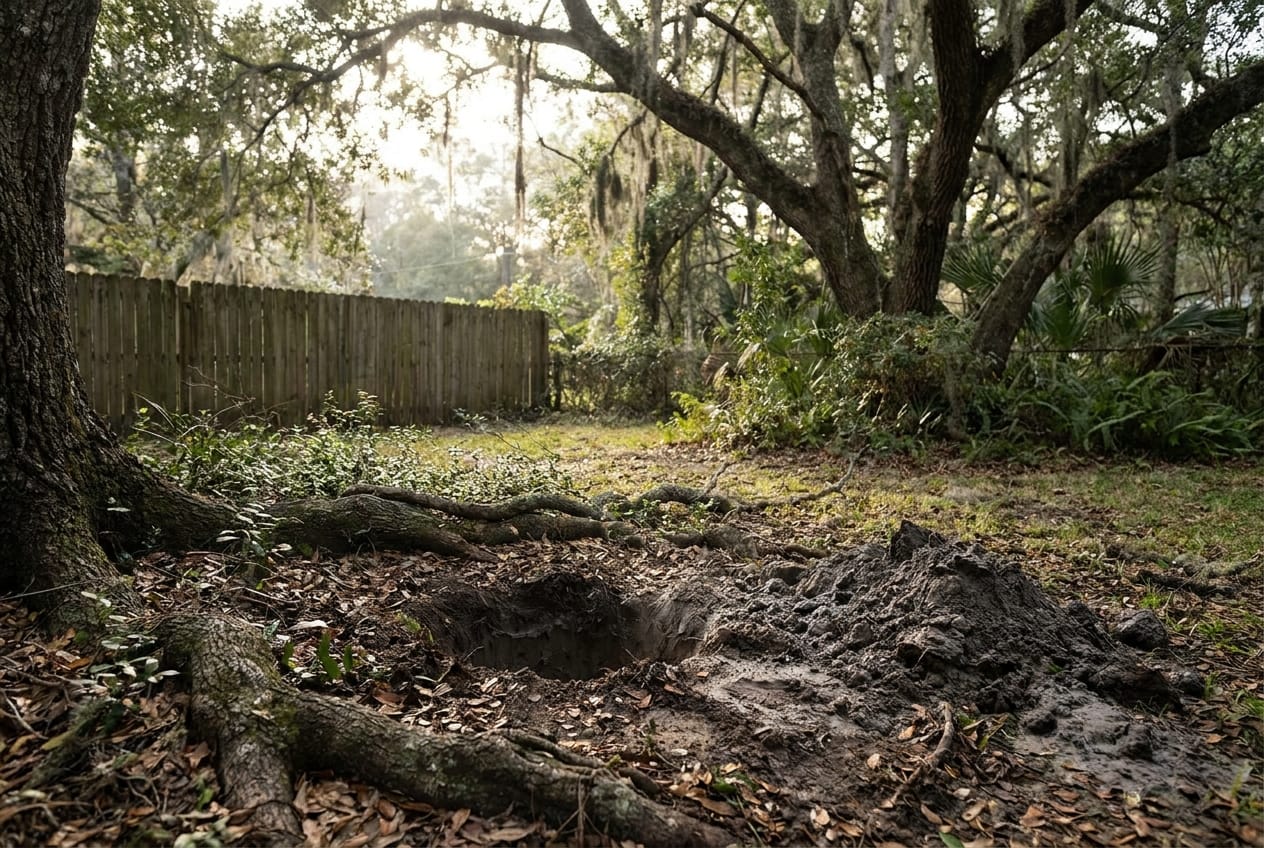
In many parts of the Lowcountry, the water table sits just a couple of feet below the surface. During wet seasons, or after periods of heavy rainfall and high coastal tides, digging a standard two-foot or three-foot hole for a fence post or structure footing can result in immediate water seepage.
When groundwater fills a freshly dug hole, pouring concrete immediately is rarely an option. Excess standing water dilutes concrete mixtures, preventing them from curing to their full rated strength. Options include pumping water out, using specialized fast-setting mixes suited for damp conditions, or waiting for the local water table to recede naturally. Each approach requires additional time and careful monitoring before moving to the next stage.
Underground Obstructions and Soil Variations
What lies beneath the grass frequently alters project timelines once excavation begins. The Lowcountry features diverse sub-surface environments, ranging from coastal sand to heavy river clay and dense root networks.
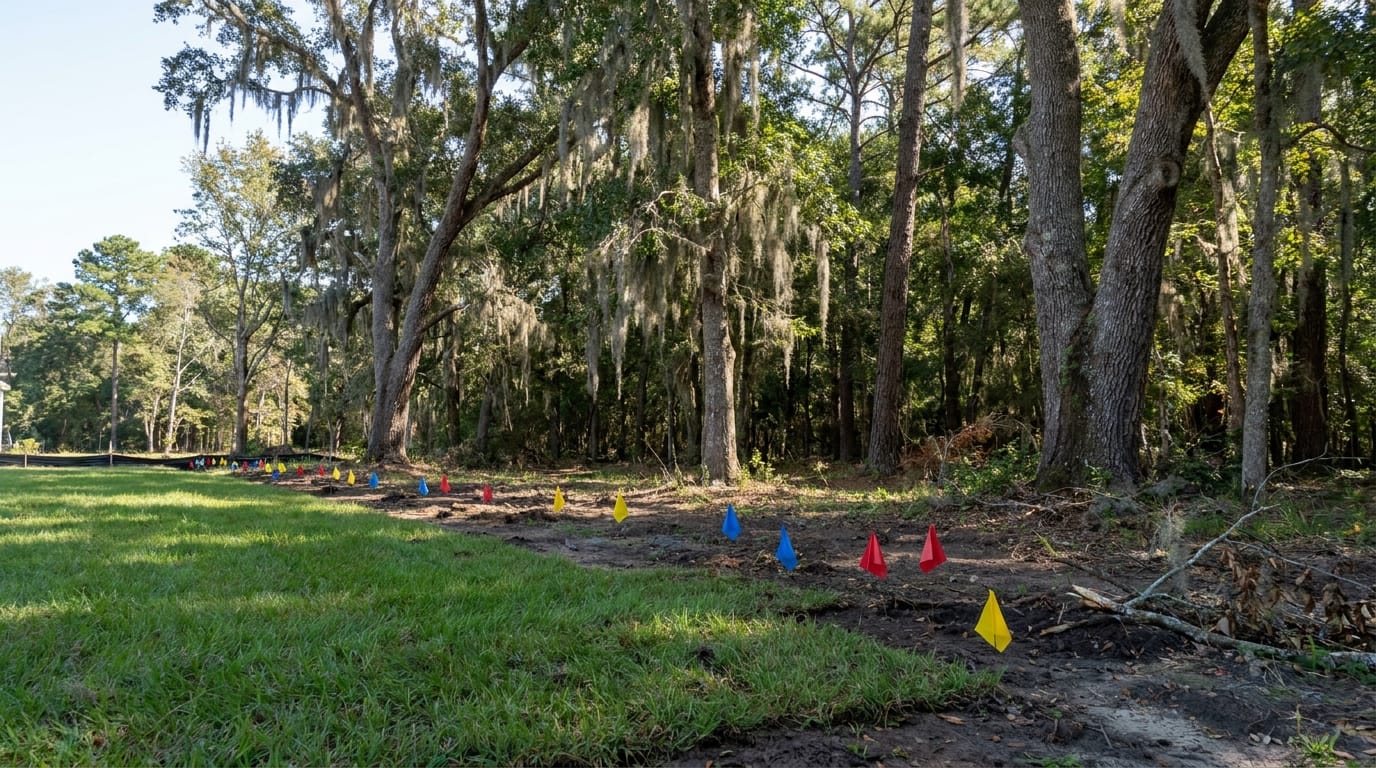
Before digging, public utility marking services identify buried electric, gas, and communication lines. However, private underground lines, such as irrigation pipes, low-voltage landscape lighting, and private drainage systems, are not mapped by public utility locators. Discovering unmapped lines requires pausing mechanical digging to hand-excavate around the obstruction or adjust the post layout.
Soil types across the region present distinct schedule considerations:
- Sandy soil digs quickly but can cave in when wet, requiring wider footings or temporary bracing.
- Heavy clay retains water for days, making digging slow when dry and messy when wet.
- Mature live oak and pine root mats require careful hand-cutting or slight design adjustments to preserve tree health and equipment.
Temperature, Humidity, and Material Curing
Air temperature and humidity directly dictate how building materials behave during installation. In the summer months, high temperatures accelerate the cure rate of concrete. While fast curing sounds helpful, concrete that loses moisture too rapidly can develop surface cracks and lose structural integrity. To prevent this, concrete pours are often scheduled during cooler morning hours.
High humidity also affects lumber installation and protective coatings:
- Framing lumber absorbs ambient moisture, expanding slightly before contracting as it dries outdoors.
- Stains, paints, and protective sealers require specific humidity and temperature windows to bond properly to wood surfaces.
- Applying oil- or water-based finishes during high humidity or right before a sudden afternoon thunderstorm can ruin the coating, requiring sanding and reapplication.
Inspection Timelines and Permit Rules
Weather disruptions impact administrative timelines alongside physical job site work. Municipal building departments schedule daily site visits based on inspector availability. If severe weather shuts down operations across a county for a day or two, inspection backlogs naturally form.
Furthermore, open footing holes must be clear of standing water and loose mud for an inspector to review them. If a sudden storm fills a dug trench prior to an inspector's arrival, the inspection must be postponed until the hole is pumped dry and cleaned out.
Permit rules, inspection procedures, setback requirements, and HOA approval timelines vary significantly depending on the municipality, county, and specific neighborhood. Homeowners should always check directly with their local city or county building department and HOA board to confirm current requirements and process times before starting work.
Adapting to Schedule Adjustments
A realistic project timeline accounts for unpredictable coastal weather. Professional crews track local radar closely and adjust daily work plans to protect job quality without losing unnecessary time.
When outdoor conditions delay field work, tasks often shift to off-site prep, material sorting, or hardware assembly. Clear communication between contractor and homeowner helps ensure everyone understands that short weather pauses protect the long-term strength and appearance of the installation.