Process · 4 min read
Underground Utility Marking for Lowcountry Fence Projects
Published 8 October 2026
Learn how utility marking works in the Charleston area and why identifying underground lines is a critical first step before building a fence.
Deep post holes are the foundation of any stable fence. In the Lowcountry, securing a fence against wind and soft soil typically requires digging down two to three feet. Before any shovel or auger touches the dirt, identifying what lies beneath the surface is the most critical safety step of the project.
Striking an underground utility line is more than an inconvenience. It can result in utility service interruptions for you and your neighbors, costly repair bills from utility companies, and serious physical danger from electrical currents or natural gas leaks. To prevent these hazards, homeowners and contractors must coordinate utility marking before any excavation begins.
The 811 System in South Carolina
South Carolina operates a free utility locating service known as South Carolina 811. This service acts as a liaison between property owners, contractors, and the utility companies. When a locate request is submitted, 811 notifies member utility companies to send technicians to mark the paths of their underground lines on the property.
To arrange for a utility locate, you can dial 811 or submit a request online. This service is free to the homeowner. The utility companies own and maintain the infrastructure up to the service meter, and they are responsible for marking these public lines.
Understanding the Timeline
Timing is critical when planning your fence project. In South Carolina, the law requires that you submit a locate request at least three full business days before you plan to dig, not including the day you make the call, weekends, or state holidays.
Once the request is submitted, technicians will visit your property to mark the lines. It is important to wait until all utility companies have responded and marked their lines, or confirmed they have no lines in the area, before beginning any work. Digging before this window closes can lead to accidental damage and significant liability.
Public Versus Private Utility Lines
A common misconception is that 811 will mark every underground line on your property. This is not the case. The utility companies only mark public lines up to their respective meters or connection points. Any line running past the meter is considered a private utility and will not be marked by the 811 service.
Examples of private utilities include:
- Irrigation system pipes and valves
- Electric lines running to detached garages, sheds, or workshops
- Low-voltage wiring for landscape lighting or security cameras
- Propane lines running from a tank to a house, pool heater, or outdoor grill
- Septic tank lines and drain fields
- Invisible pet fencing
If your yard has any of these features, you must locate them yourself or hire a private utility locating service. Damaging a private line is the financial responsibility of the homeowner or the contractor performing the work, and repairing a cut irrigation line or landscape wire can add hundreds of dollars to your project costs.
Interpreting the Color Codes
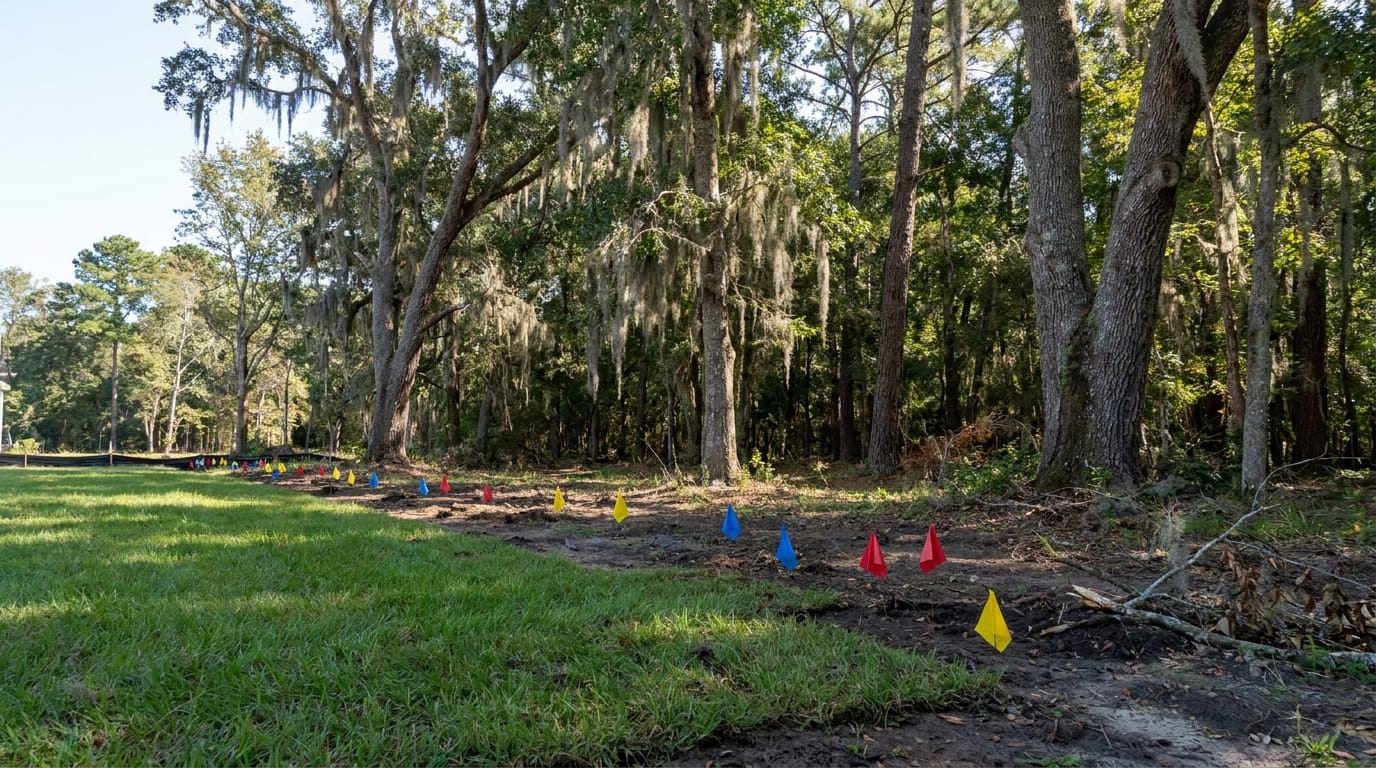
When technicians mark your yard, they will use colored spray paint, flags, or both. These colors are standardized nationwide to indicate exactly what type of utility is buried below:
- Red: Electric power lines, cables, conduit, and lighting cables
- Yellow: Gas, oil, steam, petroleum, or gaseous materials
- Orange: Communication, cable television, alarm or signal lines, and fiber optics
- Blue: Potable water
- Green: Sewers and drain lines
- Purple: Reclaimed water, irrigation, and slurry lines
- White: Proposed excavation limits (often used by contractors to show where the fence will run)
Avoid digging within the "tolerance zone" on either side of these marks, which is typically about 18 to 24 inches from the outer edge of the utility. If you must dig near a marked line, hand tools should be used with extreme caution instead of power equipment.
Permits, Setbacks, and Local Rules
While locating utility lines keeps your project safe, you must also ensure your fence location complies with local laws. Rules regarding property lines, easements, setbacks, and HOA requirements vary significantly depending on whether you live in Charleston, Mount Pleasant, Summerville, Moncks Corner, or unincorporated county areas.
Before finalizing your fence layout, check with your local municipality and Homeowners Association to confirm necessary permits and boundary rules. Some utility easements may restrict you from building a permanent structure, like a fence, directly over a buried utility main, even if it is marked. Taking the time to verify these rules saves you from the costly mistake of having to tear down and move a newly built fence.