Maintenance · 4 min read
Storm Damage to Fences: Repair or Replace
Published 1 November 2026
Learn how to evaluate storm damage on wood, vinyl, and aluminum fences to determine whether to repair isolated sections or replace the structure.
Evaluating Fence Damage After a Storm
High winds, heavy rains, and fallen limbs from coastal storms regularly test outdoor structures across the South Carolina Lowcountry. After severe weather passes, examining your fence thoroughly helps determine whether targeted fixes will suffice or if the structure requires complete replacement. Start by walking the entire perimeter to inspect three core components: the posts, the horizontal rails, and the vertical pickets or panels.
Safety comes first during an inspection. Watch for leaning sections that might be supported by active utility lines, saturated ground that could give way, or hanging limbs above the fence line. Once the area is clear, apply firm pressure to individual posts to test for hidden structural failure below the soil line.
When a Fence Can Be Repaired
Minor to moderate damage that affects isolated areas of a fence line can usually be repaired without tearing down the entire structure. Spot repairs save money when the underlying foundation of the fence remains plumb and structurally sound.
Common repairable scenarios include:
- Individual broken or split pickets caused by small flying debris.
- One or two damaged horizontal rails while adjacent posts remain rigid.
- Dislodged vinyl panels that popped out of their tracks without cracking.
- Bent aluminum pickets that can be swapped out individually.
- A single leaning post where the concrete footing failed but surrounding posts are intact.
Repair costs generally range from $150 to $600 for localized fixes, depending on the material, the number of components affected, and site accessibility. Wet soil, dense root systems, or limited access to the work area can increase labor time, which affects the final invoice.
When Full Fence Replacement Is Necessary
Certain types of storm damage compromise the integrity of the entire system. When structural failure is widespread, attempting partial repairs often leaves the fence vulnerable to the next high-wind event and may cost more over time than starting fresh.
Complete replacement is usually required when:
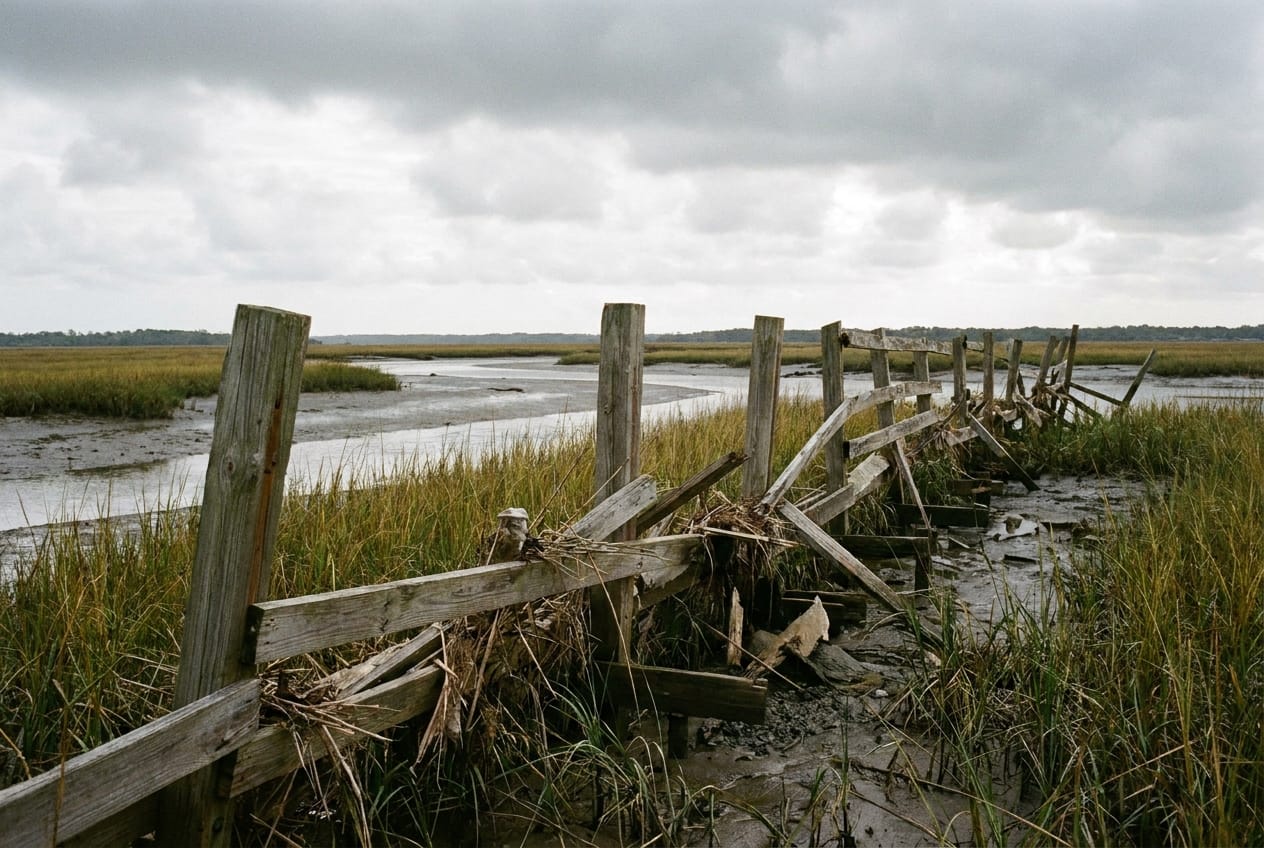
- Multiple consecutive posts have snapped at ground level or pulled out of their concrete footings.
- Soil erosion along a slope or marsh edge has washed away the ground supporting several post foundations.
- Severe wind pressure has twisted or racked the entire frame of a wood or aluminum fence line.
- A fallen tree trunk or large oak limb has crushed multiple sections and distorted the grade beneath them.
Replacing an entire fence typically costs between $20 and $60 per linear foot, heavily influenced by whether you select pressure-treated pine, cedar, low-maintenance vinyl, or powder-coated aluminum. Clearing fallen debris, digging out old concrete footings, and correcting grade issues will add to the base installation cost.
Material Differences in Storm Endurance
Different fence materials respond to storm forces in distinct ways, directly impacting your repair options:
Wood Fences: Pressure-treated pine and cedar flex under wind loads, but saturated soil can cause posts to shift easily. Individual boards are inexpensive to swap, but matching the color of aged, weathered wood with new lumber is difficult without restaining the whole fence line.
Vinyl Fences: Vinyl panels act like sails in tropical-force winds. While high winds can pop unreinforced panels out of rails without destroying them, cold or aged vinyl can shatter under impact from falling branches. Replacement of individual shattered panels is straightforward if the post grid remains plumb.
Aluminum Fences: Metal fencing allows wind to pass through easily, reducing the likelihood of post blowouts. However, direct strikes from heavy branches will bend aluminum rails and pickets. Because aluminum rails are rigid, a bend in one rail often distorts adjacent sections, requiring broader section replacement.
Navigating Permits, HOAs, and Insurance
Before finalizing any repair or replacement plan, check your local building department and homeowners association guidelines. Permit requirements, structural height limits, property line setbacks, and wind-load standards vary significantly across Charleston County, Berkeley County, Mount Pleasant, Summerville, Moncks Corner, and surrounding municipalities.
HOAs often strictly regulate visible changes, matching materials, and repair timelines. Getting written approval from your board and verifying local municipal rules before ordering materials helps avoid costly tear-downs or fines. If you plan to file an insurance claim, document all damage with clear photos before clearing debris or removing broken posts.