Design · 4 min read
Strategizing Fence Privacy to Avoid Wasted Spending
Published 21 September 2026
Learn where to install high-density privacy fencing on your property and where open styles can save you thousands of dollars.
Installing a fence around a Lowcountry property is a significant financial investment, often running into several thousand dollars. When homeowners think about fencing, the default choice is often a uniform six-foot solid privacy fence around the entire perimeter. However, enclosing an entire lot with solid wood or vinyl panels is rarely the most cost-effective or visually appealing approach.
Understanding where privacy actually improves your daily life—and where it adds unnecessary expense—can help you allocate your budget more efficiently. By targeting high-density fencing only where it is needed, you can save money while preserving your views and natural light.
High-Value Privacy Zones
Privacy fencing is highly effective when it shields specific, high-use outdoor living areas from direct view. These are the zones where a solid barrier makes a practical difference:
- Patios and Decks: These are primary gathering spaces. A solid fence or privacy screen close to a patio creates an intimate atmosphere and blocks immediate sightlines from neighboring yards.
- Pool Areas: Safety and privacy are both critical here. A solid barrier prevents passersby or neighbors from looking directly into your swimming and lounging areas.
- Direct Window Sightlines: If a neighbor’s second-story window looks straight down onto your back porch or bedroom window, a strategically placed section of tall fencing or a privacy screen can block that specific angle.
- Utility and Service Areas: Short runs of solid fencing are useful for hiding trash cans, HVAC units, and pool equipment from view, both from the street and from your own outdoor living spaces.
Where Privacy Fencing Is Wasted Money
Enclosing areas that nobody uses or that already have natural barriers is a common way to overspend on a fencing project.
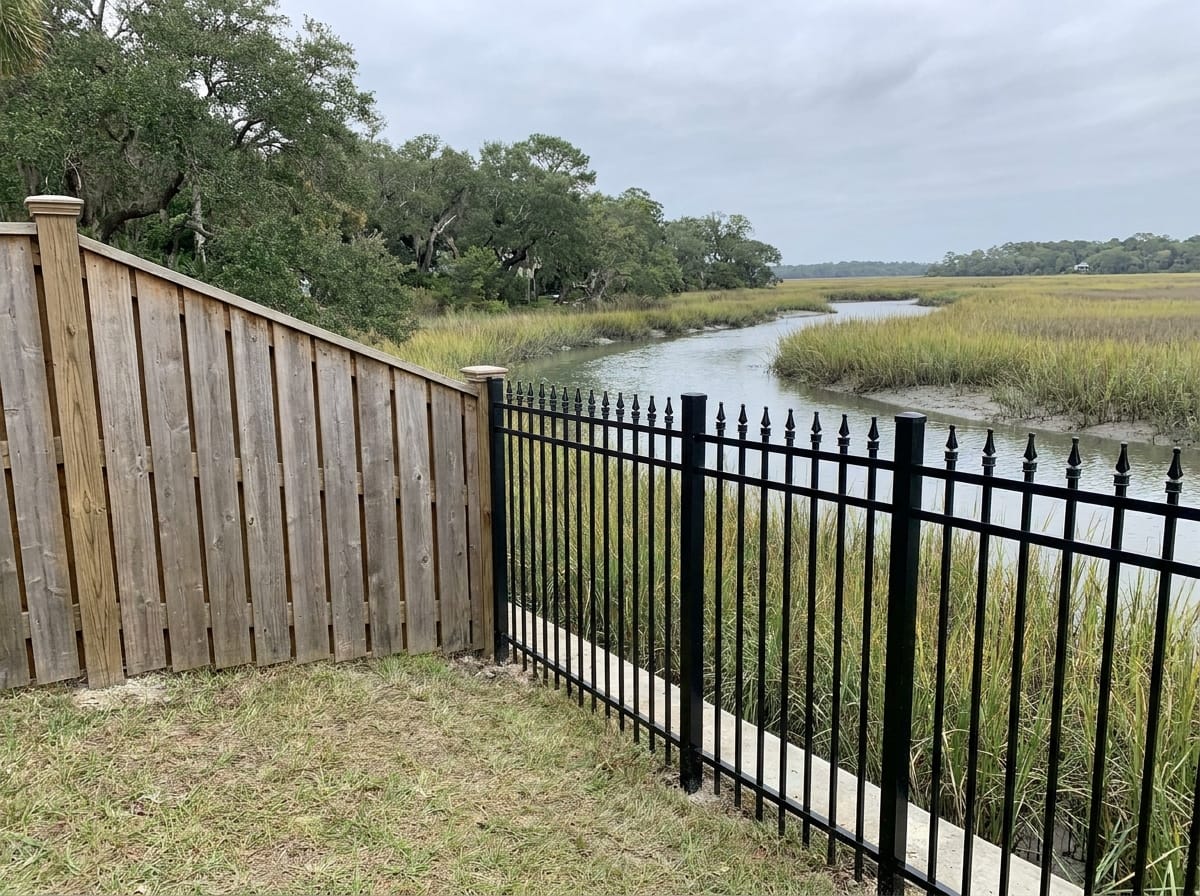
- Wooded and Marsh Borders: Many properties in the Charleston area back up to preserved wetlands, woods, or tidal marshes. Installing a solid six-foot fence along these boundaries blocks natural views and breezes. It also requires paying for expensive materials to hide a view that is already private. An open picket or aluminum fence is often a better, less expensive choice here.
- Long Side Property Lines: If the space between your house and your neighbor’s house consists of narrow utility pathways that neither family uses for recreation, a solid privacy fence may be unnecessary. A lower, open fence style can establish the property boundary at a lower cost.
- Front Yards: Front yard privacy fences are rarely practical. They block your home's curb appeal and can make a front yard feel cramped. Furthermore, local municipalities and HOAs frequently restrict the height and style of fencing allowed in front of a home.
The Hybrid Fencing Strategy
You do not have to choose a single fence style for your entire yard. A hybrid approach uses different materials and heights to match the specific needs of each side of your property.
For example, you might install a six-foot wood or vinyl privacy fence along a shared side border with a close neighbor to block views of their driveway or utility area. Then, you can transition to a four-foot black aluminum fence along the back property line to preserve a view of a pond or wooded area. This approach keeps the backyard feeling open while keeping pets and children secure. It also lowers the overall material cost of the project, as open metal or wire fencing often requires less material and labor than heavy solid panels.
Cost Variations and Site Conditions
The cost of any fencing project depends heavily on your specific site conditions. A standard wood privacy fence can range from $25 to $45 per linear foot, while vinyl privacy fencing can range from $35 to $60 per linear foot. Open aluminum fencing often ranges from $30 to $50 per linear foot.
However, these ranges are highly dependent on factors such as:
- Topography and Slope: Uneven ground requires custom stepping or racking of the fence panels, which increases labor costs.
- Clearing and Underbrush: If our crew must clear dense Lowcountry vines, roots, or small trees to establish a fence line, prep costs will rise.
- Soil Conditions: Sandy soil, heavy clay, or areas with thick tree roots affect how easily fence posts can be set, impacting installation time.
Navigating Local Rules and HOAs
Before finalizing your fence layout, you must verify the specific regulations for your neighborhood and municipality. Building codes, permit fees, easement restrictions, and setback requirements vary significantly between Charleston County, Berkeley County, Mount Pleasant, Summerville, and individual subdivisions.
Many homeowners associations have strict rules regarding what types of fences can be installed, where they can be placed on the lot, and what materials are permitted. Never assume a neighbor's fence style is pre-approved for your lot. Always check with your local zoning department and your HOA board to avoid costly fines or the requirement to tear down a newly installed fence.