Commercial · 4 min read
What a commercial fence has to do that a garden fence does not
Published 5 September 2026
Fencing a property line is not the same job as fencing a site. Access, wear, liability and what happens when a gate has to work five hundred times a week.
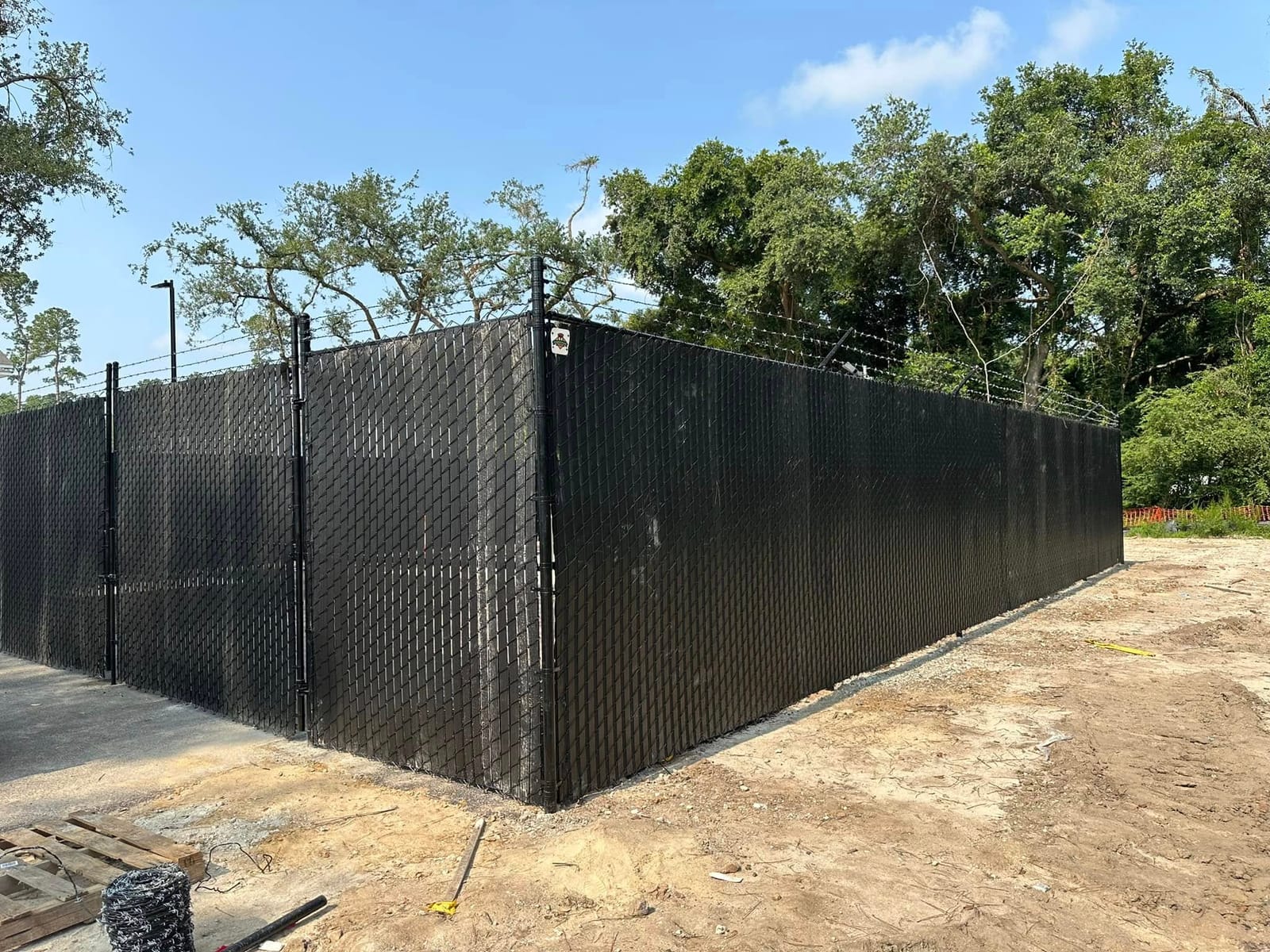
A domestic fence has to stand up and look right. A commercial one has to do that while being used far harder, by people who did not choose it, in a place where a failure is somebody's liability.
Gates are the job
On a garden fence a gate is a detail. On a site it is the thing that decides whether the fence works.
A drive gate on a commercial property may open and close dozens of times a day, every day. That is a different specification from a garden gate: heavier posts, better hardware, hinges rated for the weight and the cycle count.
Think about the vehicle that has to get through — not the car, the delivery lorry or the skip truck. A drive gate that is a foot too narrow becomes a permanently open gate, which is the same as no gate.
Chain link is usually the right answer
For a boundary around a yard, a car park or a storage area, galvanised chain link does the job at the lowest cost per foot and goes up fast.
If appearance matters, privacy slats change how a chain-link fence reads considerably, and they add screening without the wind load of a solid fence. If security is the point, height and the top detail matter more than material.
Where chain link is not the answer is anywhere the public sees it and forms an impression — a frontage, an entrance, a customer car park. Aluminium ornamental costs more and looks like a decision rather than a boundary.
What it has to survive
Commercial fencing gets hit. Reversing vehicles, trolleys, wind-blown debris, and people climbing it because it is between them and where they want to be.
That changes the sums. Post spacing and gauge that are ample on a domestic lot are marginal on a busy site, and the cheapest fence is rarely the cheapest over five years if a section gets replaced twice.
Pools, plant and liability
Fencing that exists to keep people out of something — a pool, a pond, machinery, a substation — is not a boundary fence with a different label. Height, gaps, what a child can climb and how the gate latches are the whole specification, and there are rules about it.
If that is what your fence is for, say so at the quote stage. It changes the design and it is not something to discover afterwards.
Phasing and access
A commercial job usually cannot shut the site. Which stretch goes first, what stays open while it does, and when we can be there are part of the quote rather than details to sort out on the day.
We would rather build it round your operation than find out on the morning that the run we planned to start on is where the deliveries come in.
Asking for a quote
Tell us what the fence is for, what has to get through it, and what happens on the other side of it. We will draw the line on satellite imagery, price it by real footage, and be specific about gates — which is where these jobs are usually won or lost.