Costs · 4 min read
Where Low Fence Estimates Turn Into Hidden Costs
Published 29 September 2026
Learn where low upfront estimates for fences and outdoor projects often hide future expenses and unexpected change orders during installation.
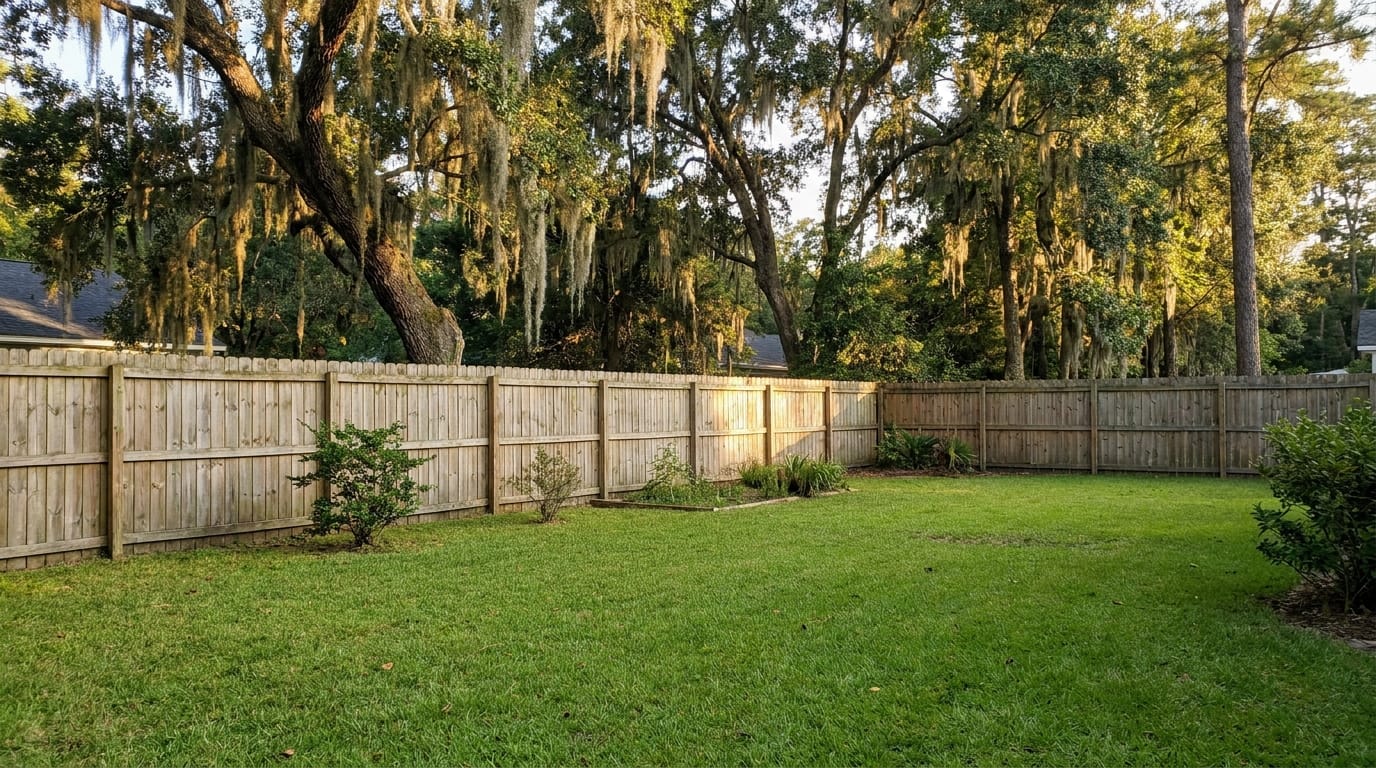
When comparing quotes for a new fence or outdoor living project in the Charleston area, the lowest bid is always tempting. However, an unusually low initial estimate often leaves out predictable variables. In many cases, these omitted details return later as change orders, driving the final invoice up to, or past, the price of the higher, more realistic bids.
Understanding where these hidden costs hide helps you compare quotes accurately and avoid unexpected budget increases mid-project.
Site Preparation and Clearing
Many initial quotes assume a perfectly clean, flat, and accessible workspace. If your yard in Mount Pleasant or Summerville has thick brush, low-hanging limbs, or an old structure in the way, that space must be cleared before work begins.
Some contractors write their estimates assuming the homeowner will handle all clearing. If the crew arrives and cannot easily access the fence line, you may face an immediate change order for site preparation. This can add several hundred to over a thousand dollars to your project, depending on the volume of debris, access restrictions, and vegetation that needs removal. Always ask if clearing and debris disposal are included in the base price.
Grading, Slopes, and Drainage
Few yards in the Lowcountry are perfectly flat. Even minor slopes require decisions about how the fence or outdoor structure meets the ground.
A low bid often assumes a standard installation that does not account for grade changes. When the crew begins installation, they may realize they need to transition the fence (either stepping it or sloping it) to avoid large gaps at the bottom. Adjusting for slopes requires extra labor, custom cuts, and sometimes longer posts. If your yard has drainage swales or low spots common in Moncks Corner and Charleston, failing to plan for them can result in a change order for specialized transition panels or erosion-control adjustments.
Underground Obstructions and Soil Conditions
What lies beneath the surface is one of the most common sources of change orders. Digging post holes in our region can reveal unexpected challenges:
- Dense root systems from live oaks, sweetgums, or mature pines.
- Buried construction debris, old concrete footings, or abandoned piping.
- High water tables or thick clay layers that slow down hand-digging or mechanical augers.
A thorough estimate should clarify how underground obstacles are handled. A low-ball quote might include a clause stating that any hole requiring more than a few minutes of digging will incur an hourly surcharge. If your yard has mature trees, you could easily face hundreds of dollars in extra labor fees just to get the posts in the ground.
Property Lines, Surveys, and HOA Approvals
Determining exactly where your property ends and your neighbor's begins is critical. Some budget contractors will install a fence wherever you point, shifting the liability for property line disputes entirely onto you.
If a boundary dispute arises mid-project, work stops, and you may face fees for moving already-installed posts. Additionally, local HOA guidelines and municipal rules vary significantly across Charleston County, Berkeley County, Mount Pleasant, and Summerville. Some bids do not include the administrative time or fees required to pull permits or submit HOA packages. If the contractor leaves these steps to you, or charges you extra mid-project to resolve permit issues, the initial savings quickly disappear. Always check with your local municipality and HOA regarding specific setbacks, height restrictions, and permit fees.
Material Specifications and Gate Hardware
Sometimes a low quote is simply the result of lower-quality components or omitted hardware.
For example, a quote might specify a gate but fail to include heavy-duty hinges, drop rods, or self-closing mechanisms required for pool safety codes (which vary by local jurisdiction). Once the gate is hung, you may find yourself paying a premium to upgrade to hardware that actually functions long-term. Similarly, verify the depth and amount of concrete used for post footings. Cutting corners on concrete saves a contractor money upfront but leads to leaning gates and sagging panels after the first heavy storm.
Evaluating Your Quotes
To protect your budget, look for detailed, line-item estimates rather than single-page lump sums. When reviewing a low quote, ask the contractor directly:
- Is site clearing and old fence disposal included in this price?
- How do you handle underground obstructions like roots or old concrete?
- Are permit fees, HOA submissions, and utility marking covered?
- What specific hardware is included for gates, and are post depths guaranteed?
A professional contractor will provide transparent answers and a comprehensive scope of work, ensuring the price you agree to is the price you actually pay.